

1. Makhan Mishri: The Quintessential Offering
No Janmashtami bhog is complete without Makhan Mishri. Lord Krishna's childhood tales are filled with his love for freshly churned white butter, earning him the affectionate name 'Makhan Chor' or butter thief. This offering is the simplest to prepare
yet holds immense significance, symbolizing purity, sweetness, and unconditional love. To make this, you simply need fresh, unsalted white butter, which can be churned at home from full-fat cream or milk. Once the butter is ready, it is gently mixed with mishri (rock sugar) and often garnished with a holy Tulsi leaf before being offered. Its no-cook nature makes it an instant and deeply personal part of the midnight puja.
2. Panchamrit: The Divine Nectar
Panchamrit, which translates to 'five nectars', is a sacred concoction essential to Hindu rituals. It is made by combining five pure ingredients: raw milk, curd (yogurt), honey, ghee (clarified butter), and sugar. Each element carries a symbolic meaning: milk for purity, curd for prosperity, ghee for strength, honey for devotion, and sugar for bliss. This mixture is used for the 'abhishek' or ritual bathing of the infant Krishna idol and is later distributed as prasad. The preparation is effortless—simply blend the five ingredients in a clean bowl. Some variations also include additions like chopped nuts or a Tulsi leaf.
3. Dhaniya Panjiri: A Fragrant Prasad for Fasting
Dhaniya Panjiri is a unique and aromatic sweet specifically prepared for Janmashtami, especially for those observing a fast (vrat). Unlike regular panjiri made with wheat flour, this version uses roasted coriander seed powder, making it gluten-free and suitable for fasting. To prepare it, coriander powder is slowly roasted in ghee until it turns fragrant and changes color. Toasted nuts like almonds and cashews, along with fox nuts (makhana) and desiccated coconut, are added for richness and texture. The mixture is then sweetened with powdered sugar after it has cooled slightly. It’s a nutritious and flavourful prasad enjoyed after the midnight prayers.
4. Gopalkala: A Savoury Treat for Kanha and Friends
Offering a delightful contrast to the sweets, Gopalkala is a savory dish with a beautiful story. Legend says that Lord Krishna would mix the food brought by his cowherd friends (gopas) with curd, creating a shared meal. Also known as Dahi Poha, this dish is a simple mix of flattened rice (poha), yogurt, chopped cucumber, and fresh coconut. It requires no cooking. Simply wash and soften the poha, then mix it with yogurt, cucumber, coconut, a pinch of salt, and finely chopped green chilies. A tempering of ghee with cumin seeds can be added for extra flavour. It is a refreshing, wholesome, and symbolic offering.
5. Makhana Kheer: A Creamy and Light Dessert
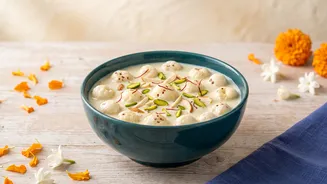
Kheer, a creamy milk pudding, is a festive staple, and the version made with makhana (fox nuts) is particularly popular for Janmashtami. Makhana is considered a nutritious food suitable for fasting days. This kheer is light yet rich and very easy to prepare. First, the makhana are lightly roasted in ghee until they become crisp. Some of them can be coarsely crushed to help thicken the kheer. Then, they are simmered in milk until it reduces and thickens. Sugar, cardamom powder, and saffron strands are added for sweetness and aroma, along with chopped nuts like almonds and pistachios. It can be served warm or chilled.
6. Quick Mewa Peda: A Classic Sweet Made Easy
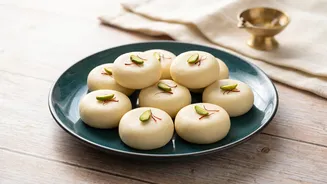
Peda is a classic milk-based sweet that is a beloved offering across many festivals. While traditional peda making can be time-consuming, you can create a quick and delicious version at home using khoya (mawa) or even milk powder. To make an easy version, simply heat khoya in a pan until it softens. Once it cools down a little, mix in powdered sugar and a pinch of cardamom powder. Knead the mixture briefly and then shape it into small, flat discs. You can press a piece of pistachio or almond into the center for garnish. This simple sweet is a wonderful, milky offering that represents the cherished dairy products associated with Lord Krishna's childhood.