





A Time Capsule at the Bottom of a Lake
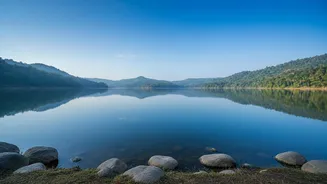
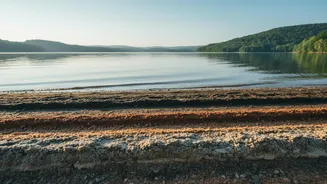
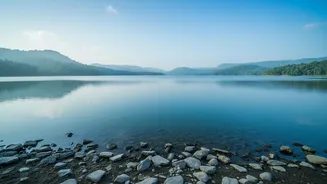
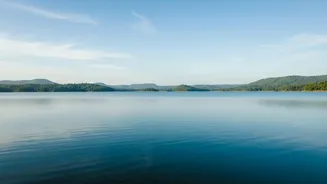
In the Korba district of Chhattisgarh, scientists from the Birbal Sahni Institute of Palaeosciences (BSIP) in Lucknow have found a remarkable climate archive at the bottom of Raja Rani Lake. By drilling down and extracting a 40-centimetre sediment core,
they have unearthed a continuous environmental record spanning the last 2,500 years. Think of it like the rings of a tree, but for a landscape. Each layer of accumulated mud contains a snapshot of the environment from a specific time, trapping clues about the past. This field of study, known as palaeoclimatology, allows researchers to look back thousands of years to understand climatic shifts long before human records began.
How Pollen Tells a Climate Story
The key to unlocking this sediment archive is palynology—the study of microscopic pollen grains. Every plant species produces uniquely shaped pollen with a tough outer wall that allows it to be preserved for millennia in sediment. When these grains settle in a lake, they become a fossil record of the surrounding vegetation. Scientists can identify the types of plants that were growing and in what abundance. For example, a high concentration of pollen from forest species that thrive in wet conditions points to a period of strong rainfall, while an increase in pollen from grasses and herbs can signify drier times. By analysing these shifts layer by layer, the BSIP team was able to reconstruct a detailed history of vegetation and, by extension, the climate in India’s Core Monsoon Zone (CMZ). This zone is critical as it receives nearly 90% of the country’s annual rainfall.
A Stronger, Wetter Medieval Monsoon
The study revealed a striking discovery: the Indian Summer Monsoon was significantly stronger between roughly 1060 and 1725 CE. This period coincides with a global warm phase known as the Medieval Climate Anomaly. The pollen data from Raja Rani Lake showed a clear dominance of moist and dry tropical deciduous forest species, painting a picture of a persistently warm and humid climate. Crucially, the researchers found no evidence of any major dry spells in this core monsoon region during that time, suggesting a more sustained and powerful monsoon regime than previously thought. This intensified monsoon is believed to have been driven by a combination of factors, including La Niña-like conditions in the ocean and increased solar activity.
Why the Past Matters for the Future
Understanding that the monsoon system has experienced such intense phases in the past is not just an academic exercise. It has profound implications for our present and future. As global temperatures continue to rise due to climate change, historical data like this provides a vital real-world baseline for what could happen next. Climate models that predict future weather patterns can be tested and strengthened against these high-resolution palaeoclimate records. This study demonstrates that the monsoon system is highly sensitive to global temperature shifts and can swing towards more extreme rainfall. For a country so dependent on the monsoon for agriculture, water security, and its economy, knowing the system's full range of behaviour is critical for developing effective climate-resilient policies and preparing for a future where monsoons could become more intense and variable.