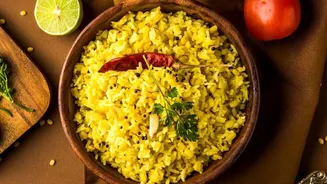

In the world of Indian comfort food, few dishes are as beloved as dalia and khichdi. Both are hailed for their wholesome simplicity, but the question remains: which is nutritionally superior? The answer, however, is not as simple as picking one.
The Foundation: What is Dalia?
Dalia,
or broken wheat, is a whole-grain food made from cracked wheat kernels. Because it's minimally processed, it retains a significant amount of its bran and germ, making it a nutritional powerhouse. Its primary strength lies in its high dietary fibre content, which is crucial for digestive health, promoting feelings of fullness, and preventing constipation. Dalia is a source of complex carbohydrates, which release energy slowly and help maintain stable blood sugar levels, making it an excellent choice for individuals with diabetes. A typical 100-gram serving of dry dalia contains roughly 340-350 calories, about 12 grams of protein, and a substantial 10-12 grams of fibre.
The Other Contender: Understanding Khichdi
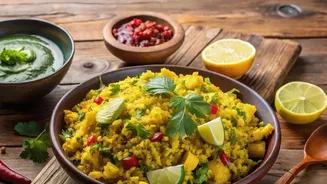
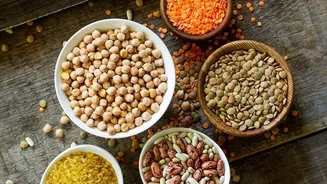
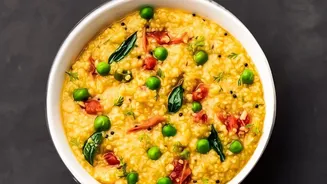
Khichdi is a classic one-pot meal, traditionally made by cooking rice and lentils (most commonly moong dal) together. Its genius lies in the concept of protein complementation; the combination of a grain (rice) and a legume (lentils) creates a complete protein, providing all nine essential amino acids. This makes it an especially valuable dish in vegetarian diets. Khichdi is famously easy to digest, which is why it's often recommended during illness or for gut reset. The nutritional profile of a basic moong dal khichdi is quite balanced. A standard serving can range from 150 to 260 calories, depending on the rice-to-dal ratio and portion size, offering a good mix of carbohydrates and protein.
The Deciding Factor: How Cooking Changes Everything
Here's where the comparison gets interesting. The base ingredients of both dalia and khichdi are fundamentally healthy, but their final nutritional value is dramatically altered by the cooking process and added ingredients. Simply boiling these grains is very different from preparing them with fats, sugars, and a variety of other additions. A teaspoon of ghee, for instance, adds flavour and healthy fats but also increases the calorie count. Adding vegetables like carrots, peas, and beans boosts the vitamin and fibre content, while adding sugar or jaggery to make a sweet porridge turns a low-sugar meal into a high-sugar one. The spices used, such as turmeric and cumin, also contribute their own anti-inflammatory and digestive benefits.
Customising Your Dalia
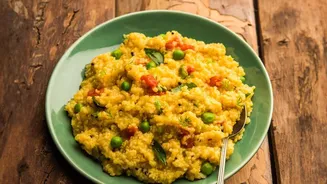
Dalia's versatility is both a pro and a con for the health-conscious. A simple, savoury vegetable dalia, made with minimal oil and loaded with greens, is a low_calorie, high_fibre meal perfect for weight management. It’s a complex carb that digests slowly, keeping you full for longer. However, if you prepare 'meetha dalia' by cooking it with full_fat milk, sugar, and generous amounts of nuts, it transforms into a calorie_dense dessert. While still offering the benefits of whole grains, its purpose shifts from a light meal to a rich, energy_heavy dish. The healthiest way to enjoy dalia is typically in its savoury form, known as dalia khichdi, often prepared with moong dal and vegetables.
Perfecting Your Khichdi
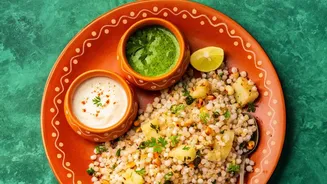
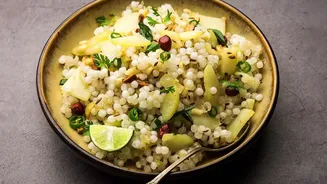
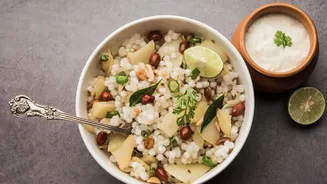
Similarly,, not all khichdis are created equal.. A simple moong dal khichdi with a pinch of turmeric,, prepared with a higher dal_to_rice ratio,, is a light,, protein_rich,, and easily digestible meal.. You can make it even healthier by swapping white rice for higher_fibre options like brown rice,, millets,, or even dalia itself.. On the other hand,, restaurant_style or festive khichdi,, often made with a rich 'tadka' of ghee and spices,, and sometimes including potatoes or sabudana,, can be significantly higher in calories and fat.. The choice of dal also matters;; moong dal is the lightest and easiest to digest,, while other lentils might make the dish heavier.
The Verdict: It Depends on Your Goal
So,, which is better? If your goal is maximum fibre intake and better blood sugar control,, dalia made as a savoury preparation is an outstanding choice due to its low glycemic index and high fibre content from whole wheat.. If you're looking for a complete protein source that is extremely easy to digest and soothing for the gut,, a simple moong dal khichdi is the winner.. For weight loss,, both can be excellent options,, provided they are cooked with minimal fat and plenty of vegetables to increase satiety.. The 'unhealthiest' version of either is one loaded with excessive ghee,, butter,, or sugar.