

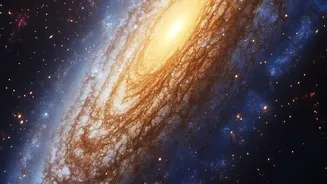
A Universe in Motion
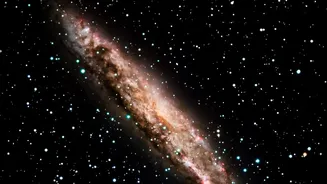
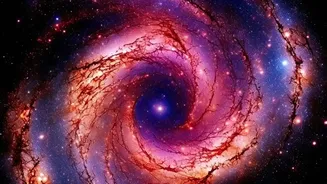
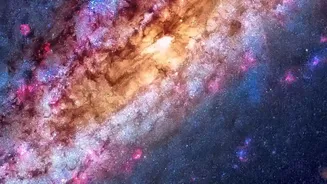
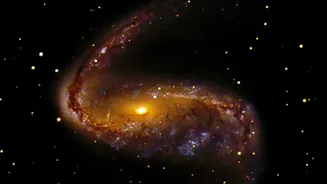
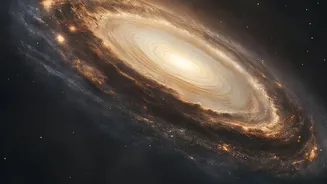
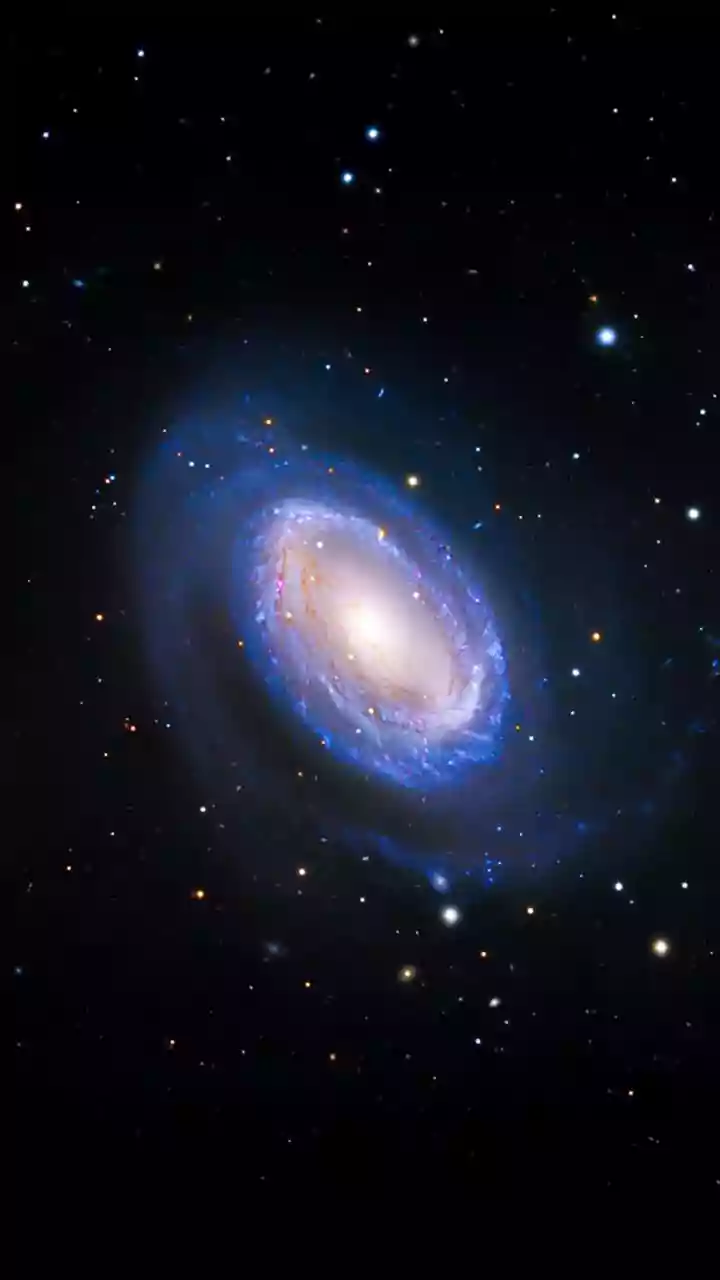
When we gaze at images of distant galaxies, we tend to see them as serene, finished objects—glittering spirals and glowing ellipses suspended in the blackness of space. For a long time, scientific models treated them similarly, as entities that formed
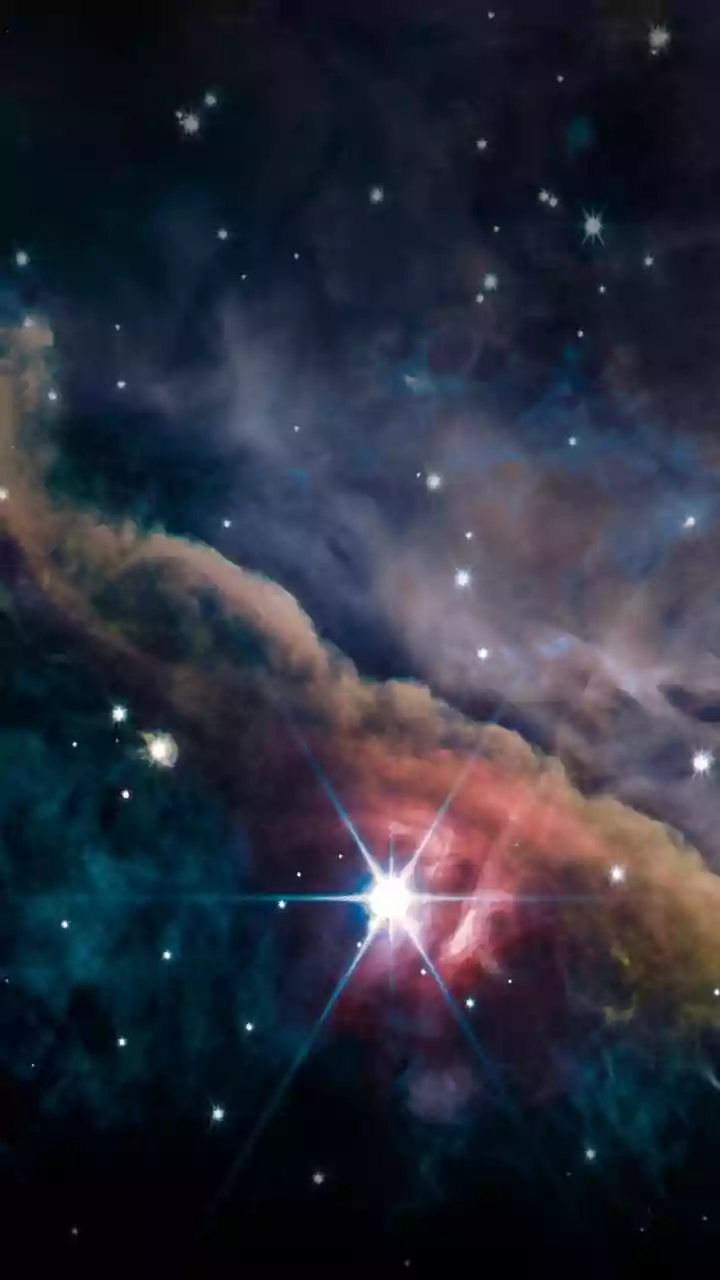
and then changed only slowly over billions of years. But this placid view is being dramatically rewritten. Recent discoveries, powered by instruments like the James Webb Space Telescope (JWST), show that galaxies, particularly in the early universe, are anything but static. They are turbulent, chaotic systems constantly undergoing violent transformations. These fresh insights reveal a cosmos defined by dramatic events: galaxies merging, stars being born in ferocious bursts, and supermassive black holes expelling vast quantities of gas. This is the story of a dynamic universe, where change is the only constant.
What the New Telescopes See
The JWST, with its unparalleled sensitivity to infrared light, can peer back in time to when the universe was in its infancy. In this early epoch, astronomers are discovering that galaxies were surprisingly active. For example, recent studies of galaxies observed as they were about 9 billion years ago show that many had already stopped forming stars—a process called 'quenching'. While they look calm on the surface, the JWST revealed subtle signs of disturbance, suggesting they had recently undergone a violent merger with another galaxy. Another puzzle is the discovery of numerous 'Little Red Dots' (LRDs), which are thought to be the cores of primordial galaxies powered by supermassive black holes. These objects, seen just 600 million to 1.6 billion years after the Big Bang, challenge our understanding of how such massive black holes could form so quickly. These LRDs are likely the building blocks of modern galaxies, caught in the act of rapid, dusty star formation.
The Engines of Galactic Change
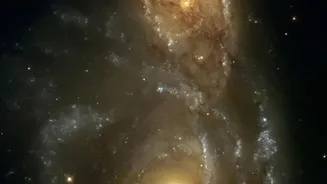
So, what drives this relentless activity? One of the primary engines is galactic mergers. When two galaxies collide, their gravitational forces throw everything into disarray, triggering massive bursts of star formation. Computer simulations show that even our own Milky Way likely experienced a major 'disc flip' after a head-on collision in its distant past, dramatically changing its orientation. Another key factor is the supermassive black hole lurking at the centre of most galaxies. As these behemoths feed on surrounding gas and stars, they can release enormous amounts of energy, creating powerful winds that can either trigger or shut down star formation in the host galaxy. In a dramatic example, NASA’s Swift Observatory recently spotted a wandering supermassive black hole, far from its galaxy's centre, as it tore apart and consumed a star. These processes create a complex cosmic ecosystem where galaxies are constantly being reshaped by both internal and external forces.
Rewriting Cosmic History
These new observations are forcing astronomers to rethink fundamental theories of galaxy evolution. The old 'bottom-up' model suggested that small galaxies formed first and slowly merged to create larger ones over cosmic time. While this is still broadly true, the timeline appears to be far more compressed and violent than previously thought. The discovery of highly evolved and even 'quenched' (inactive) galaxies in the early universe suggests that some galaxies grew up incredibly fast and then abruptly stopped. The existence of massive, well-organized galaxy clusters more than 10 billion years ago challenges models that predict such structures should take longer to form. Every new image and data point helps astronomers refine our origin story, showing that the path from the Big Bang to the galaxies we see today was not a gentle drift, but a dramatic and turbulent journey.
India's Window to the Cosmos
This quest to understand the universe is a global endeavour, and India is an increasingly vital participant. Indian astronomers are active collaborators in major international projects. Notably, India is a key partner in the Thirty Meter Telescope (TMT) project, poised to be one of the most advanced optical telescopes on Earth. Additionally, Indian researchers make significant use of data from facilities like the Subaru Telescope, which recently helped discover some of the most distant quasars ever found. These collaborations ensure that Indian scientists are at the forefront of discovery, contributing to and shaping our new understanding of the dynamic cosmos. As we build more powerful tools to look deeper into space, we can expect India's role in uncovering the secrets of galaxy evolution to continue to grow, bringing the mysteries of the distant universe closer to home.