




1. Your Tyres Are Your First Defence
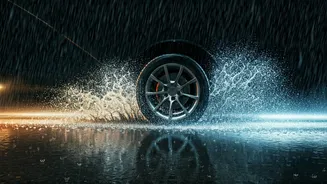
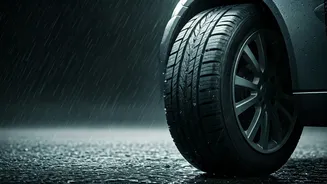
Before you even turn the key, your safety begins with your tyres. In wet conditions, the tread on your tyres is crucial for channelling water away and maintaining grip. A worn-out tyre can't do this effectively, leading to a dangerous phenomenon called
hydroplaning. Check your tyre pressure regularly, as under-inflated tyres can also compromise handling. Most importantly, inspect the tread depth. The common 'one rupee coin test' is a good start: if you can see the entire Ashoka lion emblem when the coin is inserted into the tread, your tyres are likely too worn and need immediate replacement. Don't wait for the downpour to discover your tyres are bald.
2. Understand and Avoid Hydroplaning
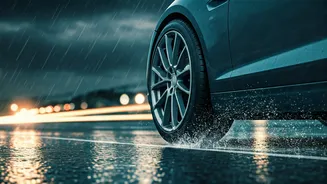
Hydroplaning is when a layer of water builds between your tyres and the road surface, causing a complete loss of traction and steering control. It feels like skating on ice. It can happen at speeds as low as 50 km/h in heavy rain. If you feel your car start to hydroplane, do not panic and slam the brakes or jerk the steering wheel. Instead, ease your foot off the accelerator smoothly and keep the steering wheel straight. Let the car slow down on its own until you feel the tyres regain contact with the road. The best way to deal with hydroplaning is to prevent it: slow down significantly in heavy rain and avoid driving through large puddles of standing water.
3. The Hidden Dangers of Waterlogged Roads
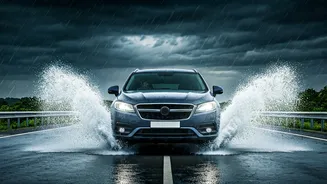
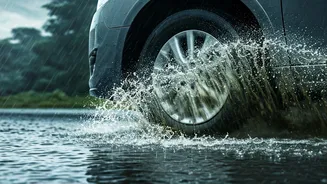
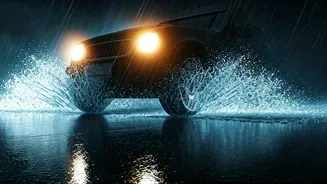
A flooded street is one of the biggest monsoon hazards in Indian cities. What looks like a shallow puddle could be hiding a deep, car-swallowing pothole or an open manhole. Never drive into standing water if you cannot gauge its depth. If other cars are struggling or stalled, turn back. If you must proceed, drive slowly and steadily in a low gear (first or second) to keep the engine RPMs high, which helps prevent water from entering the exhaust pipe. Splashing through water at high speed not only risks damaging your engine's electronics but is also inconsiderate to pedestrians and other motorists.
4. Double Your Following Distance
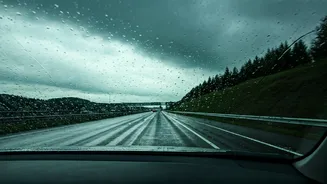
Braking distances can more than double on wet roads. The usual 'three-second rule' for maintaining a safe following distance in dry weather is not enough. During rain, extend this to at least five or six seconds. This gives you more time to react if the vehicle ahead of you suddenly brakes or swerves. Tailgating in the rain is exceptionally dangerous, as it leaves you with no margin for error. Remember, the spray from the vehicle in front can also obscure your vision, making it even harder to judge distance and speed. Give yourself space.
5. See and Be Seen
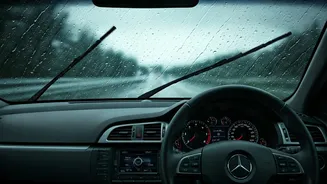
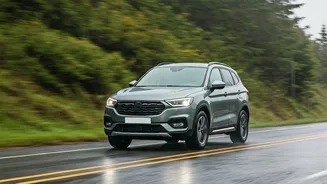
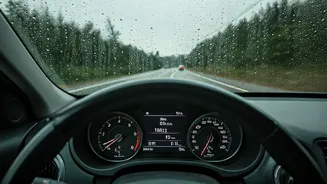
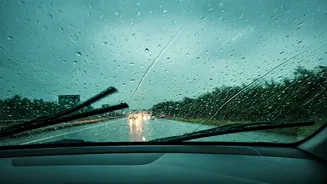
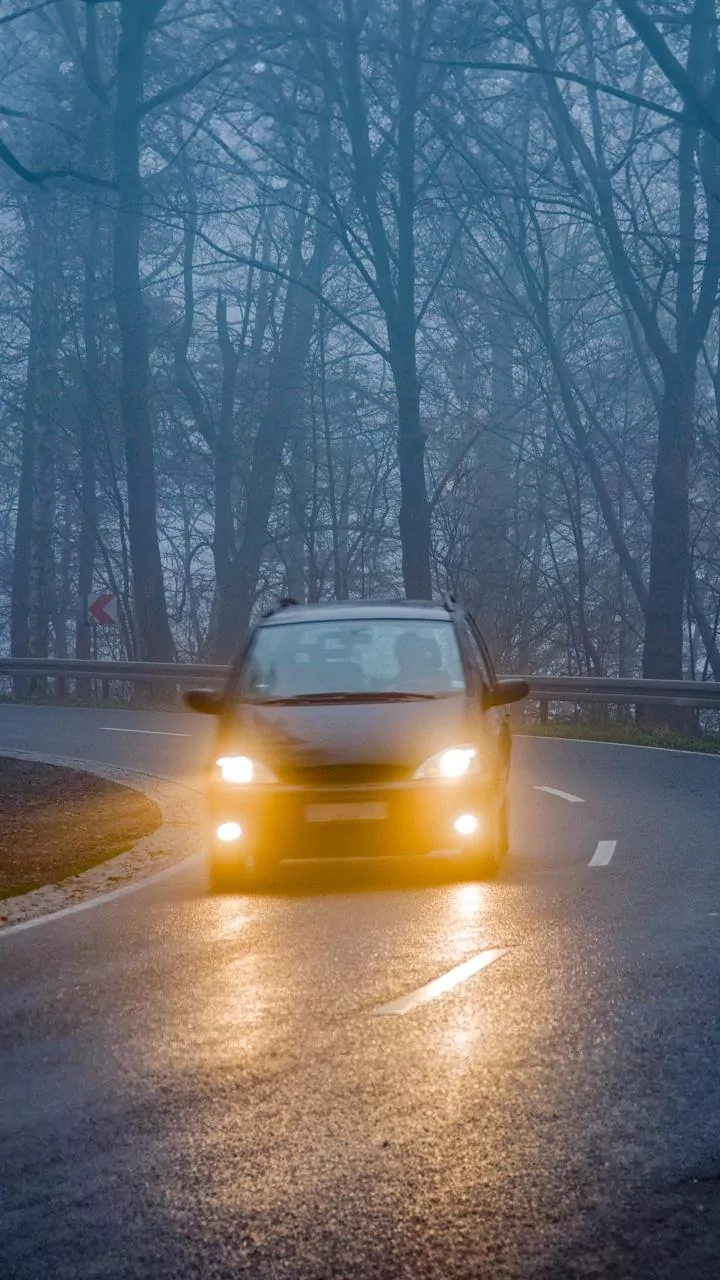
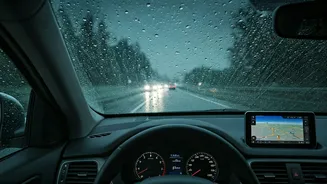
Visibility is drastically reduced for everyone during a downpour. It’s not just about you seeing the road; it’s about other drivers, cyclists, and pedestrians seeing you. Turn on your headlights (on low beam) as soon as it starts raining, even during the day. This makes your vehicle far more visible. Ensure your windshield wipers are in good condition and can clear the glass without smearing. Also, use your car's defogger to keep the front and rear windshields clear of condensation. Avoid using your hazard lights while moving, as this can be confusing; they are meant for when your vehicle is stationary and causing an obstruction.
6. If Your Car Stalls, Don't Panic
If your car stalls after driving through deep water, do not try to restart the engine immediately. Doing so can cause catastrophic and expensive engine damage, a condition known as hydrostatic lock, where water gets into the cylinders. Instead, turn on your hazard lights, put the car in neutral, and if it's safe to do so, try to push it to the side of the road. Call for roadside assistance. It's far better to wait for a professional than to risk turning a manageable problem into a total engine failure.