


What Exactly Are You Looking For?
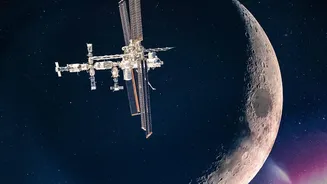
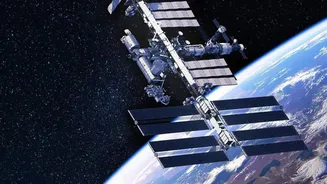
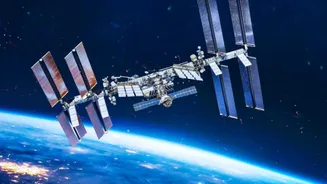
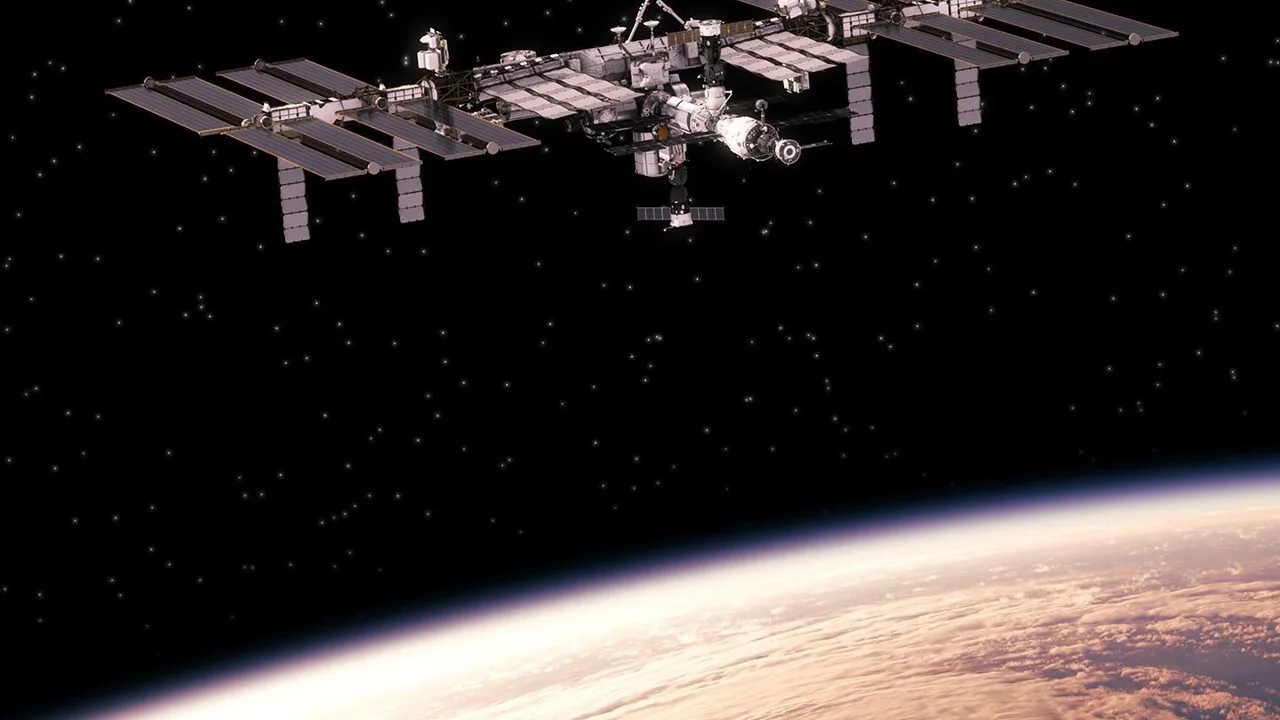
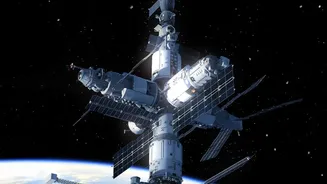
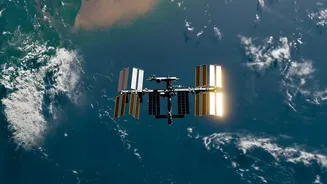
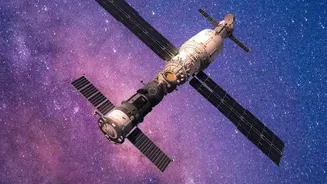
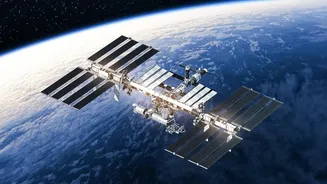
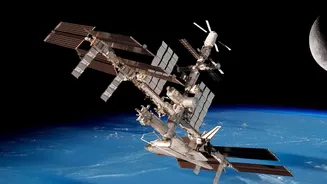
The International Space Station is a large spacecraft and orbital laboratory that has been continuously occupied by astronauts since November 2000. It orbits the Earth at a staggering 28,000 kilometres per hour, completing a full circle every 90 minutes.
Because it reflects sunlight, the ISS is visible from the ground without a telescope. To the naked eye, it appears as a very bright, fast-moving star or a non-blinking airplane. It doesn’t have flashing lights like a plane and travels much faster. The best times to see it are a few hours before sunrise or after sunset, when the sky is dark but the station is high enough to catch the sun's rays.
Finding NASA's Spot The Station Service
To make finding the ISS easy, NASA created a free service called Spot The Station. This is the official and most reliable tool for getting viewing schedules. You can access it through the Spot The Station website or by downloading the official mobile app for iOS and Android devices. The website allows you to look up upcoming sighting opportunities for any location on Earth. Simply enter your country, state, and city to get a list of potential viewing times. The app offers the same functionality but with the added convenience of push notifications and other features.
How to Sign Up for Alerts
One of the most useful features of the Spot The Station service is its alert system. You can sign up on the website to receive an email or text message a few hours before the station is scheduled to fly over your area. This ensures you never miss a good viewing opportunity. If you use the mobile app, you can enable push notifications that will alert you to upcoming passes based on your location. These alerts are sent for good viewing opportunities, typically when the station will be high enough in the sky to be clearly visible above trees and buildings.
Decoding the Sighting Information
When you get an alert or look up a sighting, NASA provides a few key pieces of information to help you. 'Time' refers to the local time the pass will begin. 'Visible' (or 'Above the Horizon') tells you how long the station will be in sight, which can range from under a minute to over five minutes. 'Max Height' is a crucial detail; measured in degrees, it tells you how high the station will get in the sky. Zero degrees is the horizon, while 90 degrees is directly overhead. Higher passes are generally brighter and easier to see. Finally, 'Appears' and 'Disappears' tell you the compass directions where you should look to see the station enter and exit your field of view.
Tips for a Perfect Sighting
To make the most of your viewing experience, find a spot with a clear, unobstructed view of the sky, away from bright city lights if possible. An open park or field is ideal. Head outside a few minutes before the scheduled time to let your eyes adjust to the darkness. Use the 'Appears' direction to know where to start looking. Remember, you don't need any special equipment like binoculars or a telescope, though binoculars can make the station appear brighter. The sight of this silent, brilliant light gliding across the cosmos is a powerful reminder of the human presence in space, a shared experience available to anyone who simply remembers to look up.