







The Deluge in Our Cities
For residents of Mumbai, Chennai, Bengaluru, or Delhi, the sight of cars submerged on arterial roads and water entering homes is a painfully familiar annual trauma. Rapid, often unplanned, urbanisation has transformed our cities into vast stretches of concrete
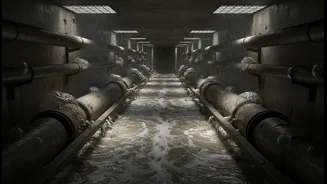
and asphalt. These impervious surfaces prevent rainwater from seeping naturally into the ground. Instead, it is funnelled into ageing drainage systems that are frequently overwhelmed by the increasing intensity of rainfall, a trend exacerbated by climate change. The result is flash flooding that not only causes massive economic damage but also poses significant risks to public health and safety. For decades, the answer has been sought in conventional engineering: widening drains, building higher embankments, and installing more powerful water pumps. While important, these measures are often a step behind the escalating problem.
An Unseen Underground Force
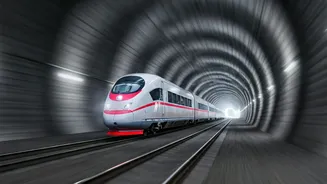
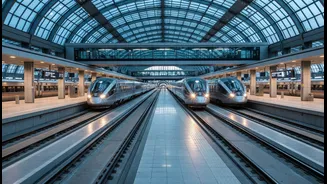
Beneath our bustling cities lies another world: a network of underground metro tunnels. And within these tunnels is a powerful, often overlooked, phenomenon. When a train speeds through a tunnel, it acts like a giant piston in a cylinder. It pushes a massive column of air ahead of it, creating a high-pressure zone, while simultaneously pulling air in behind it, creating a low-pressure zone. This phenomenon, known as the 'piston effect', is something commuters experience every day as a gust of wind heralding an approaching train. For years, this effect was primarily a concern for engineers designing ventilation systems to ensure passenger comfort and safety. But now, innovative thinkers are asking a new question: can this powerful movement of air be harnessed for a completely different purpose?
Harnessing the Piston Effect to Fight Floods
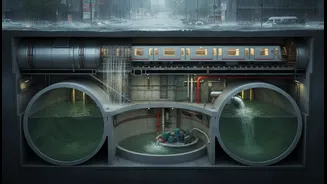
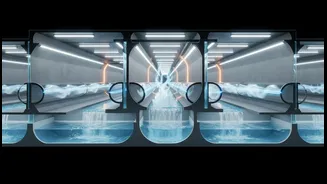
The core idea is surprisingly elegant. Imagine a city where the metro tunnels are integrated with the stormwater drainage network through a system of smart gates and channels. During a heavy downpour, as floodwater begins to overwhelm the surface drains, this system would kick into action. The immense pressure generated by a passing train could be strategically directed to push or pull large volumes of water through this interconnected network. In essence, the piston effect could act as a supplementary, high-powered pump, helping to move floodwater away from critical inundated areas towards larger drainage channels, holding tanks, or rivers more efficiently. Research has shown that falling water in shafts can also push air like a piston, suggesting that the interplay between air and water in underground systems is a powerful force that can be engineered. This turns the entire metro system into a dynamic, active part of the city's flood defence infrastructure.
From Theory to Reality
This is not just a far-fetched theory. Engineers and urban planners globally are exploring ways to make underground infrastructure more resilient and multi-functional. While the specific application of the piston effect for floodwater management is still in its nascent stages, the underlying principles are sound. The concept builds on existing ideas like 'smart drainage systems' which use sensors and automated controls to manage water flow in real-time. It also aligns with the development of multi-purpose infrastructure, such as Kuala Lumpur's SMART Tunnel, which functions as both a traffic tunnel and a stormwater diversion channel. Realising such a project would require advanced computational fluid dynamics (CFD) modelling to understand the complex interactions between air, water, and train movements. Retrofitting existing metro systems would be a significant engineering challenge, but incorporating such designs into new underground infrastructure projects could be far more feasible.
Challenges and the Path Forward for India
For India's rapidly expanding cities, this concept holds immense promise. With massive investments in metro networks across the country, from the established lines in Delhi and Kolkata to the newer systems in Pune and Ahmedabad, there is a unique opportunity to think about 'dual-use' design from the ground up. However, the challenges are considerable. The initial investment in the required technology—smart gates, sensors, and control systems—would be substantial. There would also be a need for intricate coordination between municipal corporations, which manage drainage, and the metro authorities. Sceptics might point to the complexities of retrofitting legacy systems or the risk of malfunction. Yet, the potential benefits—a drastic enhancement of flood resilience without needing more surface-level space in already congested cities—are too significant to ignore. As our cities continue to grow, moving beyond single-purpose infrastructure and embracing innovative, integrated solutions will be key to building a safer, more sustainable urban future.