






An Unpredictable Rhythm
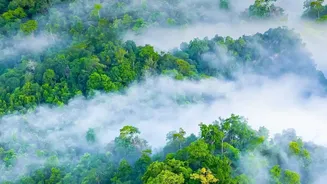
The predictable pulse of the Indian monsoon has nourished the subcontinent's diverse forests for millennia. From the moist deciduous forests of the Western Ghats to the dry teak forests of central India, ecosystems are tuned to this seasonal rhythm. However,
climate change is rewriting the rules. Scientific studies now point to a worrying trend: it's not just about the total amount of rain, but its character. The new normal involves long, arid spells punctuated by short, aggressive bursts of extreme rainfall. This variability is creating a two-pronged threat, pushing forests to their limits through both intense water scarcity and sudden deluges.
The Stress of Scarcity
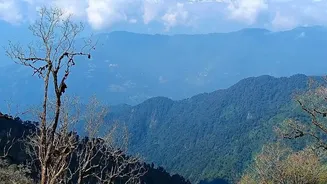
Periods of drought and rising temperatures create a combined moisture stress that can be devastating for trees. When water is scarce, trees struggle to cool their leaves, leading to cell damage and hindering photosynthesis. This condition, known as 'ecological drought', is causing widespread 'browning'—a visible decline in vegetation health—in regions like the Himalayas, the Northeast, and the Western Ghats. A recent study on the Panchmarhi Biosphere Reserve in central India found that lower precipitation and higher temperatures have significantly increased the risk of forest fires. Dry deciduous forests, which function closer to their moisture limits, are particularly vulnerable, with some species facing mortality during multi-year droughts. This stress can ultimately weaken the ability of these forests to act as vital carbon sinks.
The Damage of Downpours
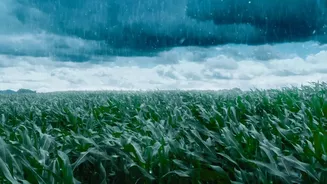
While drought is a clear danger, the other extreme—intensely concentrated rainfall—is just as harmful. The torrential downpours that have become more frequent in recent years do not allow water to percolate gently into the ground. Instead, the powerful runoff strips away nutrient-rich topsoil, which is essential for a healthy forest undergrowth. In mountainous regions like the Western Ghats and the Himalayas, this phenomenon dramatically increases the risk of landslides, which can decimate entire forest patches in an instant. Studies show that areas with high rainfall velocity are experiencing significant forest loss. This intense precipitation can also disrupt the lifecycles, or phenology, of trees and plants, affecting everything from flowering to photosynthesis.
A Ripple Effect Across Ecosystems
The impacts of these rainfall changes ripple outwards, affecting entire ecosystems. For instance, shifts in tree lifecycles can desynchronise the relationship between plants and their pollinators, threatening biodiversity. In the Western Ghats, changes in rainfall patterns have been linked to the disappearance of certain bird species. Some studies suggest that under continued stress from rainfall variability, some forest landscapes could even transition towards more savanna-like ecosystems, which support different kinds of life. The health of these forests is not an isolated issue; it is directly linked to India's water security, as forests play a critical role in regulating water flow into rivers and streams. Degradation of these catchment areas can have severe consequences for agriculture and communities downstream.
The Human Connection and the Path Forward
The changes occurring in India's forests are not merely academic. They have profound implications for the millions of people whose livelihoods depend directly on forest resources for fuel, fodder, and food. A decline in forest health threatens this vital support system. Moreover, human activities like deforestation often worsen the impacts of erratic rainfall, creating a vicious cycle of degradation. Researchers stress that understanding how these ecosystems respond to climate variability is critical for developing effective, evidence-based forest management and adaptation strategies. Protecting biodiversity is seen as a key strategy, as more diverse forests are often more resilient to change. A forest with a wide variety of species is more likely to contain some that can survive and adapt to the new climatic realities, helping to keep the ecosystem intact.