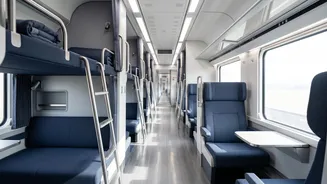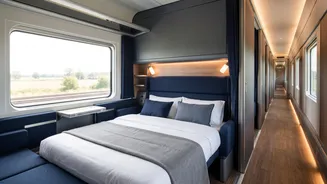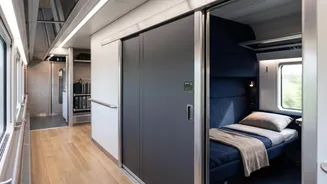





The new Vande Bharat sleeper trains introduce a thoughtful design tweak aimed at a common passenger grievance: a sliding door. This feature subtly redefines personal space on overnight journeys by creating a buffer from corridor traffic.
A New Division in Comfort
Anyone who has
travelled overnight on an Indian train, especially in berths near the coach entrance, knows the struggle. Constant movement of passengers and vendors, coupled with the noise from doors, can disrupt sleep. The Vande Bharat sleeper prototype, unveiled by BEML, introduces a simple yet effective solution: a sliding door that creates a distinct separation between the main passenger entry/exit area and the sleeping berths. This design carves out a vestibule-like space, ensuring that the berths are no longer immediately adjacent to the high-traffic zone by the main doors. The goal is to minimize the disturbances that have long been a pain point for those in the end-of-coach berths, promising a more peaceful journey.
The Primary Goal: Uninterrupted Rest
The main purpose of this sliding partition isn't a high-tech marvel, but a practical response to passenger feedback. By physically separating the sleeping bay from the commotion of the entrance, Indian Railways aims to enhance passenger privacy and reduce disturbances. A recent viral video by a travel content creator highlighted this very feature, showcasing how the additional space prevents the direct impact of corridor traffic on resting passengers. This is particularly beneficial in AC 3-tier coaches, where density is higher and movement is more frequent. The design acknowledges that a good night's sleep depends not just on the berth's cushioning, but also on the environment around it. This is less about silence and more about serenity.
Managing the Noise Expectation
The headline's point is crucial: this feature is not officially marketed as a soundproofing solution. While separating the berth area from the main door will likely have a positive effect on noise levels for nearby passengers, its primary stated function is to manage passenger flow and create a physical buffer. The Vande Bharat sleeper trains do incorporate other noise-reduction measures, such as improved insulation and fully sealed gangways, to create a calmer cabin atmosphere overall. The sliding door is one component of a broader strategy to enhance comfort. It is designed to reduce disturbances from movement, with any noise reduction being a welcome but secondary benefit, rather than a guaranteed specification of the door itself.
A Glimpse into the Future of Rail
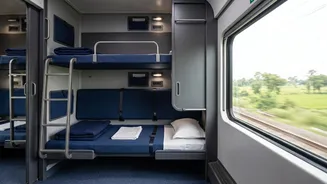
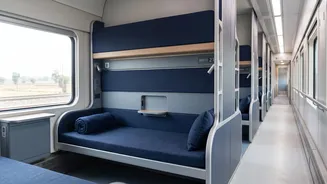
This sliding door is part of a comprehensive upgrade in the Vande Bharat sleeper, which is designed to rival airline travel for long distance routes. The trains, capable of operating at 160 kmph, feature a host of modern amenities. These include ergonomically designed berths with superior cushioning, sensor based intercommunication doors, integrated reading lights with USB ports, modern vacuum based toilets, and a shower with hot water in the First AC coach. Safety has also been enhanced with crashworthy elements, advanced fire safety standards, and CCTV surveillance. Together, these features signal a significant shift in Indian Railways' approach, prioritizing a holistic and world class passenger experience over singular upgrades.