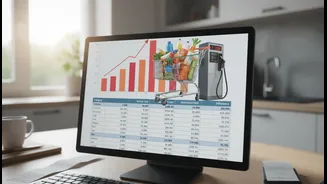









What the June Numbers Mean for You
India's retail inflation, as measured by the Consumer Price Index (CPI), rose to 4.38% in June, an 18-month high that pushes it past the Reserve Bank of India's 4% target. The main drivers of this increase are the items you buy most frequently: food and
fuel. Food inflation climbed to over 5.3%, with sharp price increases seen in vegetables like tomatoes and ginger, while transportation costs also jumped significantly. For a young family, this isn't abstract economic data. It directly translates to higher bills for groceries, costlier commutes, and more expensive cooking gas, squeezing your monthly budget from multiple sides.
Pinpoint Your 'Cost Drift'
Financial experts often talk about 'cost drift'—the slow, almost invisible increase in spending that happens when you're not paying close attention. It’s the extra food delivery you order because you’re tired, the subscription you forgot to cancel, or the slightly more expensive brand you pick up at the store. Over time, these small drifts compound. The first step to rebalancing is to see exactly where your money is going. Dedicate one month to meticulously tracking every expense. Use a simple notebook, a spreadsheet, or a budgeting app. The goal is to get an honest picture of your actual spending habits, not what you think they are. This audit will reveal the gaps between your intended budget and your real-world financial behaviour.
Identify Budget Pressure Points
With your spending audit complete, compare it against the backdrop of the latest inflation figures. The pressure points will likely be obvious. Transport and food are the two areas where recent price hikes have been most pronounced. Look closely at your variable expenses in these categories. How much did you spend on eating out versus cooking at home? Could you consolidate trips to save on petrol or diesel? Beyond the essentials, examine your 'wants'. Are there entertainment subscriptions, frequent online shopping habits, or other discretionary costs that have crept up? Identifying these specific areas of overspending is crucial because it allows you to make targeted cuts rather than feeling like you have to slash everything.
The Art of Rebalancing: Shift, Don't Just Slash
Rebalancing isn't about extreme deprivation; it's about making conscious choices. The popular 50/30/20 rule—where 50% of income goes to needs, 30% to wants, and 20% to savings—is a useful starting point, but it needs to be flexible during high inflation. If your 'needs' bucket is now taking up 55% or 60% of your income due to rising costs, that extra 5-10% has to come from somewhere. The goal is to consciously shift funds from your 'wants' to cover your 'needs'. This might mean reducing your entertainment budget to accommodate the higher grocery bill, or cutting back on new clothes to cover the increased cost of your commute. By actively reallocating funds, you take control, ensuring your savings goals aren't the first casualty of rising prices.
Make Your Review a Regular Habit
Inflation isn't a one-time event, and your budget review shouldn't be either. The June data is a catalyst for action now, but the real benefit comes from turning this into a recurring financial habit. Set a calendar reminder to review your budget every three or six months. This regular check-in helps you stay ahead of cost drift and make small adjustments before they become big problems. It transforms your household's financial management from being reactive—panicking when costs are already high—to being proactive. Automating your savings on salary day is another powerful step that ensures your future goals are prioritized before discretionary spending can consume your entire income. By making these practices routine, you build financial resilience that can weather any economic climate.