




A New Chapter in Space Exploration
In a significant moment for India's burgeoning private space sector, the Technopark-based startup HEX20 has been selected to develop key systems for an ambitious asteroid probe. The project is part of the United Arab Emirates' (UAE) 'Emirates Mission
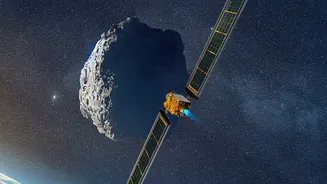
to the Asteroid Belt' (EMA), a multi-year endeavour to explore seven different asteroids. HEX20's involvement makes it the first private Indian company to be part of a deep-space mission led by the Gulf nation, signalling a major leap for commercial space ventures from the subcontinent. The company is providing its expertise in spacecraft engineering for the mission's interplanetary probe, which will eventually be deployed to study the asteroid 269 Justitia.
HEX20's Critical Contribution
Selected by the UAE Space Agency and the Technology Innovation Institute (TII) in late 2024, HEX20 was tasked with developing the probe's core infrastructure. This includes the spacecraft bus—the physical structure that houses the payload—as well as the mission software, onboard computer, and power systems. These components are crucial, as they must withstand the extreme conditions of a multi-billion-kilometre journey through deep space. The firm, which has engineering operations in Thiruvananthapuram and a presence in the UAE's Masdar City, delivered the complex systems in a tight timeframe of just 15 months, a testament to its engineering capabilities.
The Challenge of 'Autonomous' Operation
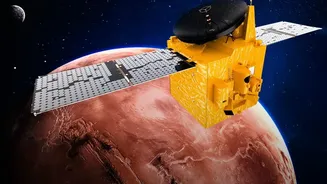
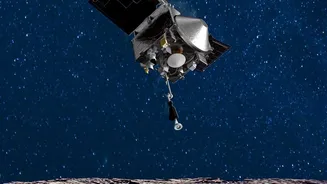
What makes this probe particularly advanced is its autonomy. After a long journey aboard the main MBR Explorer spacecraft, the lander will separate and perform its final descent to the asteroid Justitia on its own. While the mothership remains in communication with Earth, the probe itself will execute its functions without real-time commands from mission control. This is a significant engineering feat, as autonomous navigation and operation are essential for exploring distant celestial bodies where communication delays can take many minutes. Technologies like AI-powered navigation and onboard decision-making are crucial for the probe to analyse its surroundings and complete its mission successfully.
A 5-Billion-Kilometre Journey to Justitia
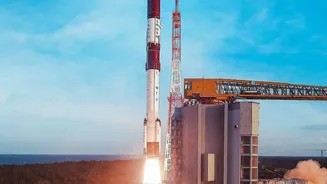
The mission timeline is nothing short of epic. Scheduled to launch in March 2028, the MBR Explorer will travel for nearly a decade, using gravity assists from Venus, Earth, and Mars to navigate the main asteroid belt. It will fly by six other asteroids before reaching its primary target, 269 Justitia, in 2034. After entering orbit, it will deploy the HEX20-engineered probe for its autonomous landing in 2036. The target itself, Justitia, is of immense scientific interest due to its unusual reddish hue, which suggests it may have originated in the far reaches of the solar system and could hold clues about the distribution of water and organic materials.
Why This Mission Matters
This project is more than just a single mission; it represents a major trend in space exploration. The involvement of private companies like HEX20, founded by individuals with roots in a small southern Indian city, underscores the global and commercial shift in the space industry. For decades, space was the exclusive domain of national agencies, but policy reforms in countries like India have paved the way for a vibrant startup ecosystem. Missions like this not only push the boundaries of science but also pave the way for future industries like asteroid mining, which could one day provide essential resources. By proving their capabilities on such a demanding international stage, companies like HEX20 are positioning India as a key player in the trillion-dollar global space economy.