


The Difference Between Surviving and Thriving
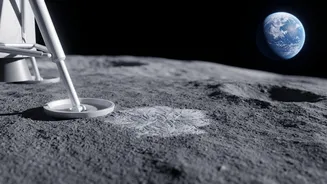
Recent headlines were sparked by a NASA-led study modeling how certain Earth microbes might fare on the Moon. The research found that in permanently shadowed craters near the lunar south pole, where they would be shielded from intense solar radiation,
some resilient fungi and bacteria could potentially survive for a period of weeks or months. Specifically, a common black mold called Aspergillus niger proved exceptionally tough due to its high resistance to UV radiation. This has led to exciting speculation, but scientists are quick to clarify a crucial point: survival is not the same as thriving. The microbes in these scenarios would be in a dormant, non-reproductive state, essentially paused in time. For life to be 'sustained,' organisms need to actively grow, metabolize, and reproduce—something the lunar surface does not allow.
An Incredibly Hostile Environment
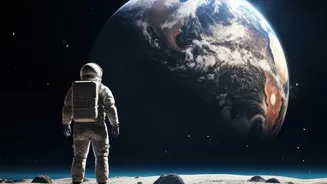
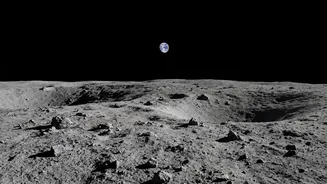
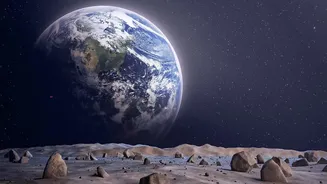
The Moon remains one of the most inhospitable places imaginable. Its primary challenges for life as we know it are formidable. First, there is no meaningful atmosphere. This means there is no air to breathe, no atmospheric pressure to support liquid water, and no shield against a constant bombardment of micrometeoroids and cosmic radiation. Second, the temperature swings are violent, ranging from a scorching 127°C in the sun to a cryogenic -173°C in the dark. While permanently shadowed craters offer stable, cold temperatures, they don’t solve the other problems. Radiation, both from the sun and deep space, is perhaps the biggest hurdle. Earth’s magnetic field and atmosphere protect us, but on the Moon, this radiation shreds complex molecules and damages cellular structures, making active life on the surface impossible without heavy shielding.
What About Extremophiles Like Tardigrades?
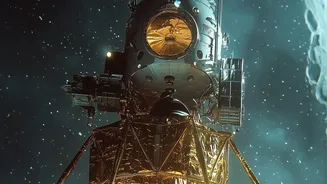
When discussing life in extreme environments, the tardigrade, or 'water bear,' often comes up. These microscopic creatures are famous for their ability to enter a state of suspended animation called cryptobiosis to survive unbelievable conditions, including the vacuum of space. In 2019, a number of dehydrated tardigrades were aboard Israel's Beresheet lander when it crashed on the Moon. While it’s possible some survived the impact in their dormant state, they are not 'living' on the Moon. To become active again, a tardigrade needs liquid water, food, and oxygen—none of which are available on the lunar surface. They are not colonizing or evolving; they are simply waiting in a state that they cannot escape from without being returned to a habitable environment. Their presence highlights the distinction between enduring a harsh place and living in it.
The Ingredients for a Habitable World
For a celestial body to be considered 'habitable' in the way scientists define it, a few key ingredients are non-negotiable. The most critical is the presence of stable, liquid water. While we have found water ice in the Moon’s polar craters, it remains frozen and inaccessible. A habitable world also needs a consistent energy source, essential nutrients and chemical building blocks, and protection from lethal radiation. The Moon fundamentally lacks several of these key requirements. It has no system for circulating nutrients, no protective atmosphere, and no liquid water on its surface. Even if we were to introduce the toughest microbes from Earth, they would find no purchase, no food, and no way to build a self-sustaining population.
Why This Finding Still Matters
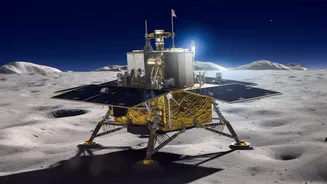
So, if the Moon can’t sustain life, why is the survival of a few microbes important? The findings are crucial for a different reason: planetary protection. As humans prepare to return to the Moon with the Artemis missions, we need to understand that we will inevitably bring microbial hitchhikers with us. Knowing that some of these microbes could survive for a time in sheltered areas means we risk contaminating the very sites we want to study for their pristine, ancient chemistry. This research helps NASA and other space agencies develop protocols to minimize contamination, ensuring that when we eventually search for signs of life on Mars or elsewhere, we don’t just end up finding ourselves.