




Rugs That Define a Room
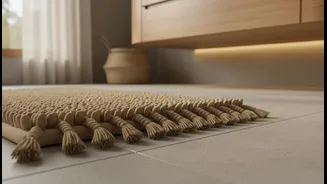
The simplest way to create a 'room within a room' is with a rug. An area rug acts as a visual anchor, grouping furniture together and telling your eyes where one zone ends and another begins. In a large room that serves as both a living and dining area,
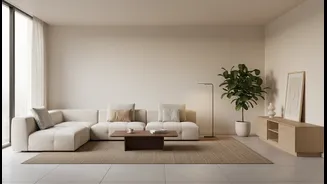
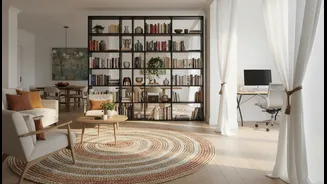
placing a distinct rug under your dining table and another under your sofa and coffee table instantly creates two separate, purposeful spaces. The key is size: for a living area, the rug should be large enough that at least the front legs of your sofa and chairs rest on it. For a dining zone, ensure the rug is big enough for all chair legs to remain on it, even when pulled out. This technique not only defines the space but adds colour, texture, and can even improve acoustics by absorbing sound in large, open areas.
Curtains as Flexible Dividers
Curtains are not just for windows. Hung from a ceiling track, they can become a soft, flexible wall that you can open or close as needed. This is an incredibly versatile solution, perfect for separating a sleeping area in a studio apartment, hiding a home office after work hours, or creating a cosy reading nook. The choice of fabric is crucial. Sheer or voile curtains can create a subtle, airy division without blocking precious natural light, making them ideal for separating a lounge from a dining space. For more privacy or to block light, opaque, thermal, or layered fabrics are a better choice. Installing a ceiling-to-floor curtain creates an elegant, unbroken vertical line that can make the room feel taller and more intentionally designed.
Shelves for Structure and Storage
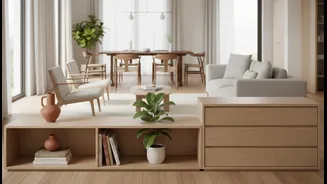
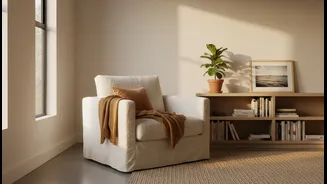
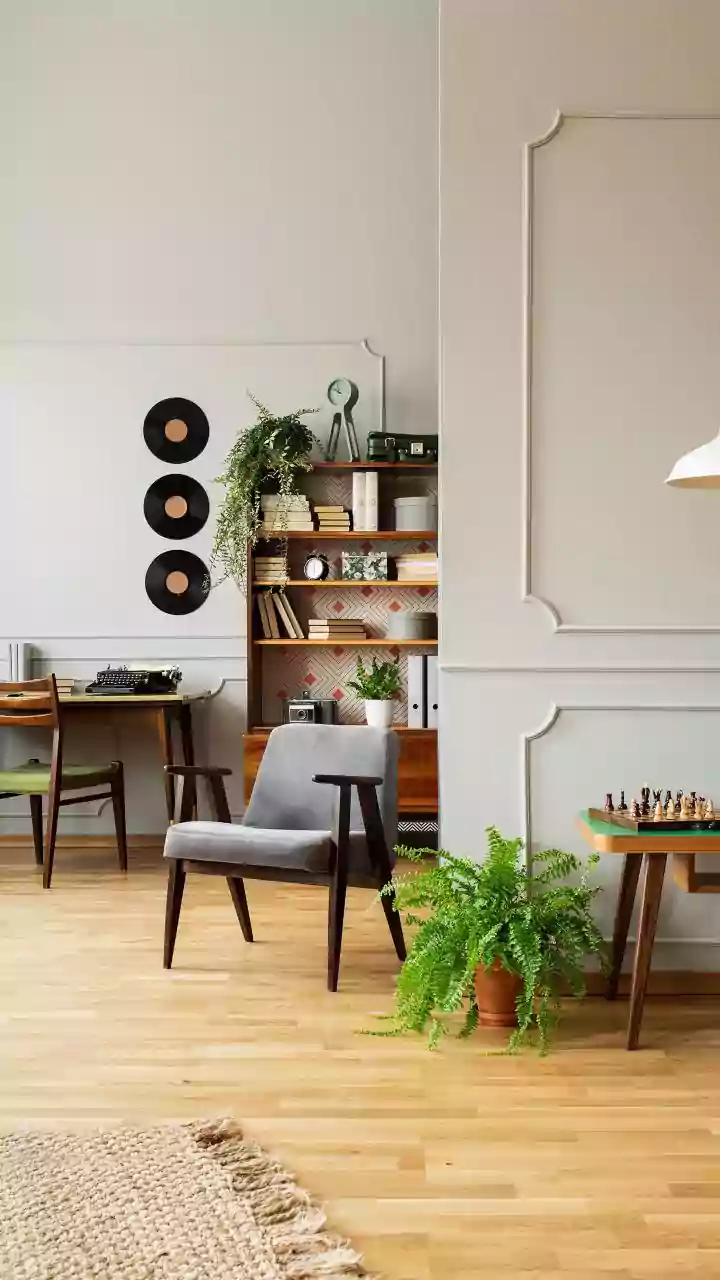
An open-back bookshelf is a classic room divider that offers the best of both worlds: separation and storage. By placing a tall, open shelving unit perpendicular to a wall, you create a semi-permeable barrier that defines a zone without completely blocking light or sightlines. This makes it perfect for sectioning off a living space from an entryway or creating a home office corner. The shelves themselves become a functional and decorative feature. You can fill them with books, plants, and decor to add personality, or use stylish baskets and bins on the lower shelves for concealed storage. The key is to balance function with aesthetics; don't over-clutter the shelves, as the empty space is what allows light to pass through and maintains the feeling of openness.
Combining Techniques for a Cohesive Look
While each of these methods works well on its own, they become even more powerful when used in combination. You might use a large rug to anchor your living area, while a nearby open-backed shelf separates it from a small workspace. To maintain a harmonious feel, try to create a common thread between your chosen dividers. This could be a consistent colour palette, a repeated material, or a similar style. For example, you can coordinate the colours of your rugs, even if they have different patterns. Or, if you use a wooden bookshelf, you might choose a curtain rod with a similar wood finish. The goal is to make these divisions feel like an intentional part of your home's overall design, creating a space that is not only more functional but also more stylish and personalised.