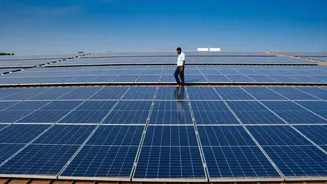







Powering a Million Rooftops
At the heart of India's green energy transition is the 'PM-Surya Ghar: Muft Bijli Yojana', a monumental scheme aiming to install rooftop solar systems on one crore (10 million) households. To turn this vision into reality, the government has launched
a collaborative skilling plan to train a workforce of 100,000 technicians and 50,000 entrepreneurs. This initiative, spearheaded by the Ministry of New and Renewable Energy (MNRE) and the Ministry of Skill Development and Entrepreneurship, is the critical link between policy and execution. It recognizes that achieving the target by 2027 requires more than just panels and subsidies; it needs a legion of skilled hands to ensure quality installation and maintenance across the country.
The Blueprint for a Green Workforce
The skilling strategy is multi-pronged, involving several key institutions. REC Ltd., the nodal agency for the program, is collaborating with bodies like the National Power Training Institute and the National Skill Development Corporation. A major player is the Skill Council for Green Jobs (SCGJ), which has been tasked with upskilling thousands of existing electricians and new entrants through its Recognition of Prior Learning (RPL) and other training programs. These programs, such as the long-running 'Suryamitra' initiative, are designed to create a standardized, certified workforce. The training is comprehensive, often residential, and spans hundreds of hours to ensure trainees are not just certified, but genuinely job-ready.
More Than Just Nuts and Bolts
The skills being imparted go far beyond basic installation. The curriculum is designed to create well-rounded solar professionals. Trainees learn about everything from initial site assessment and system design to the nuances of civil and mechanical mounting structures. Core components include classroom training on solar PV systems, critical safety protocols, and hands-on practicals. Importantly, the programs also include on-the-job training (OJT), where trainees gain real-world experience at project sites under expert guidance. Soft skills and entrepreneurship modules are also integrated, preparing some to become small business owners in the solar ecosystem.
Who Can Become a Solar Technician?
The initiative is designed to be inclusive, targeting a wide range of candidates. The baseline eligibility for many programs, like Suryamitra, is a 10th pass plus an ITI certificate in a technical trade such as Electrician, Wireman, or Fitter. This focus opens up green job opportunities for vocationally trained youth from all corners of the country, with a special emphasis on those from rural backgrounds. Some programs specifically target underprivileged youth, including women and those without formal education, to provide pathways to sustainable livelihoods. For existing electricians, RPL programs offer a chance to get their skills formally recognized and certified, making them eligible for work under the national scheme.
The Bigger Picture: Jobs, Growth, and Climate Action
This skilling initiative is a cornerstone of India's larger strategic goals. By creating an army of green-collar workers, the country is tackling unemployment while simultaneously building the capacity to meet its ambitious renewable energy targets. The International Labour Organization (ILO) has forecasted that India's green transition could add 3 million jobs in the renewables sector alone by 2030. These programs are creating a pipeline of talent to fill those roles. The success of the PM-Surya Ghar yojana, and by extension India’s climate commitments, will depend heavily on the quality and availability of this skilled workforce. It is an investment in human capital that promises to pay dividends for the economy and the environment alike.