



An Innings of Grit and Domination
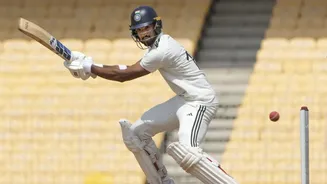
Walking in with India A in a precarious position after being bundled out for a paltry 113 in the first innings, the pressure was immense. The team was trailing by a huge margin and had lost both openers early in the second innings. Padikkal, however,
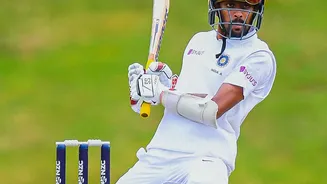
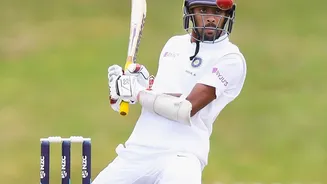
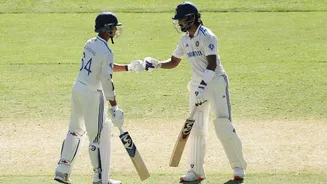
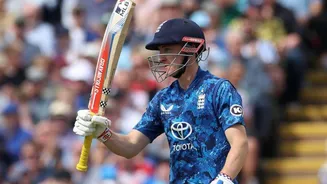
looked unflustered. He crafted his innings with a blend of caution and aggression, resurrecting the team's chances with a monumental 215-run stand with Sai Sudharsan. The left-hander scored 199 off just 248 balls, an innings studded with 24 fours and three sixes. The fluency of his drives and the authority with which he handled the Kiwi pacers in their own backyard spoke volumes of his temperament. Though he was visibly disappointed with the contentious caught-behind decision that ended his knock, the damage was already done.
The Red-Ball Metamorphosis
For a long time, Padikkal was typecast as a white-ball specialist, an elegant opener best suited for the shorter formats. His early success in the IPL, where he won the Emerging Player Award in 2020, reinforced this perception. However, over the past few seasons, he has diligently worked on his red-ball game, transforming himself into a formidable first-class cricketer. His domestic form has been nothing short of spectacular. He scored a career-best 232 for Karnataka in the Ranji Trophy semi-finals earlier this year and has been a consistent run-getter across formats. This knock of 199 in challenging overseas conditions is the latest and most compelling evidence of his evolution. It demonstrated a willingness to grind, build long innings, and assume responsibility — the exact qualities India seeks in a Test batsman.
The Left-Handed Advantage
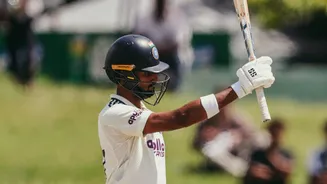
The Indian Test batting line-up has, in recent times, been predominantly right-handed. A quality left-handed batsman in the top or middle order provides a crucial point of difference, disrupting the rhythm of opposition bowlers and forcing changes in field placements. At 6'3", Padikkal's height gives him a natural advantage, particularly against spin and on bouncy tracks. His long reach allows him to get to the pitch of the ball with ease, a skill he demonstrated effectively during his twin centuries in Sri Lanka earlier this year. He has shown he can handle both pace and spin with proficiency, possessing a game that is not just about flair but also has the substance required for the five-day format.
Answering the No. 3 Conundrum
Ever since the departure of Cheteshwar Pujara, and before him Rahul Dravid, India has been searching for a long-term solution for the pivotal No. 3 position. The spot requires a player with the defensive technique of an opener and the stroke-making ability of a middle-order batsman. Padikkal has shown he has the temperament and technique for this role. His successful Test debut against England in 2024 was a glimpse of his potential. More recently, his back-to-back centuries against Sri Lanka while batting at number three were a stronger assertion. While the current Indian side has established openers, the No. 3 spot remains a point of discussion, and Padikkal's consistent red-ball form makes him a frontrunner to make that position his own for the foreseeable future.