



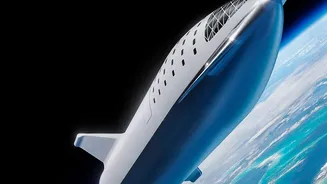
An Ambitious Double-Catch Plan
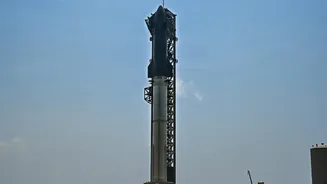
The 15th test flight of the Starship system, which launched from Starbase, Texas on Friday, November 13, was SpaceX's most ambitious yet. The primary goal was to achieve something never before accomplished in the history of rocketry: launch the world's
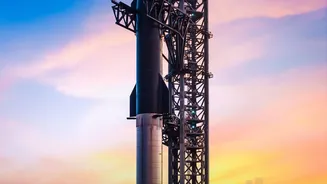
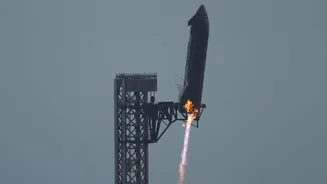
most powerful rocket and then recover both of its main components for reuse. The plan involved the massive Super Heavy booster returning to the launch site minutes after liftoff to be caught by the giant mechanical arms of the launch tower, a system nicknamed 'Mechazilla'. Following that, the Starship upper stage was to spend nearly a day in orbit, deploy a batch of Starlink satellites, and then perform its own fiery reentry before being caught by the very same tower. Achieving this would have marked the first time an orbital launch system was fully recovered, a key milestone in CEO Elon Musk's quest to make spaceflight more affordable and frequent.
The Booster's Unplanned Detour
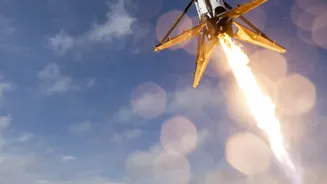
While the launch and stage separation went according to plan, the first half of the ambitious recovery effort faltered. Shortly after separating from the Starship upper stage, the Super Heavy booster initiated its 'boostback burn' to reverse course and head back to Texas. However, an alarm related to low fuel mass caused the engines to shut down early. As a result, the booster's automated guidance system determined it was not in the correct position for a safe tower catch and autonomously diverted its trajectory. Instead of being caught, the booster headed for a splashdown in the Gulf of Mexico, where it exploded before hitting the water. While the loss of the booster was a setback, SpaceX noted that the guidance system worked as intended by prioritizing the safety of the ground-based launch tower.
A Historic Catch for Starship
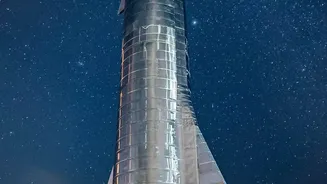
Despite the booster's failure, the mission was far from over. The Starship upper stage, Ship 42, successfully reached orbit, deployed 26 Starlink satellites, and completed 14 orbits of Earth over a 22-hour period. On Saturday, November 14, the world watched as the spacecraft performed a controlled reentry, surviving the intense heat and pressure as it plunged back through the atmosphere. In the final moments of its descent, Starship fired its engines, slowed down, and maneuvered itself perfectly between the 'chopstick' arms of the launch tower. The arms closed around the vehicle, successfully catching an orbital-class upper stage for the very first time. The moment marked a monumental achievement for SpaceX and a massive step toward a fully reusable launch system.
What This Means for SpaceX
This mixed-result mission perfectly encapsulates SpaceX's iterative 'test, fly, fail, fix' philosophy. The loss of the booster provides crucial data for engineers to analyze and correct the fuel-related anomaly. Simultaneously, the successful catch of the Starship upper stage is a game-changing validation of the company's entire reusability architecture. Elon Musk stated that the recovered Ship 42 appeared to be in great condition and could potentially be refurbished for another flight within weeks, allowing engineers to inspect a vehicle that has completed a full orbital mission. While the dream of catching both stages on a single flight remains just out of reach, this test proved that the most challenging part—recovering the orbital stage—is possible. This progress is critical for SpaceX's business, particularly for deploying its next-generation Starlink satellites and for fulfilling its contracts with NASA to use Starship for future astronaut landings on the Moon as part of the Artemis program.