








A Strategic Shift in the Stars
For decades, India's journey into space was synonymous with one name: ISRO. From launching satellites to historic missions to the Moon and Mars, the government agency did it all. Private companies were essential but were largely limited to being suppliers
of components. However, a historic decision in 2020 began to fundamentally change this model, opening the entire gamut of space activities to private enterprise. This wasn't about replacing ISRO but repositioning it. The new goal is to foster a vibrant ecosystem where ISRO focuses on advanced research and deep space exploration, while private players drive commercial applications and innovation, turning India into a global space-tech hub.
The Twin Engines: IN-SPACe and NSIL
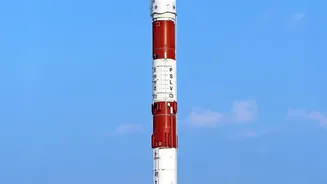
To guide this new public-private partnership, the government created two key entities. The first is the Indian National Space Promotion and Authorisation Centre (IN-SPACe). Think of it as a single-window agency designed to promote, authorise, and supervise the activities of private space companies. It's the facilitator, helping startups navigate regulations and gain access to ISRO's extensive facilities and expertise. The second is NewSpace India Limited (NSIL), ISRO's commercial arm. NSIL's job is to commercialise India's space assets. This includes producing and marketing proven rockets like the PSLV through industry, managing satellite launches for customers, and selling space-based services like satellite data and transponder leasing.
Meet the New Industry Pioneers
The policy reforms have unleashed a wave of entrepreneurial energy. From a handful just a few years ago, India is now home to over 400 space startups. Companies like Skyroot Aerospace, founded by former ISRO scientists, have already made history with successful orbital launches, proving private Indian firms can build and launch their own rockets. Others, like Chennai-based Agnikul Cosmos, are developing innovative technologies such as 3D-printed engines and reusable launch systems. Meanwhile, startups like Bengaluru-based Pixxel are building constellations of earth-observation satellites to provide high-resolution data. This new generation of companies is not just building components; they are designing and executing entire space missions.
How ISRO Is Fueling the Fire
ISRO's support has been crucial and multifaceted. The organisation is actively handholding startups by providing access to its world-class testing facilities, transferring technology, and offering mentorship from seasoned experts. For instance, ISRO has assisted with everything from site selection for private launchpads to providing critical wind and atmospheric data for flight planning. Very recently, in August 2026, the government introduced new schemes through IN-SPACe offering subsidies ranging from 30% to 100% on launch services, use of ISRO facilities, and technology transfer fees. This active support dramatically lowers the high entry barriers of the space industry, making Indian companies more competitive on a global scale.
The Multi-Billion Dollar Orbit
The stakes are enormous. India's space economy, currently valued at around $8-9 billion, is projected to surge to approximately $40-45 billion within the next decade. The goal is to grow India's share of the global space market from the current 2% to around 8%. This expansion is not just about prestige; it's about creating high-tech jobs, boosting advanced manufacturing, and developing new services in areas from satellite broadband to agricultural monitoring and disaster management. By fostering a robust private sector, India is positioning itself not just as a cost-effective launch destination but as a comprehensive solutions provider for the burgeoning global space economy.