



Wait, There's Really Ice on the Moon?
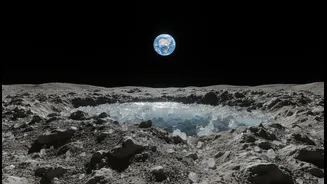
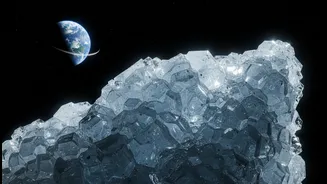
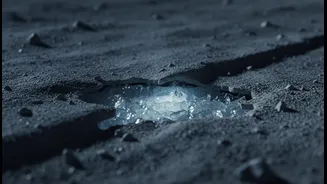
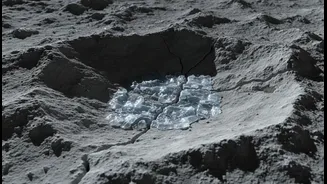
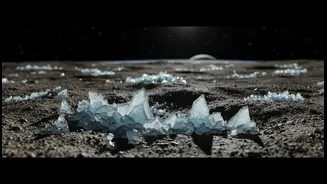
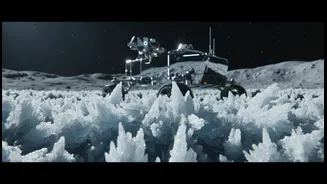
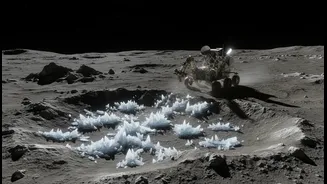
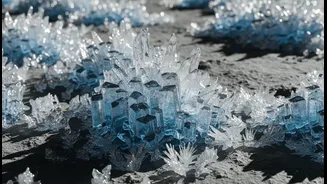
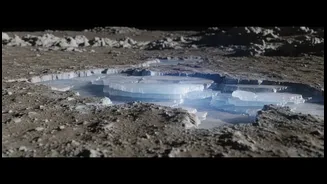
Yes, but not like the ice rinks or glaciers we have on Earth. The Moon's water is mostly in the form of ice crystals mixed with lunar dust, hidden away in some of the coldest and darkest places in the entire solar system. For a long time, scientists thought
the Moon was completely dry. But data, first from ISRO's Chandrayaan-1 mission in 2008 and more recently from the Chandrayaan-2 orbiter, has completely flipped that idea on its head. These missions confirmed that water molecules are present, especially concentrated near the lunar poles.
How ISRO Became a Lunar Water Detective
India's journey to find lunar water has been a multi-mission effort. It started with Chandrayaan-1, which carried a NASA instrument called the Moon Mineralogy Mapper (M3). This tool scanned the lunar surface and detected the chemical signature of water. Then came Chandrayaan-2. While its lander had a hard landing, the orbiter has been a huge success. Its advanced radar, called the Dual-Frequency Synthetic Aperture Radar (DFSAR), can peer beneath the Moon's surface. Recent analysis of this radar data has provided some of the strongest evidence yet for thick, subsurface ice deposits.
The Deep-Freeze: Secrets of the Shadow Craters
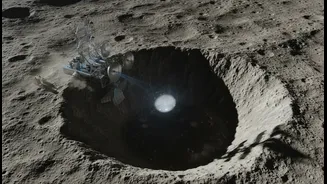
The key to finding this ice lies in 'Permanently Shadowed Regions' (PSRs). These are deep craters near the Moon's poles where the crater floor has not seen a single ray of direct sunlight for billions of years. Because the Moon's tilt is very small, the sun is always low on the horizon at the poles, casting long shadows. The floors of these craters are like natural deep-freezers, with temperatures dropping to as low as -248°C. In this extreme cold, any water that arrived on the Moon—perhaps from comets or asteroids—became trapped as ice and has remained perfectly preserved.
Why Finding Water Ice Is a Game-Changer
Finding water on the Moon isn't just a cool scientific fact; it's the key to our future in space. First, for life support. Astronauts on future lunar bases could melt the ice for drinking water and separate the hydrogen and oxygen molecules to produce breathable air. Second, and perhaps even more exciting, is rocket fuel. Hydrogen and oxygen are the primary components of rocket propellant. If we can 'mine' water ice on the Moon and convert it into fuel, the Moon could become a refueling station for missions to Mars and beyond. This is called In-Situ Resource Utilisation (ISRU), and it would make deep space travel much cheaper and more feasible.
What This Means for India's Future in Space
These findings are a massive achievement for ISRO and India. By playing a crucial role in confirming and mapping lunar water, India has secured a vital position in the new global space race. The world's space agencies, from NASA to those in China and Russia, are all targeting the Moon's south pole precisely because of these ice deposits. ISRO's data provides a valuable roadmap for where to find this critical resource. This enhances India's strategic importance and opens the door for collaboration on future international missions, including the establishment of a long-term human presence on the Moon. This knowledge will be crucial for planning future missions like Chandrayaan-4, which aims to bring back samples, and for the long-term vision of India's role in space.