






The Underrated Power of a Twist
Often overlooked, the standing torso twist is more than just a simple side-to-side motion. It's a fundamental movement that activates key muscle groups and enhances overall body function. The primary benefit lies in its ability to improve spinal mobility,
particularly in the thoracic spine (your mid-back), an area that often becomes stiff. This rotational movement engages your core muscles, including the obliques, which are crucial for stability, balance, and generating power in sports like golf, tennis, or cricket. By increasing blood flow and lubricating the joints with synovial fluid, this dynamic stretch effectively prepares your body for more strenuous activity, helping to prevent painful back injuries and improve posture over time.
How to Perform the Perfect Standing Twist
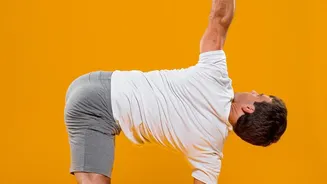
Mastering the form is key to unlocking the benefits and avoiding strain. Follow these steps for a safe and effective twist: 1. Stand with your feet shoulder-width apart and your knees slightly bent. This creates a stable base. 2. Engage your core by gently bracing your abdominal muscles, as if preparing for a light punch to the stomach. 3. Place your hands on your hips, cross them over your chest, or bend your elbows at a 90-degree angle at your sides. 4. Slowly and with control, rotate your upper body to one side. The movement should originate from your core, not from swinging your arms. Your head and shoulders should move together as one unit. 5. Allow your hips to remain as stable and forward-facing as possible to isolate the twist in your torso. 6. Return to the centre and repeat on the other side. Focus on a smooth, continuous motion rather than rapid, jerky movements.
Common Mistakes to Avoid
To get the most out of your twists and prevent injury, watch out for these common errors: • Twisting Too Fast: Rushing the movement relies on momentum, not muscle control. This reduces the effectiveness and can strain your lower back. Focus on a slow, deliberate pace. • Moving Only the Arms: Swinging your arms without engaging your torso is a frequent mistake. The power should come from your obliques rotating your rib cage, with your arms just following along. • Letting Your Hips Swing: The goal is to rotate the spine, not the entire lower body. Try to keep your hips relatively still and facing forward to maximize the stretch and activation in your mid-back and core. • Hunching Your Back: Maintain a tall, neutral spine throughout the exercise. Slouching can put undue stress on your vertebrae and negates the postural benefits.
Making Twists Part of Your Routine
The standing torso twist is a dynamic stretch, making it ideal for the 'movement preparation' phase of your warm-up. After 3-5 minutes of light cardio like jogging in place or jumping jacks to raise your body temperature, perform 10-15 controlled twists on each side. This is particularly beneficial before workouts that involve rotational movements, such as weightlifting (think wood chops or lunges with a twist), cricket, tennis, or golf. Because it requires no equipment, you can also use it as a quick mobility break during a long day of sitting at a desk to release tension and re-energise your body.
Progressions and Variations
Once you have mastered the basic form, you can introduce new challenges to continue building strength and stability: • Weighted Twist: Hold a light dumbbell, kettlebell, or medicine ball close to your chest with both hands. This added resistance will further challenge your core muscles. Keep the weight locked to your chest rather than extending your arms. • Band-Resisted Twist: Anchor a resistance band at chest height. Stand sideways to the anchor point, hold the band with both hands and arms extended, and rotate your torso away from the anchor. This forces your core to resist the pull of the band, building anti-rotational strength. • Lunge with Twist: Combine a forward or reverse lunge with a torso twist. As you step into the lunge, rotate your torso toward the side of your front leg. This variation adds a balance and coordination challenge while targeting your lower body.