






The Current Charging Challenge
For all their benefits, today's electric vehicles are tethered to a significant limitation: their batteries. Conventional lithium-ion batteries, the same basic technology found in your smartphone, use a liquid electrolyte to shuttle energy back and forth.
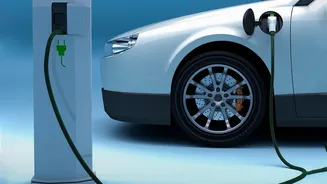
While effective, this liquid is flammable, adds weight, and has a physical limit on how quickly it can accept a charge without degrading or, in worst-case scenarios, catching fire. Pushing too much power too fast can cause the formation of metallic spikes called dendrites, which can short-circuit the battery. This is why even the most advanced 'fast chargers' still require 20 to 40 minutes for a substantial top-up, a stark contrast to the five-minute pit stop drivers of petrol cars are accustomed to.
Enter the Solid State
Solid-state batteries represent a paradigm shift in energy storage. The core innovation is replacing the flammable liquid electrolyte with a solid, stable material, often a ceramic or polymer. This simple-sounding swap has profound consequences. A solid electrolyte is not flammable, which immediately makes the battery pack safer. It's also more physically robust, acting as a barrier that can prevent the formation of the dendrites that plague liquid-based batteries. This enhanced safety and stability unlock the true potential of the battery's chemistry, allowing for designs that were previously considered too risky or impractical.
The Science of Faster 'Refuelling'
The reason solid-state technology promises to dramatically accelerate charging speeds lies in this newfound stability. By using a solid electrolyte, engineers can use a high-capacity lithium metal anode, which is far more energy-dense than the graphite anodes used in current batteries. With the risk of dendrite formation suppressed by the solid separator, the battery can handle a much higher flow of electrical current during charging. Ions can move more efficiently and directly through the solid structure without the resistance and side-reactions that occur in a liquid. This allows the battery to absorb energy at a much faster rate, potentially slashing charging times from half an hour to under ten minutes, a timeframe much more aligned with consumer expectations for refuelling a vehicle.
Today's Laboratory Breakthroughs
While you won't find a mass-market car with a true solid-state battery in a showroom today, the term 'dramatically today' in the headline refers to the rapid pace of breakthroughs happening in research labs. Companies like QuantumScape, Solid Power, and Toyota are consistently publishing results and delivering prototypes that validate the technology's promise. For instance, research teams have demonstrated small-scale cells that can charge to 80% capacity in minutes, not hours. Samsung has showcased prototypes with an impressive range and cycle life. These aren't just theories anymore; they are tangible results from functioning hardware. The science is largely proven, and the focus is now shifting from the laboratory to the factory floor.
From Lab Bench to Production Line
The single greatest challenge remaining for solid-state batteries is not science, but manufacturing. Producing the thin, perfect layers of solid electrolyte material at a massive scale and at a low cost is incredibly difficult. The interfaces where the solid electrode meets the solid electrolyte must be flawless to ensure efficient energy transfer. Any imperfections can create resistance and slow the battery down. Automakers and battery startups are investing billions to solve these production challenges. Companies like Nissan aim for mass production by 2028, and many analysts predict that semi-solid or hybrid batteries will serve as a bridge technology, appearing in niche applications like e-bikes or consumer electronics first.