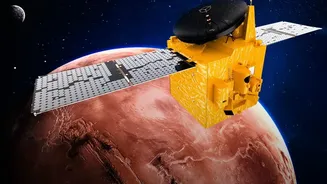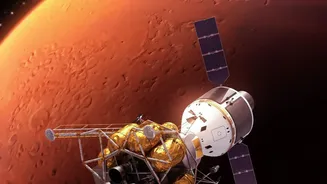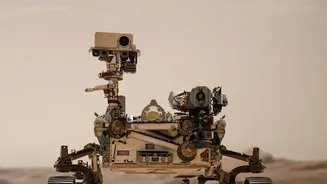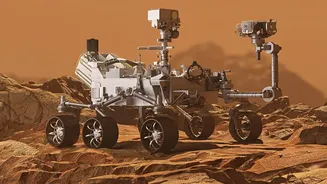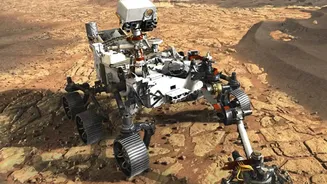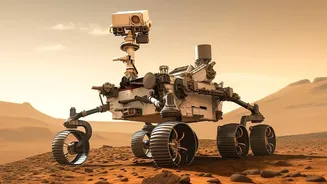







For decades, bringing pristine samples of Mars back to Earth has been a holy grail for scientists. But NASA's ambitious Mars Sample Return plan hit a wall, forcing the agency to rethink one of its most complex missions ever.
An Audacious Goal
The objective of the Mars Sample
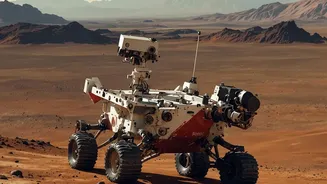
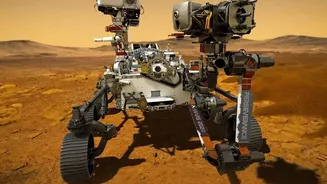
Return (MSR) mission is as simple to state as it is difficult to achieve: bring Martian rocks, soil, and atmospheric samples to Earth. Since landing in Jezero Crater in 2021, the Perseverance rover has been dutifully collecting and caching compelling specimens in titanium tubes. Scientists believe these samples could revolutionize our understanding of Mars, its geological history, and, most tantalizingly, whether the Red Planet ever hosted life. Studying them in advanced labs on Earth would allow for analysis far beyond the capabilities of any rover, no matter how sophisticated.
The Original Blueprint
The initial plan, developed in partnership with the European Space Agency (ESA), was a multi-part epic. It involved sending a new lander to Mars, the Sample Retrieval Lander, which would deploy a small 'fetch' rover to pick up the tubes left by Perseverance. This lander would also carry a Mars Ascent Vehicle (MAV)—a small rocket—to launch the samples into Martian orbit. From there, a separate ESA-built orbiter would capture the orbiting container and begin the long journey back to Earth, with the samples arriving sometime in the 2030s.
Too Costly, Too Complex, Too Late
In 2023, an independent review board delivered a sobering assessment of this intricate plan. It concluded that the mission's complexity, budget, and timeline were unrealistic. The estimated cost had ballooned to as much as $11 billion, and the return date for the samples had slipped to 2040. NASA Administrator Bill Nelson stated bluntly that the price was 'too expensive' and the timeline 'too far away'. The review board found there was a 'near zero probability' of meeting the original launch dates and that the program was established with unrealistic expectations from the start.
A Call for a Fresh Approach
In response to the review, NASA announced it was scrapping the old architecture and going back to the drawing board. The agency put out a call to its own centers, as well as commercial industry partners, to propose faster, cheaper, and more innovative ways to get the job done. This has led to a new initiative called the Perseverance Sample Retrieval Architecture (PSRA). Announced in November 2026, the PSRA team's goal is to assess all options and develop impartial recommendations for a new mission strategy. The team is scheduled to kick off its work in January 2027 and deliver a final report in the winter of 2027-2028.
What Might the New Plan Look Like?
While the final architecture is yet to be determined, several ideas are being explored. These include leveraging commercial heavy-lift landers, potentially from companies like SpaceX or Blue Origin, or using a single, more capable lander instead of multiple spacecraft. The goal is to streamline the mission, reduce the number of hand-offs, and bring the return date back into the 2030s. One of the key challenges is designing a mission that is not only robust but also fits within a more constrained budget, a problem the new PSRA team is tasked with solving. Meanwhile, the timeline is becoming more pressing, as China is also moving forward with its own Mars sample return mission, Tianwen-3, which aims to launch by 2028 and return samples by 2031.