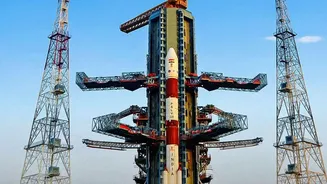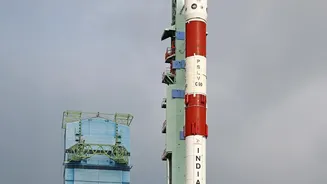





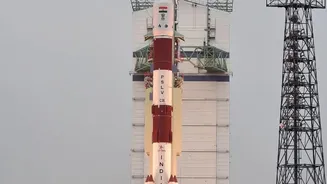
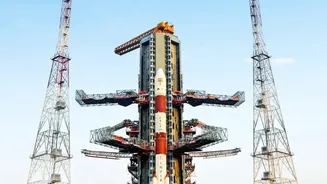

In a major boost for India's technological self-reliance, the Indian Space Research Organisation (ISRO) successfully launched a new-generation satellite on October 30. This mission is critical for strengthening NavIC, our nation's very own GPS.
A Crucial Launch for India's GPS
Late in
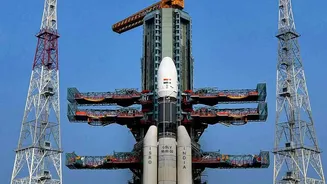
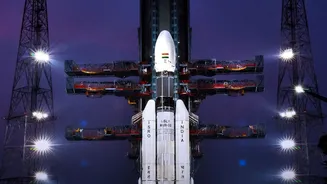
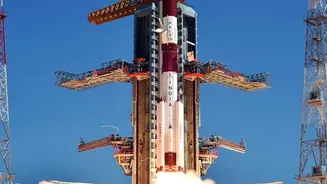
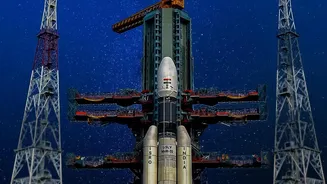
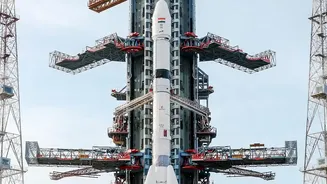
the night on October 30, 2026, ISRO's Geosynchronous Satellite Launch Vehicle (GSLV-F18) lifted off from Sriharikota, carrying the NVS-03 satellite. The launch was a success, placing the satellite into its intended orbit. This wasn't just another launch; it was a vital mission to reinforce the Navigation with Indian Constellation (NavIC) system. NavIC is India's independent regional navigation satellite system, an indigenous answer to foreign-controlled systems like the American GPS. The successful deployment of NVS-03 marks a significant step towards restoring and enhancing the operational strength of this critical national infrastructure.
What Exactly is NavIC?
Think of NavIC as India's dedicated GPS, but designed specifically for the nation and its surrounding region. It provides accurate real-time positioning, navigation, and timing services covering India and an area extending about 1,500 kilometres beyond its borders. This homegrown system offers two kinds of services: a Standard Positioning Service (SPS) for all civilian users and a Restricted Service (RS), which is encrypted and reserved for authorised users like the military. Having our own navigation system is a matter of strategic independence, reducing reliance on other nations for critical location data that is essential for everything from disaster management and transport to defence operations.
Why Reinforcement Was Necessary
A navigation system's accuracy depends on a minimum number of healthy satellites. The original NavIC constellation, known as IRNSS, was facing challenges as some of its first-generation satellites were ageing and their onboard atomic clocks were failing. At one point, the number of fully functional satellites had dropped below the minimum of four required for standalone positioning services. This made the system less reliable. The launch of NVS-03, part of a new generation of more advanced satellites, was essential to replace the older ones, restore the constellation's full strength, and ensure the continuity of NavIC services.
The New Satellite's Advanced Features
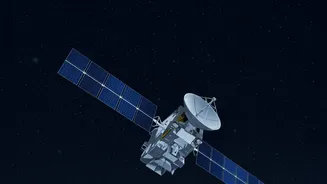
The NVS_03 is not merely a replacement; it's a significant upgrade. One of its most important features is the inclusion of an indigenously developed Rubidium atomic clock, which is crucial for providing precise timing data needed for accurate positioning. Furthermore, NVS_03 transmits signals in the L1 frequency band, in addition to the existing L5 and S bands. The L1 band is one of the most widely used frequencies for civilian navigation devices globally. Its inclusion will make it much easier for manufacturers to make smartphones, wearables, and other consumer devices compatible with NavIC, paving the way for mass_market adoption.
The Path to True Self Reliance
The success of the NVS_03 launch is a testament to ISRO's resilience, especially after a previous satellite in the series, NVS_02, failed to reach its operational orbit. It reinforces India's position in a small club of nations with their own navigation systems. This capability is paramount for national security, providing the armed forces with a secure and reliable navigation service for missile guidance, troop movements, and aircraft. With more satellites like NVS_04 and NVS_05 already in advanced stages of development, ISRO is not just restoring NavIC but building a more robust and reliable system for the future. This not only serves strategic interests but also opens up vast economic opportunities in a digitally connected India.