





A Daring Descent to a Lost World
NASA's DAVINCI mission, short for Deep Atmosphere Venus Investigation of Noble gases, Chemistry, and Imaging, is humanity's next great attempt to understand our planetary neighbour. Scheduled for launch in the early 2030s, it will be the first US-led
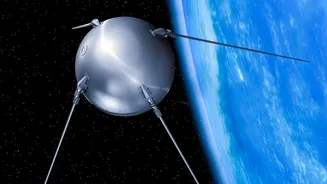
mission to enter Venus's atmosphere in over 40 years. The mission has two key components: an orbiter that will study the planet from above and a heavily-shielded descent probe. This probe, a one-meter-wide titanium sphere, is designed to plunge through the toxic clouds, sampling the air and taking images as it falls for about an hour before impacting the surface. Its goal is to analyze the atmosphere's composition to figure out how Venus transformed from a potentially water-rich world into the inferno it is today.
Venus: The Ultimate Obstacle Course
Practising on Earth is non-negotiable because Venus is arguably the most hostile environment in the solar system. The surface temperature averages a staggering 475 degrees Celsius, hot enough to melt lead. The atmospheric pressure at the surface is over 90 times that of Earth's, equivalent to being nearly a kilometer deep in the ocean. On top of that, the atmosphere is 96% carbon dioxide, creating a runaway greenhouse effect, and it's filled with clouds of sulfuric acid. Any probe that enters this environment must be a fortress, capable of withstanding being simultaneously crushed, roasted, and dissolved. There are no second chances; the hardware has to work perfectly the first time, which is why simulations and physical rehearsals are paramount.
Rehearsing the Plunge in the Utah Desert
So how do you practice for a trip to hell? You go to Utah. The headline's "helicopter rehearsals" refer to a series of recent tests where a prototype of the probe's camera system was carried in a basket by a helicopter. Over the rugged landscape of Crater Island, chosen for its geological similarity to the probe's target destination on Venus, the helicopter simulated the probe's descent. For nearly 40 minutes at a time, the chopper ascended and then slowly descended while the camera system, called the Venus Descent Imager (VenDI), captured images. This wasn't about testing the probe's heat shield, but rather its eyes. The tests are designed to ensure the camera can take clear, useful pictures of the terrain below as it falls, a crucial part of understanding the geology of Venus.
The Science of Simulation
The data gathered from these helicopter flights helps the DAVINCI team refine its imaging techniques. By taking pictures of a known landscape from a moving, descending platform, scientists can perfect the software that will reconstruct the images sent back from Venus. The probe's entire descent will last about an hour, a precious window to collect as much information as possible. During its fall, it will deploy parachutes to slow its initial descent before being released to fall the rest of the way. Every moment is choreographed and simulated countless times using computer models. The helicopter tests provide a real-world check on those simulations, ensuring the instruments not only survive but deliver the revolutionary science promised. The goal is to study the Alpha Regio highlands, a mountainous region that may contain some of the oldest rocks on Venus, offering clues to its watery past.