





A Celestial Double Feature
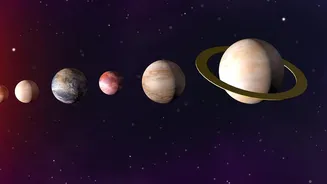
September is a fantastic month for planet-watching, and tonight is no exception. While you might think you need a high-powered telescope and a remote mountain peak, both Jupiter and Saturn are bright enough to be seen from urban and suburban areas. Saturn rises
in the evening and will be visible for most of the night. Jupiter makes its appearance in the pre-dawn sky, shining brightly in the east. These planets are what astronomers call 'bright targets', meaning their brilliance can often overcome the hazy glow of city lights that washes out fainter stars. Spotting them is a rewarding experience, connecting you to the grand scale of our cosmic neighbourhood without ever leaving your city.
Your Planetarium in Your Pocket
The single most powerful tool for any aspiring urban astronomer is already in your hand: your smartphone. Modern astronomy apps transform your device into a dynamic map of the night sky. By using your phone's built-in GPS and compass, these apps know exactly where you are and what direction you're pointing. The result is an augmented reality (AR) view that overlays names and information directly onto the stars and planets you see through your camera. For beginners, free apps like Star Walk 2, SkyView Lite, and the open-source Sky Map (formerly Google Sky) are excellent starting points. They are intuitive and designed to help you identify celestial objects in seconds.
How to Find the Gas Giants
Using these apps is incredibly simple. Once downloaded, grant the app location access so it can calibrate to your specific sky. To find a planet, you simply open the app and point your phone towards the sky. The screen will display the constellations, stars, and planets in that direction. Most apps have a search function; type in 'Saturn' or 'Jupiter', and an arrow will appear on your screen, guiding you to move your phone until the planet is centered. Star Walk 2 is particularly noted for being beginner-friendly, while SkyView Lite is praised for its simple and beautiful interface that makes identifying objects a breeze. For those interested in an Indian-specific context, the Bhagol app offers a unique view of the sky through the lens of Indian astronomical traditions, mapping the 27 nakshatras.
Tips for Beating City Lights
Light pollution is the biggest challenge for city stargazers, but it's not an insurmountable one. While you can't make the sky darker, you can improve your chances of a good viewing. First, find the darkest spot you can. This might be a local park, a rooftop, or even a balcony that’s shielded from direct streetlights. Give your eyes time to adjust to the darkness—it can take up to 20 minutes for them to become fully dark-adapted. Avoid looking at your bright phone screen during this time. Many astronomy apps feature a 'night mode' that switches the interface to a red hue. This preserves your night vision, making it easier to spot fainter details in the sky. Finally, aim to view the planets when they are at their highest point in the sky, as you'll be looking through less of Earth's hazy atmosphere.