





An August to Remember: The Numbers
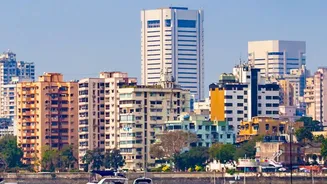
The data for August 2026 paints a clear picture of a resilient market. Mumbai recorded 12,503 property registrations, marking an 11% increase compared to the same month last year. This wasn't just a minor uptick; it was the strongest performance for the month of August in over
14 years. This robust activity translated into significant revenue for the state, with stamp duty collections rising 12% year-on-year to reach approximately ₹1,123 crore. While there was a slight, and largely expected, sequential dip from an unusually strong July, the year-on-year growth underscores a powerful underlying demand that has become the market's defining characteristic in 2026.
The Buyer's Mindset: Why Price Isn't a Deterrent
The paradox of rising prices and rising demand can be explained by a shift in buyer psychology. Homebuyers in Mumbai are increasingly looking beyond the immediate price tag and focusing on long-term value. Factors like a stable economic outlook, confidence in long-term appreciation, and a desire for security are proving more influential than price hikes alone. This demand is primarily driven by end-users—families looking to upgrade, professionals seeking stability, and individuals prioritising an improved quality of life. The speculative frenzy of past cycles has been replaced by a more mature, needs-based approach to homeownership, where a well-located, quality home is seen as a crucial lifestyle investment rather than a short-term trade.
Key Drivers Fuelling the Demand
Several key factors are working in concert to keep the market buzzing. Crucially, a stable interest rate environment has kept home loans relatively manageable, providing a vital cushion against rising property values. Furthermore, Mumbai's massive infrastructure overhaul is a significant catalyst. The expansion of the metro network, along with major projects improving east-west and city-suburb connectivity, is making previously overlooked locations more attractive and accessible. This not only reduces commute times but also fundamentally changes the perception of distance, widening the pool of viable options for prospective buyers. Homebuyers are willing to pay a premium for properties in well-connected areas with strong social infrastructure, confident in their future value.
Redevelopment: The New Supply Engine
In a city constrained by a scarcity of vacant land, redevelopment has emerged as the primary engine of new housing supply. For the first time, sales from redevelopment projects are outpacing new launches, accounting for a significant 15% of total housing sales. This trend is a win-win: it allows buyers to access brand-new homes with modern amenities in established, centrally-located neighbourhoods, and it provides a mechanism for the city to upgrade its ageing housing stock. Buyers are increasingly showing a preference for these projects over greenfield developments on the periphery, as they offer the dual benefits of a prime location and new construction. This shift indicates that the market is maturing, focusing on urban renewal as a sustainable path to growth.
Market Outlook: Steady as She Goes
Experts believe the current momentum sets a strong foundation for the upcoming festive season, a period traditionally associated with high property sales. The consensus is that demand will remain robust, driven by end-users who are more discerning and quality-conscious than ever before. The market is seeing a trend of 'premiumisation', where buyers are willing to spend more for larger homes, better amenities, and superior locations. While the days of uniform, rapid price growth across the board may be over, well-located developments by reputable builders are expected to continue attracting strong interest. The focus for buyers in 2026 is less about timing the market and more about finding the right property that meets their long-term financial and lifestyle goals.