



Light Doesn't Travel Instantly
It’s easy to think of light as instantaneous. You flip a switch, and the room is bright. But in the vast emptiness of space, light, while incredibly fast, has a speed limit. It travels at a blistering 2,99,792 kilometres per second. That’s fast enough
to circle the Earth more than seven times in a single second. However, the distances between stars are so mind-bogglingly immense that even at this breakneck speed, light takes a significant amount of time to travel from a star to our eyes. So, when we look at a star, we are seeing it as it was in the past—the light is a snapshot from the moment it left the star's surface.
A Journey, Not a Calendar
To measure these cosmic distances, astronomers use a unit called a "light-year." It sounds like a measure of time, but it’s actually a measure of distance. A light-year is the distance that light travels in one year—approximately 9.46 trillion kilometres. It’s a number so large it’s hard to imagine, but think of it this way: if you were to drive a car at a constant 100 km/h, it would take you over 10 million years to cover the distance of a single light-year. When we say a star is 100 light-years away, it means the light we see from it tonight started its journey 100 years ago.
Postcards from the Past
Let's put this into perspective with some famous stars. The closest star system to us, Alpha Centauri, is about 4.3 light-years away. The light we see from it left around the time of the 2018 FIFA World Cup. But what about the "hundreds of years" from the headline? A perfect example is Polaris, the North Star. It's approximately 430 light-years away. This means the light from Polaris that we see today left the star around the year 1594, during the reign of Mughal emperor Akbar. You are literally seeing light that is older than the Taj Mahal.
A Window into the Distant Past
The further we look, the further back in time we see. Take Betelgeuse, the bright reddish star in the constellation Orion. It is about 640 light-years away. The light hitting our retinas from Betelgeuse tonight began its journey in the 14th century, around the time the Tughlaq dynasty was ruling the Delhi Sultanate. And it goes even further. The Andromeda Galaxy, the closest major galaxy to our own Milky Way, is a staggering 2.5 million light-years away. The faint smudge of light you can see with the naked eye in a dark sky is composed of photons that started their trip when early human ancestors, not modern humans, roamed the Earth.
Why This Time Lag is Useful
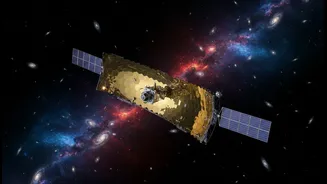
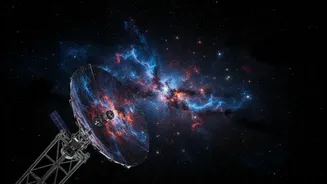
This cosmic time delay isn't just a cool piece of trivia; it’s one of the most powerful tools in astronomy. Because looking far away is the same as looking back in time, astronomers can study the history of the universe directly. Telescopes like the Hubble and the James Webb Space Telescope are essentially time machines. By capturing light from galaxies that are billions of light-years away, they allow scientists to see what the universe was like in its infancy, shortly after the Big Bang. They can watch how galaxies formed, how stars evolved, and piece together the grand story of our cosmic origins, all thanks to the finite speed of light.