





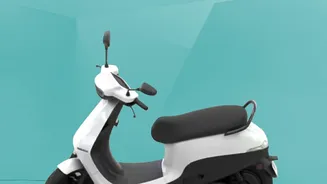
The EV Price Problem
For the average Indian buyer, the main barrier to purchasing an electric scooter or motorcycle is the upfront cost. A significant portion of that cost, often up to 40-50%, is the battery pack. Currently, most electric vehicles (EVs) rely on lithium-ion
batteries. While they are a proven technology, they have limitations. They use a liquid electrolyte which can be flammable, require complex cooling and safety systems, and their energy density—the amount of power stored for their weight—is approaching its physical limits. These factors all add to the final showroom price, keeping electric two-wheelers just out of reach for a large segment of the market.
What is a Solid-State Battery?
Imagine a battery with no liquids inside. That's the core concept of a solid-state battery. It replaces the flammable liquid or gel electrolyte found in conventional lithium-ion batteries with a solid material, like a thin sheet of ceramic or polymer. This fundamental change has several key advantages. Firstly, it dramatically improves safety by removing the risk of leakage and fire. Secondly, it allows for a more compact and energy-dense design. This means a battery of the same size could offer significantly more range, or a manufacturer could use a smaller, lighter battery to achieve the same range, reducing the overall weight and cost of the vehicle. Finally, they show potential for incredibly fast charging times—in some cases, under 15 minutes.
The Promise of a Lower Price Tag
It seems counterintuitive that a new, advanced technology could be cheaper, and initially, it won't be. Early production of solid-state batteries is complex and expensive. However, the long-term potential for cost reduction is significant. By eliminating the need for bulky and expensive cooling systems and safety casings required for liquid-filled batteries, manufacturers can simplify the entire battery pack design. Furthermore, some solid-state chemistries could reduce or eliminate the need for costly and controversial materials like cobalt. Researchers are also exploring the use of abundant materials like sodium as a replacement for lithium, which could slash raw material costs. As production scales up, the simpler pack architecture and potentially cheaper materials could lead to a lower overall vehicle price, even if the individual cells are initially more complex to make.
From the Lab to the Road
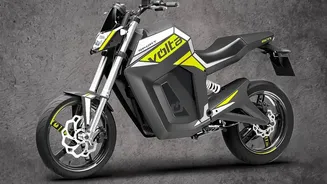
What was once a futuristic concept is now becoming a reality. Several companies are moving from lab research to pilot programs and real-world trials. Some niche, high-performance electric motorcycles are already being delivered to customers with what are described as all-solid-state batteries. Companies like Finnish manufacturer Verge Motorcycles, in partnership with technology firm Donut Lab, claim their new bikes equipped with solid-state tech can gain nearly 300 km of range in just ten minutes of charging. While some in the industry remain skeptical about these initial claims, these early commercial applications are a crucial step in validating the technology for mass-market vehicles. Major battery manufacturers like CATL and vehicle brands like BYD, Honda, and BMW are all working on their own solid-state solutions, with most targeting commercial production between 2027 and 2030.
What This Means for India
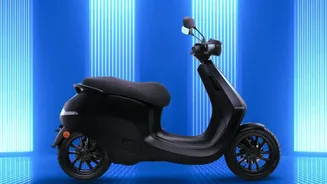
The implications for the Indian market are enormous. With two-wheelers dominating the roads, a cheaper, safer, and longer-range electric scooter is a potential game-changer. Indian companies are already getting in on the action. Ola Electric has announced plans for a gigafactory in Tamil Nadu with a focus on developing solid-state battery technology. The Indian government is also promoting domestic battery manufacturing through incentive schemes, which is expected to accelerate the adoption of next-generation technologies like solid-state. While we are unlikely to see these batteries in entry-level scooters tomorrow, the path is becoming clearer. The transition will likely happen in phases, with semi-solid or hybrid batteries appearing first in the next few years, followed by full solid-state technology becoming mainstream closer to 2030.