
The Allure of Open and Airy
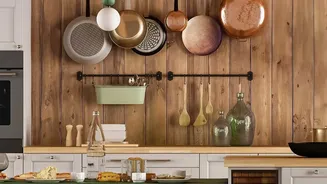
Unlike bulky, closed-off upper cabinets that can make a kitchen feel smaller, open shelving creates an immediate sense of space and light. This design choice allows you to showcase your personality by turning everyday items into part of the decor. Beautiful
plates, colourful mugs, and charming spice jars are no longer hidden away but become curated elements that tell a story. The accessibility is another major draw; grabbing a frequently used bowl or glass is effortless, making the daily rhythm of kitchen life smoother for both you and your guests.
Choosing the Perfect Wood
The type of wood you choose is crucial for both durability and aesthetics in a kitchen environment, which often deals with heat and moisture. For Indian homes, hardwoods like Teak (Sagwan) and Sheesham (Indian Rosewood) are excellent choices. Teak is highly resistant to moisture and termites, making it a premium, long-lasting option. Sheesham offers a rich, dark grain and is known for its strength, lending a traditional, sturdy feel to your kitchen. Mango wood is another popular, eco-friendly choice that provides a unique texture. For a more modern rustic look, consider lighter woods like oak or even bamboo, ensuring they are properly sealed to withstand kitchen conditions.
Styling for Function and Flair
The key to successful open shelving is curated organisation. Start by displaying items you use daily, like your favourite plates, bowls, and coffee mugs. Group similar items together—stack plates neatly and arrange glasses in rows. Introduce visual interest by varying heights and textures. Place a stack of cookbooks next to a ceramic pitcher, or add a small potted herb plant for a touch of green. Woven baskets are perfect for hiding smaller, less sightly items, keeping the overall look clean and uncluttered. Remember to leave some 'negative space' on the shelves to avoid a chaotic feel; not every inch needs to be filled.
What to Display (and What to Hide)
Open racks are ideal for your most attractive and frequently used items. Think everyday dishware, uniform glass jars for dals and spices, shapely oil bottles, and mixing bowls. They are also the perfect stage for decorative pieces like small artworks, vintage kitchen tools, or beautiful serving platters. However, it's wise to keep less aesthetic items behind closed doors. Cluttered plastic containers, half-empty snack bags, and bulky appliances are best stored in lower cabinets to maintain the clean, organised look of your open shelves. A successful kitchen often uses a combination of open and closed storage, giving you the best of both worlds.
Practical Considerations Before You Commit
While visually appealing, open shelves do have a practical downside: dust and grease. Items on display will require more frequent cleaning than those tucked away in a cabinet, especially if the shelves are near your cooking hob. This is particularly true for items that are used less often. A simple strategy is to place your most-used items on the shelves, as their regular rotation will naturally keep them clean. If you're hesitant to go all-in, start small. Install a single floating wooden shelf for your most-used spices or prettiest tea cups and see how it enhances your space before committing to a larger overhaul. This allows you to enjoy the aesthetic benefits while managing the upkeep.