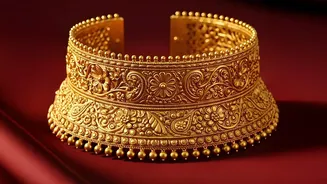







Why Your Budget Is Your Best Friend
For many in India, purchasing gold is an emotional decision tied to culture, prosperity, and celebration. However, approaching it without a financial plan can lead to impulsive buys and debt. A clear budget acts as a roadmap, helping you balance tradition
with financial wisdom. It allows you to determine what you can comfortably afford, preventing the festive cheer from turning into post-celebration regret. Think of it not as a restriction, but as a tool for empowerment. It gives you the clarity to browse with confidence, knowing exactly what you’re looking for and how much you're prepared to spend, making the entire process more deliberate and enjoyable.
Laying the Groundwork: Setting Your Gold Budget
Before you even step into a jewellery store, sit down and assess your finances. Start by looking at your total income and listing all your mandatory festive expenses—gifts, travel, food, and home decorations. Once you have a clear picture of your outflows, you can allocate a realistic amount towards your gold purchase without compromising other needs. Decide on a firm upper limit. This isn't just a vague idea but a concrete number. Whether it's ₹50,000 or ₹2,00,000, having a defined budget is the first and most critical step. This will guide all your subsequent decisions, from the weight of the jewellery to the intricacy of the design you choose.
Decoding the Final Price: More Than Just the Gold Rate
The price tag on a piece of jewellery is composed of several elements, and understanding them is key to smart budgeting. The final cost is typically calculated as: (Gold Price x Weight) + Making Charges + GST. First, there's the base price of gold, which fluctuates daily. Most jewellery in India is made from 22-karat (91.6% purity) gold, as 24K gold is too soft for intricate designs. Next are the making charges, which cover the labour and craftsmanship. These can be a fixed rate per gram or, more commonly, a percentage of the gold's value, ranging from 6% for machine-made items to over 25% for complex, handcrafted pieces. Finally, a Goods and Services Tax (GST) is applied. You pay 3% GST on the value of the gold and an additional 5% GST on the making charges. Always ask for a detailed, itemised bill that breaks down these costs separately.
Do Your Homework Before You Shop
A prepared buyer is a smart buyer. Start by tracking the daily gold rate for a week or two before your intended purchase to get a sense of the market trend. Always check for the BIS hallmark, which is a mandatory certification of purity from the Bureau of Indian Standards. A hallmarked piece will have the BIS logo, the purity grade (e.g., 22K916), and a unique 6-digit alphanumeric HUID code. Furthermore, don't hesitate to compare making charges between different jewellers, as this is often the most variable component of the price. Some jewellers may have festive offers like discounts on making charges, which can lead to significant savings. However, negotiation is also common and expected in many stores, particularly on making charges for larger purchases.
Consider Gold Savings Schemes
If you are planning a significant purchase, a gold savings scheme can be a disciplined way to save. Offered by most major jewellers, these schemes allow you to deposit a fixed amount every month for a set tenure, typically 11 months. At the end of the term, you can purchase jewellery worth the total amount you've deposited. As a benefit, the jeweller often adds a bonus, such as paying the final month's instalment for you or offering a discount on the making charges. These schemes help you plan systematically and can make a large purchase feel more manageable. They are particularly useful for accumulating funds for significant events like weddings or major festivals.