





The Golden Rule: Match Socks to Trousers
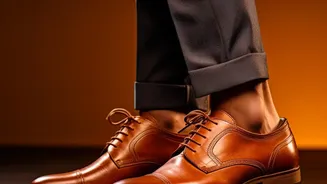
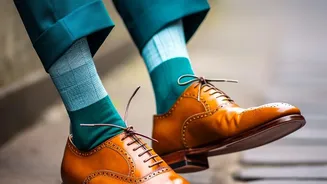
The most fundamental and safest rule of sock-pairing is to match your socks to your trousers. This creates an unbroken, continuous line of colour from your waist to your shoes, which has the elegant effect of visually lengthening your legs. For example,
with navy trousers, wear navy socks. With a charcoal grey suit, opt for charcoal socks. The goal isn't necessarily an exact colour match, but to stay within the same tonal family. A slightly lighter or darker shade is perfectly acceptable and often looks more natural. This approach ensures your shoes stand out as the endpoint of your outfit, rather than being muddied by a clashing or poorly chosen sock colour. Think of the sock as a bridge, not a barrier.
The Exception: When to Match Shoes
While matching trousers is the primary rule, there are situations where coordinating with your shoes is a viable option. This works best in more casual settings or when your trousers and shoes are of a similar dark tone. For instance, if you are wearing dark navy trousers with dark brown shoes, a dark brown sock can work because the contrast is minimal. Similarly, khaki or tan trousers paired with medium-brown shoes and a brown sock create a cohesive, smart-casual look. However, for formal or business attire, sticking to the trouser-matching rule is almost always the more refined choice, as matching the shoe can sometimes interrupt the leg line and draw unwanted attention to the ankle.
Navigating Colour and Pattern
Once you've mastered the basics, you can begin to introduce colour and pattern for a touch of personality. The key here is subtlety and coordination. If you opt for patterned socks, a reliable method is to ensure the base colour of the sock matches your trousers, while the pattern introduces a secondary, complementary colour. For example, with a navy suit, you could choose a navy sock with a burgundy dot or stripe. Alternatively, you can use your socks to pick up an accent colour from another part of your outfit, like your tie or pocket square. This creates a harmonious, intentional look. For casual wear, feel free to be more adventurous with bolder patterns and colours, especially with jeans or chinos where a flash of personality is welcome. Just be mindful of the setting; what works for a weekend brunch might not be appropriate for a conservative office.
Common Combinations and Pitfalls
To put the rules into practice, consider these common pairings. For a navy suit with brown shoes, navy socks are the classic, can't-miss choice. Burgundy or dark green socks can also offer a sophisticated, complementary contrast. For a grey suit, grey socks are the natural starting point, but navy and burgundy also work well, especially if you're wearing brown shoes. The biggest pitfall to avoid is wearing white athletic socks with dress trousers and shoes. These socks are typically made of thick cotton and are designed for sports; with formalwear, they create a jarring and unprofessional contrast. Always opt for finer dress socks in materials like wool, cashmere, or high-quality cotton blends that are appropriate for the setting.
Sock Length and Material Matter
Finally, don't forget about the length and fabric. A cardinal sin of formal dressing is exposing bare skin on your leg when you sit down. To avoid this, always choose over-the-calf or mid-calf dress socks that will stay up throughout the day. Ankle-length socks should be reserved for casual or athletic wear. The material is also important for both comfort and style. Fine wools, lisle cotton, and cashmere blends not only feel better but also look much sharper than thick, bulky athletic socks. The fabric should complement the rest of your outfit; for instance, a thicker ribbed wool sock works well with tweed or corduroy, while a fine, smooth lisle sock is perfect for a sharp business suit.