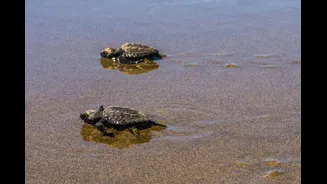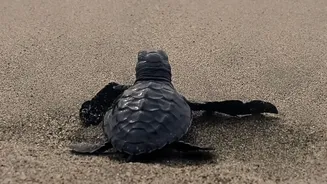







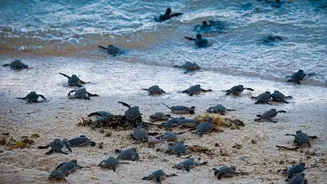

The Heart of the Matter: Olive Ridley Turtles
Every winter, Goa's shores become a crucial nursery for Olive Ridley turtles, a vulnerable species that returns to these sands to lay its eggs. The nesting season, running roughly from November to March, is a remarkable natural event. However, human activity
poses a significant threat. Artificial lights from shacks and parties can disorient female turtles and their hatchlings, who navigate by the moon's reflection on the sea. Noise, crowds, and beach furniture can also disrupt the nesting process. In response to these pressures, and a noted decline in nesting numbers in recent seasons, the state's Forest Department has stepped in with a significant proposal.
What Are the Proposed Changes?
Goa's Forest Department has proposed formally designating 24 beaches—10 in the North and 14 in the South—as official turtle nesting sites under the Coastal Regulation Zone (CRZ) Notification, 2019. This designation would grant these areas enhanced protection. If accepted, the proposal could lead to much stricter controls on activities, especially at night during the nesting season. The new rules would likely target artificial lighting, loud music, late-night events, vehicle movement on the sand, and the placement of temporary structures like beach shacks. The goal is to create a safer, quieter environment for the turtles to nest undisturbed.
The Beaches in Question
This isn't a minor change affecting a few isolated spots. The list of 24 beaches includes some of Goa's most famous and commercially active coastlines. In North Goa, popular tourist hubs like Baga, Calangute, Candolim, Vagator, and Ashvem are on the list. In the South, the proposal covers well-known beaches such as Palolem, Agonda, Cavelossim, and Varca. Several beaches in Canacona taluka are included, an area where tourism is a primary source of income. While Agonda and Galgibag are already recognized as nesting sites, extending these regulations across nearly the entire coast represents a major policy shift.
Shacks, Sound, and Livelihoods
The proposal has sent waves of concern through Goa's tourism-dependent communities. For thousands of shack owners, fishermen, and event organizers, the peak tourist season directly overlaps with the turtle nesting period. Stakeholders fear that sweeping restrictions on light, sound, and operating hours could cripple their businesses. The All Goa Private Property Shacks and Huts Owners Association has strongly opposed the plan, arguing that it threatens to 'kill tourism business at large'. Many feel there has been a lack of consultation, and they are seeking clarity on what exactly would be permitted. They argue for a balanced approach that protects turtles without destroying the livelihoods that define the Goan coast.
A Search for Common Ground
No one disputes the importance of protecting the Olive Ridley turtles. The debate is about how to do it effectively while sustaining Goa's unique economy. Business owners and local leaders are calling for a more nuanced plan. They suggest that instead of a blanket declaration, authorities should focus on specific stretches where nesting occurs, as has been discussed in the past. Many believe that conservation and tourism can coexist, but it requires clear, practical rules and collaboration between the government, businesses, and local communities. As the proposal moves forward, the challenge for Goa will be to safeguard its precious natural heritage without sacrificing the vibrant culture and economic engine that makes it one of India's most beloved destinations.