
The Soul of Winter Cooking
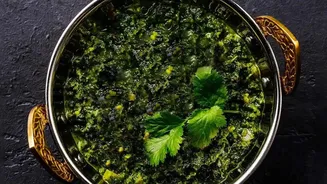
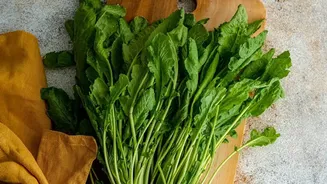
In North India, winter brings a bounty of fresh produce, but none is more celebrated than sarson, or mustard greens. These leafy greens are the foundation of sarson ka saag, a dish synonymous with the season. While 'saag' is a general term for dishes
made with various greens, sarson ka saag is specifically a mustard greens-based curry, slow-cooked to perfection. Traditionally harvested in the cooler months, these greens offer a pungent, slightly bitter, and peppery flavour that defines this beloved winter delicacy.
Why Mustard Greens Are a Winter Staple
Mustard greens are more than just a seasonal ingredient; they are a nutritional powerhouse perfectly suited for colder weather. Packed with vitamins A, C, and K, they are believed to help boost immunity and provide warmth. Their robust nutritional profile includes antioxidants like beta carotene, which supports heart and eye health. The slightly bitter taste comes from natural compounds called glucosinolates, which transform during slow cooking from sharp and pungent to deep and savoury. This makes the greens not only delicious but also incredibly nourishing during a season when the body craves hearty, energy-rich foods.
The Art of Balancing Flavours in Saag
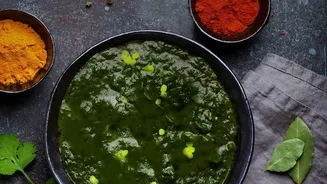
The secret to a great saag lies in balance. Mustard greens have a strong, peppery character that can be overwhelming on its own. To mellow this, cooks traditionally blend them with other, milder greens. Spinach (palak) is a common addition, lending a softer texture and balancing the bitterness. Other greens like bathua (chenopodium or goosefoot) and fenugreek (methi) are also frequently used to add layers of flavour and complexity. This blend is the key to achieving the dish's signature deep, earthy taste. The final dish is often finished with a touch of jaggery to counteract any remaining bitterness and a tempering of aromatics to enhance its richness.
Preparing and Cooking Your Greens
The preparation of saag is a labour of love, but the results are well worth it. The first crucial step is to wash the greens thoroughly multiple times to remove all dirt and grit. After washing, the greens are typically chopped and slow-cooked, often in a pressure cooker, with aromatics like ginger, garlic, and green chillies until they are completely tender. This slow-cooking process is essential for breaking down the fibrous leaves and developing a creamy consistency. Once cooked, the greens are traditionally pureed to a coarse texture, not a perfectly smooth paste. To thicken the saag and give it a velvety finish, maize flour (makki ka atta) is often whisked in before a final simmer.
The Perfect Accompaniments
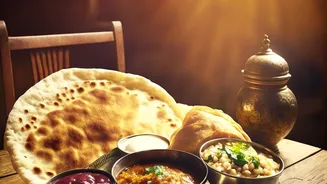
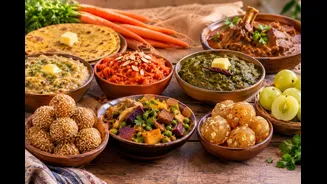
Sarson ka saag is almost inseparable from its traditional partner: makki di roti, a rustic flatbread made from maize flour. This combination is a winter staple in Punjab. The saag is typically served hot, with a generous dollop of white butter (makhan) or ghee melting into the centre, adding a final layer of richness. Some also enjoy it with a side of raw onions and a piece of jaggery (gud) to complete the meal. This pairing isn't just about taste; it's a wholesome combination that provides comfort and sustenance on a cold day.