




From Cane to Kitchen: A Tale of Two Processes
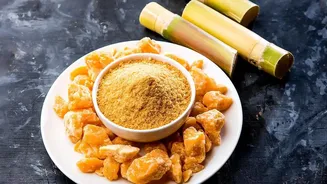
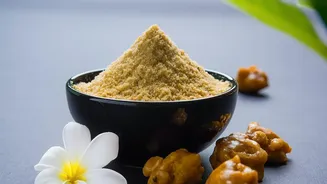
Both jaggery and white sugar begin their journey as sugarcane juice, but their paths quickly diverge. Jaggery production is a minimalist affair: the juice is simply filtered and boiled in large, open pans until it thickens and solidifies. This process
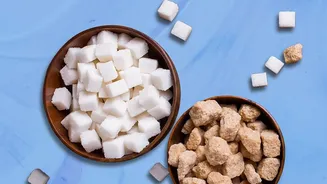
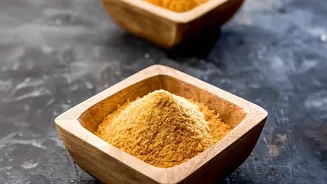
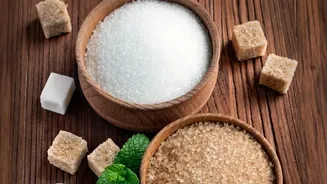
is what gives jaggery its characteristic golden-to-dark-brown hue and rich, caramel-like flavour. Because it's unrefined, it retains the natural molasses content of the sugarcane.White sugar, on the other hand, undergoes extensive industrial refining. After the juice is extracted, it is clarified, filtered, and crystallised to separate the pure sucrose from the molasses. This multi-step process, which can involve chemicals like sulphur dioxide, strips away the molasses, minerals, and colour, resulting in the uniform white crystals and neutral sweetness we are familiar with. Essentially, jaggery is what you get before this final, intensive refining stage.
The Nutritional Scorecard: More Than Just Sweetness?
Because jaggery retains its molasses, it also holds onto a profile of minerals that white sugar lacks. Jaggery contains trace amounts of iron, potassium, magnesium, and calcium. For instance, some analyses show that jaggery can contain significantly more iron than refined sugar, which has virtually none. However, the headline 'more nutritious' requires context. Calorie-wise, both are nearly identical, with 100 grams of jaggery providing around 383 calories and sugar providing 387. To get a significant dose of these minerals, you would need to consume a large amount of jaggery, and the high sugar intake would likely negate any benefits. So, while jaggery is the winner on micronutrients, it's a marginal victory in the context of a balanced diet. It is best seen as a slightly less 'empty' calorie source, not a health supplement.
The Glycemic Index Myth
One of the most persistent beliefs about jaggery is that it's safer for people with diabetes because it's 'natural'. This is a dangerous misconception. The glycemic index (GI), which measures how quickly a food raises blood sugar levels, tells a surprising story. Several sources indicate that sugarcane jaggery has a high GI, in some cases even higher than that of white sugar (around 84 for jaggery versus 65 for sugar). This means jaggery can cause a rapid spike in blood glucose, similar to or even faster than white sugar. For managing blood sugar, both should be treated with the same caution and consumed in strict moderation.
Winter Warmth and Digestive Aid: The Traditional View
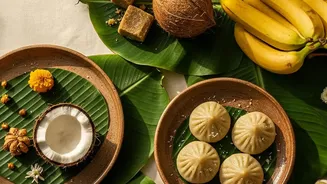
In many parts of India, jaggery is a winter staple, traditionally believed to have a 'warming' effect on the body. This is partly because it provides a quick source of energy, which the body uses to maintain its temperature in the cold. Traditionally, it is also consumed after meals to aid digestion, believed to stimulate digestive enzymes. Paired with ingredients like ginger, sesame seeds (til), or ghee, it forms the base of many winter sweets like chikki and laddoos that are designed to be nourishing and energy-dense. While scientific evidence for these specific benefits is limited, jaggery's role in traditional winter wellness is undeniable, offering comfort and a quick energy boost. It has also been traditionally used to help soothe coughs and colds.
The Verdict: A Better Choice, Not a Miracle Food
So, should you switch to jaggery this winter? Jaggery is the moderately better choice, but it is not a 'health food'. Its main advantages are its mineral content and the fact that it is less processed. When you need a sweetener, choosing jaggery over white sugar provides a few extra nutrients that would otherwise be absent. However, it is crucial to remember that it is still a form of sugar. It carries the same caloric load and has a significant impact on blood sugar levels. The key is not to add jaggery on top of your existing sugar intake but to use it as a direct replacement, and to do so in moderation. The biggest health benefit comes not from choosing the 'right' sugar, but from reducing your overall consumption of all added sugars.