




The Liquid Question: Mastering the 100ml Rule
The most common reason for delays at security screening is incorrectly packed liquids, aerosols, and gels (LAGs). In India, the Bureau of Civil Aviation Security (BCAS) enforces rules aligned with global standards. Each liquid container in your carry-on
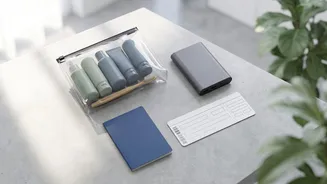
must be 100ml or less. It's the size of the container that matters, not how much liquid is inside; a half-empty 200ml shampoo bottle is not allowed. All these small containers must fit comfortably inside a single, transparent, re-sealable plastic bag with a capacity of up to one litre. This rule applies to everything from perfume and sunscreen to toothpaste and hand sanitiser. Remember that this one-litre bag is your total allowance per passenger and you may be asked to present it separately for screening. This applies to both domestic and international flights departing from India. Items like prescribed medicines and baby food are typically exempt but should be declared to security personnel.
Power Banks: The Carry-On Imperative
Power banks, which contain lithium-ion batteries, are considered a potential fire risk and face strict regulations. The most critical rule is that power banks must always be in your carry-on luggage; they are strictly forbidden in checked baggage. Most airlines in India and internationally limit passengers to a maximum of two power banks each. The capacity of each power bank must generally be 100 Watt-hours (Wh) or less. While some airlines may permit units between 100Wh and 160Wh with prior approval, anything above 160Wh is universally banned. Crucially, recent directives from India's Directorate General of Civil Aviation (DGCA) and other international bodies have banned the use of power banks to charge devices during a flight. You are also not allowed to recharge the power bank itself using the in-seat power outlets. For safety, it's advised to keep power banks in an under-seat bag rather than an overhead bin.
Taming the Tech Tangle: Chargers and Accessories
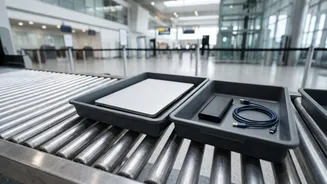
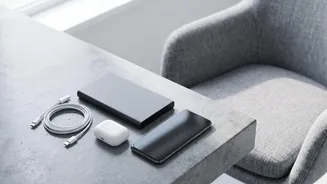
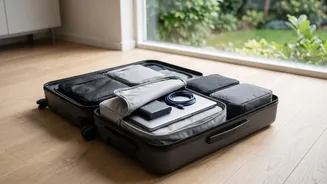
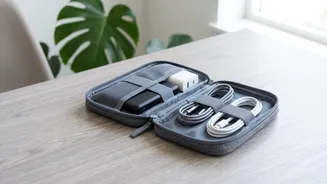
While most personal electronic devices like laptops, tablets, and cameras are allowed in your cabin bag, how you pack them matters. To speed up your security check, be prepared to remove large electronics, such as laptops, from your bag and place them in a separate tray for screening. To avoid a frustrating mess of cables, it's wise to use a dedicated tech pouch or packing cube. This keeps your chargers, cables, and adaptors organised and in one place. Consider investing in a multi-port USB charger to reduce the number of plugs you need to carry. Keep this pouch easily accessible, as security officials may want to inspect its contents. Packing your electronics neatly not only helps at the airport but also prevents damage to your devices and makes it easier to find what you need during your travels.
Your Strategy for the Security Belt
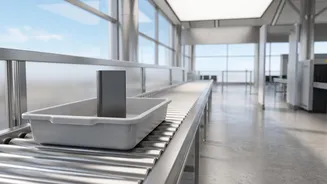
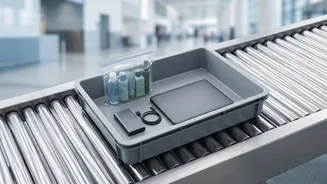
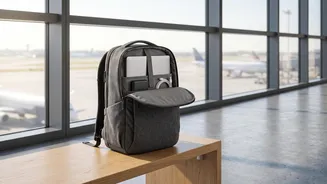
A smooth security experience is all about preparation. Before you even reach the screening belt, consolidate your pocket items—phone, wallet, keys—into your jacket or a designated pocket in your carry-on bag. When you arrive at the trays, you'll have a clear sequence of actions. First, place your one-litre bag of liquids into a tray. Next, take out your laptop or any other large electronics and place them in their own tray. Finally, put your coat and your carry-on bag through the scanner. By having your liquids and electronics already separated and easy to access, you avoid holding up the line while you rummage through your belongings. This simple system makes the process predictable and efficient, significantly reducing the potential for stress and last-minute repacking.