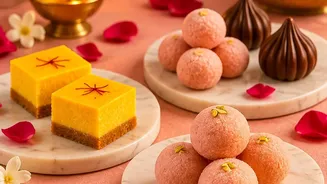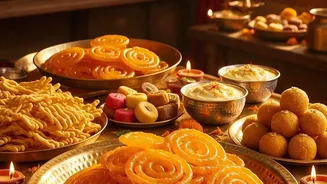



The joy of Diwali often leaves a delicious legacy: boxes of mithai. But as the days pass, how do you know if that ladoo or barfi is still safe to eat? Here’s a practical guide to checking your festive treats for freshness and safety.
The First Line of Defence: Your Senses
Before you even consider
the type of sweet, use your senses as a primary guide. This simple three-step check is your most reliable tool. First, look for any visible signs of spoilage. This includes any fuzzy white, green, or black mould. If you see mould on one piece, it's best to discard the entire container, as spores can spread invisibly. Also, look for changes in texture; for example, a normally soft sweet that has become hard, or a dry sweet that has gone tacky or slimy on the surface. Next, trust your nose. Milk-based sweets, in particular, will develop a sour, sharp, or cheesy smell when they start to go bad. Any fermented or alcoholic odour is also a clear red flag, especially in syrupy sweets. Finally, if it looks and smells okay, a tiny taste can confirm. If it tastes sour, off, or simply stale, it’s not worth the risk. When in doubt, it is always safest to throw it out.
High-Risk Sweets: Milk and Khoya
Sweets made with milk, khoya (mawa), or chhena (paneer) are the most perishable. This category includes treats like kalakand, milk barfi, peda, sandesh, and fresh rasgulla. Because of their high moisture and protein content, they are a prime breeding ground for bacteria. These sweets have a very short shelf life and should always be stored in the refrigerator. As a rule, they should be consumed within two to four days of being made or purchased. Any longer, and the risk of spoilage increases significantly, even if visible signs aren't present yet. A sour smell is often the first and most obvious sign that a milk-based sweet has turned.
Syrupy Sweets: A Sticky Situation
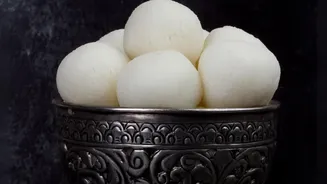
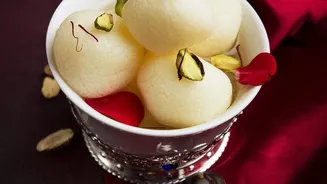
Sweets like gulab jamun and rasgulla, which are soaked in sugar syrup, have a slightly different spoilage pattern. While sugar acts as a preservative to some extent, moisture still makes them vulnerable. The most telling sign of spoilage is in the syrup itself. If the syrup appears cloudy, stringy, or has started to bubble or froth, the sweets are no longer safe to eat. This indicates fermentation. You might also notice a sour or alcoholic smell. Even if the sweet itself looks fine, contaminated syrup means the whole batch must be discarded. Stored in the fridge, these sweets generally last for about four to five days.
The Sturdier Sweets: Flour, Ghee and Nuts
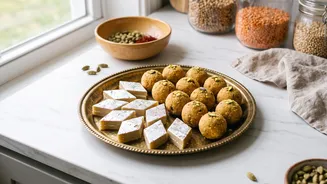
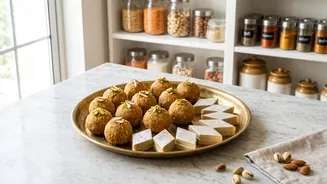
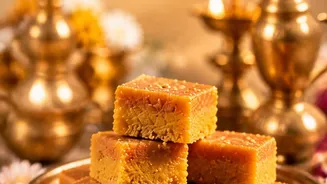
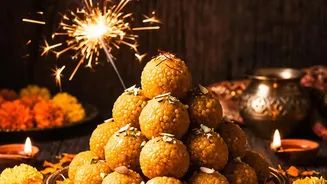
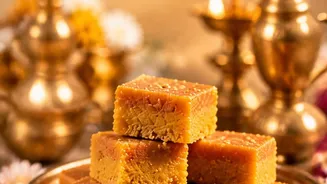
This category is the champion of the Diwali leftovers box. Sweets made primarily with gram flour (besan), ghee, sugar, and nuts have a much lower moisture content and are therefore more stable. Think of besan ladoo, motichoor ladoo, kaju katli, mysore pak, and various nut-based barfis. These sweets can typically last for a week to ten days when stored properly at room temperature in an airtight container. For kaju katli, a common sign of ageing is the surface becoming tacky and then hard with a dull cast. For ladoos made with ghee, rancidity is the main concern. They will develop a stale or unpleasant 'old oil' smell. While not always immediately harmful, it indicates the fats have oxidized and the quality is poor.
Proper Storage is Key to Longevity
How you store your mithai is just as important as what it's made of. The golden rule is to use an airtight container, which protects the sweets from air, humidity, and absorbing other odours from the fridge. It's crucial to separate dry sweets from syrupy ones; storing them together will cause the dry sweets to become soggy. Milk-based and syrupy sweets must always be refrigerated. Drier sweets like ladoos and nut barfis are best kept at a cool room temperature, as refrigeration can sometimes dry them out or harden them. If you have a large batch, you can also freeze denser sweets like barfis and ladoos. Wrap them individually, place them in a freezer-safe container, and they can last for a month or two. Thaw them in the refrigerator overnight rather than at room temperature to preserve their texture.