

The Quintessential Winter Pair
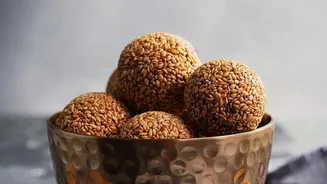
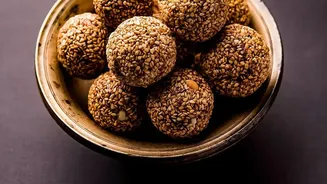
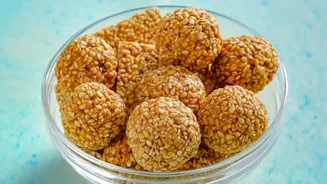
At its core, a til-gur sweet is a simple, wholesome confection made from roasted sesame seeds bound together with melted jaggery. This combination is the foundation for a wide array of beloved treats, from the familiar round Til Ladoos and brittle Chikki
to the flaky Gajak and softer, crumbly Tilkut. The magic lies in the synergy of these two ingredients. Sesame seeds, known as 'til' in Hindi, are tiny, oil-rich seeds with a nutty flavour that deepens upon roasting. Jaggery, or 'gur', is an unrefined sweetener made from concentrated sugarcane juice, which retains its natural molasses and offers a complex, caramel-like taste that is distinct from white sugar. Together, they create a perfect balance of texture and flavour that is synonymous with Indian winter.
A Tradition Rooted in Seasonality
The prominence of til and gur in winter is no coincidence; it is deeply tied to India's agricultural cycles. Sesame is typically harvested in the winter months, while the production of fresh jaggery from sugarcane also peaks during this time. This seasonal availability made them a natural choice for winter cuisine. Beyond simple availability, traditional wisdom, particularly Ayurveda, regards both ingredients as 'warming'. It is believed that they generate internal heat, helping the body stay warm and resilient against the cold. This concept of using food to balance the body against seasonal changes is a cornerstone of traditional Indian dietary practices, making til-gur sweets a practical and nourishing choice for the colder, drier months.
The Heart of Harvest Festivals
Til-gur sweets are inextricably linked to Makar Sankranti, the vibrant harvest festival celebrated across India in mid-January. The festival marks the sun's transition into the northern hemisphere, symbolising a shift towards longer, warmer days. In Maharashtra, families exchange 'tilgul' while reciting the phrase 'Tilgul ghya, goad goad bola,' which means 'Eat this sesame and jaggery and speak sweet words'. This beautiful tradition encourages forgiveness and the mending of relationships. Similar customs are observed during Lohri in Punjab and Pongal in the south, where these sweets symbolise gratitude for the harvest, prosperity, and goodwill for the year ahead. The sticky jaggery holding countless sesame seeds together is often seen as a metaphor for unity and friendship.
A Nutritional Powerhouse
Beyond tradition and taste, the combination of sesame and jaggery offers significant health benefits. Sesame seeds are a fantastic source of plant-based protein, healthy fats, and crucial minerals like calcium, iron, magnesium, and zinc. The calcium content is particularly noteworthy, supporting bone health during a season when people are often less active. Jaggery, being unrefined, provides a quick energy boost and contains trace minerals like iron and potassium. Unlike refined sugar, it is a complex carbohydrate that releases energy more steadily. Together, this duo helps boost immunity, aid digestion thanks to the fibre in sesame and enzymes stimulated by jaggery, and improve skin health, making it a truly functional food.
A Spectrum of Sweets
While the ingredients are simple, the variety of sweets is impressive. Til Ladoo, a homemade staple, consists of roasted sesame seeds rolled into balls with jaggery. Chikki is a thin, brittle candy, often made with peanuts but also popular in a sesame-only version. Gajak, a specialty from regions like Rajasthan and Madhya Pradesh, is a more artisanal sweet where the mixture is hammered into thin, flaky layers that melt in the mouth. Tilkut is softer and more granular, created by pounding the ingredients together. Regional variations like Til Pitha in Assam and Ellu Bella in Karnataka showcase the versatility of this classic pairing, each with its own unique texture and local flavour.