








A First for Tamil Nadu
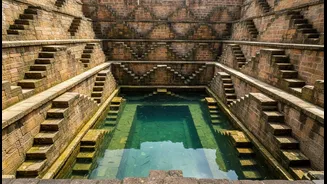
Archaeologists from the Tamil Nadu state department have unearthed a square-shaped brick stepwell at Karivalamvandanallur, near Tenkasi. This is a landmark discovery, as experts say it is the first-ever brick stepwell from the early historic period, also
known as the Sangam Age, to be found in the state. The well, measuring four by four metres, features stone steps descending into the brick-walled structure. The find is being compared in significance to other major Sangam sites like Keeladi, Alagankulam, and Poompuhar, suggesting Karivalamvandanallur could be another key to unlocking the secrets of ancient Tamil civilization.
Clues in the Construction
The very materials and methods used to build the well tell a story. The bricks are of a specific size—40cm long, 20cm wide, and 7cm thick—which is consistent with those found at other prominent Sangam Age sites. This consistency allows archaeologists to date the structure to the same period, roughly 2,500 years ago. The walls were constructed in a sturdy interlocking fashion, using clay as a binding agent. Furthermore, the noticeable wear on the stone steps suggests the well was in use for a very long time, serving as a vital community resource.
Ancient Water Wisdom
This stepwell is more than just an old structure; it's a testament to the sophisticated understanding of water management possessed by ancient Tamils. According to K. Rajan, an advisor to the state archaeology department, the structure is a clear indicator of well-planned water systems. Built on a paleochannel (the path of an old river), it would have served as a reliable water source, especially during dry summer months. Water stains found on the inner walls indicate that the water table was once high, confirming its function as a reservoir for the community.
A Hub of Trade and Life
The location of the stepwell is itself significant. The site is situated on an ancient trade route that once connected the Pandya capital of Madurai to the west coast through the Shencottah pass. This is supported by the fact that Roman gold coins were discovered in the same area back in the 1930s. The ongoing excavation, which has been proceeding for three months, has also yielded other fascinating artifacts. These include high-tin bronze and iron objects, terracotta figurines, glass beads, and even hopscotches used for games, painting a vivid picture of a bustling settlement.
More Than Just a Well
The dig at Karivalamvandanallur has uncovered more than just the stepwell. Researchers have identified distinct habitation and cremation areas, suggesting a well-organized settlement. Among the other notable finds is a beautiful red-slipped pot from the Iron Age, intricately decorated with paintings of peacocks. This, along with various other pottery styles like black-and-red ware, connects the site to a wider cultural network across ancient Tamil Nadu. Each artifact, from a tiny bead to a large brick, adds a new sentence to the evolving story of the region's rich past.