







The Truth About Frites
Let’s settle this first: what the world calls 'French fries' are Belgian. The origin story points to the Meuse Valley in the late 1600s, where locals, accustomed to frying small fish, turned to frying potatoes cut in a similar shape when the river froze.
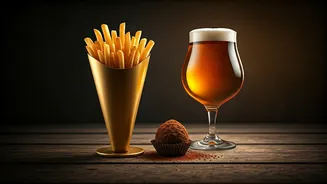
American soldiers stationed in French-speaking Wallonia during WWI are thought to have mislabelled them, and the name stuck. But the Belgian method is what matters. True Belgian frites are twice-fried, a process that creates a fluffy interior and a perfectly crisp exterior. Served in a paper cone with a dollop of mayonnaise, they are not a mere side dish; they are a national institution and a unifying cultural symbol.
Chocolate That Set the Standard
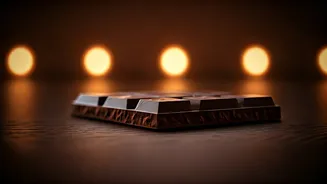
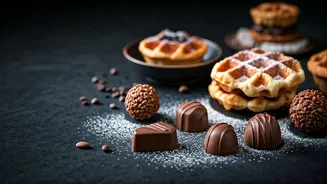
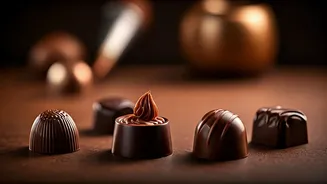
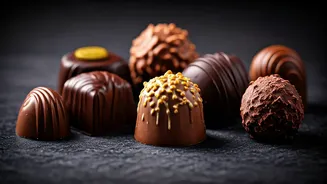
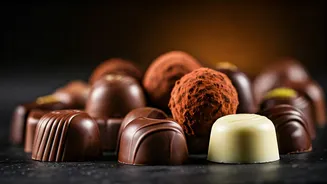
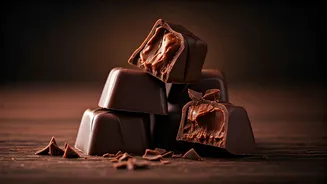
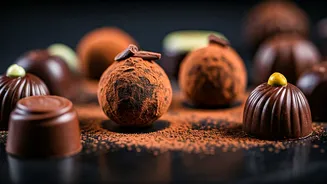
Swiss chocolate has its merits, but Belgium is where chocolate became an art form. The country's association with chocolate dates to the 17th century, but it was the invention of the praline by Jean Neuhaus Jr. in 1912 that changed everything. This was the first chocolate with a soft filling, a revolutionary concept that introduced a new level of complexity and flavour. Belgian law has long mandated high standards, such as a minimum of 35% pure cocoa, to prevent adulteration. The use of 100% cocoa butter gives it a signature smoothness, making a visit to a Belgian chocolatier a truly luxurious experience.
A Tale of Two Waffles
The singular 'Belgian waffle' known in many parts of the world doesn't truly exist in Belgium. Instead, the country offers two distinct and beloved varieties. The Brussels waffle is rectangular, light, and crispy, with deep pockets designed to hold toppings like whipped cream, fruit, or chocolate. Its batter is thin and yeast-leavened. In contrast, the Liège waffle is denser, chewier, and made from a thick dough similar to brioche, with uneven edges. Its defining feature is pearl sugar, which caramelises during cooking to create a sweet, crunchy exterior. While tourists might load them with extras, many Belgians prefer the Liège waffle plain, savouring it as a perfect on-the-go snack.
Beer Culture Honoured by UNESCO
In Germany, beer is governed by purity laws. In Belgium, brewing is an act of boundless creativity. With almost 1,500 different types, from Trappist ales brewed in monasteries to sour lambics spontaneously fermented with wild yeast, the diversity is staggering. This isn't just a hobby; it's a core part of the national identity, so much so that in 2016, UNESCO recognised Belgian beer culture as an Intangible Cultural Heritage of Humanity. Beer is also a key ingredient in the kitchen, used to create rich, complex stews like Carbonnade Flamande, a Flemish beef and onion stew slow-cooked in dark ale.
Beyond the Famous Four
While frites, chocolate, waffles, and beer are the headliners, Belgium's culinary depth goes much further. Moules-frites (mussels and fries) is considered by many to be the national dish, a generous pot of mussels steamed in white wine, garlic, and herbs, served alongside those perfect fries. The country also prizes seasonal ingredients like white asparagus and Belgian endives. Regional stews like Waterzooi from Ghent, a creamy chicken or fish stew, offer comforting, soulful flavours that speak to a cuisine built on tradition and high-quality local ingredients.
Excellence by the Numbers
For a country of its size, Belgium's density of high-end culinary establishments is astounding. It boasts one of the highest numbers of Michelin-starred restaurants per capita in the world, ranking third globally in some recent reports. This isn't a new trend; Belgium was the first country outside of France to have a three-star Michelin restaurant back in 1972. Cities like Antwerp have become fine-dining powerhouses, offering world-class cuisine that rivals much larger global capitals. This concentration of excellence proves that from street-side friteries to haute cuisine, Belgians are deeply serious about food.