







From Messy Memo to Organised Mission
Imagine dictating a stream-of-consciousness idea into your phone: “Okay, so for the Diwali campaign, we need to get the creative designs done, maybe run some ads on Instagram and Facebook, check with the finance team about the budget, and we need to email
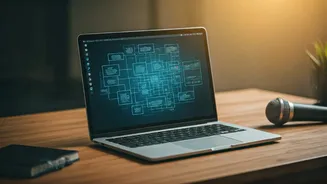
the vendor about the packaging... oh, and set a meeting for next Tuesday to review everything.” Previously, this voice note was a problem for ‘Future You’ to solve. You’d have to listen back, manually type out a to-do list, create calendar invites, and draft emails. The friction was immense, and good ideas often died in our voice memo apps. Today, artificial intelligence is closing that gap between thought and action. The technology described in the headline isn't science fiction; it’s a rapidly emerging capability. New AI models can listen to your unstructured audio, understand the intent, identify distinct tasks, and then automatically organise them into a structured format. This format is often called a 'task pipeline'—a clear, step-by-step workflow that can be fed directly into project management tools.
How Does It Actually Work?
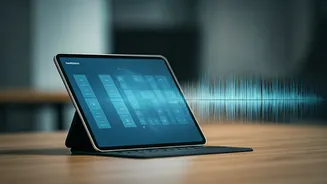
The process happens in a few lightning-fast steps, all powered by AI. First, advanced speech-to-text algorithms convert your spoken words into a written transcript. This is more than just basic dictation; modern AI can handle different accents, background noise, and conversational pacing with remarkable accuracy. Next, a Large Language Model (LLM)—the same kind of technology behind tools like ChatGPT and Google Gemini—analyses the transcript. It uses Natural Language Understanding (NLU) to identify the key components: tasks, deadlines, people involved, and dependencies. It understands that “check with the finance team about the budget” is a task assigned to a specific department and that “set a meeting for next Tuesday” is a calendar event with a date. Finally, the AI structures this information into a machine-readable format like JSON or a simple list, which can then be automatically sent to other applications. Your single voice note has now become a set of tasks in Asana, a new card on a Trello board, and a calendar invite sent via Google Calendar, all without you lifting another finger.
A Game-Changer for Indian Professionals
In India's fast-paced business environment, this technology offers a significant competitive advantage. Consider these scenarios: - **The Startup Founder:** A founder in Bengaluru is constantly juggling product development, fundraising, and marketing. While stuck in traffic, she can dictate her entire weekly strategy. The AI can create separate task lists for her tech lead, marketing manager, and financial advisor, populating their respective project boards instantly. - **The Project Manager:** A manager in Gurgaon overseeing a complex infrastructure project can do a site walk-through, recording observations and action items. The AI can transcribe her notes, identify urgent safety issues, assign repair tasks to the relevant engineers, and schedule a follow-up inspection. - **The Freelance Creative:** A content creator in Mumbai can brainstorm a video series out loud. The AI can structure it into a production plan, complete with a shot list, research topics for the script, and a social media promotion checklist. This frees up creative energy that would otherwise be spent on tedious administration.
The Tools Making This Possible
This capability isn't confined to a single app. It’s an ecosystem trend. Automation platforms like Zapier and Make.com are at the forefront, allowing users to build custom 'Zaps' or 'Scenarios' that connect their voice input (via an app like Voice Memos or a dedicated capture tool) to hundreds of other applications. For example, you could create a workflow where any new audio file in a specific Google Drive folder is automatically transcribed by OpenAI's Whisper, analysed by GPT-4o, and the resulting tasks are added to your Notion database. Furthermore, many existing productivity apps are starting to build these features directly into their platforms. The goal is to create a frictionless experience where capturing an idea is synonymous with acting on it. This integration is key, as it removes the need for users to be expert-level tech integrators. As these features become more mainstream, expect to see a 'magic microphone' button appearing in more of your favourite work tools.
More Than Just Productivity Hacking
While the immediate benefit is enhanced productivity, the long-term impact is more profound. This technology fundamentally lowers the barrier to execution. It democratises workflow automation, making it accessible to anyone who can speak. It can help reduce the cognitive load on busy professionals, preventing burnout and allowing them to focus on high-level strategic thinking rather than administrative minutiae. By creating an instant, structured record of verbal commitments and ideas, it also improves accountability and alignment within teams. The era of ideas being lost in translation or forgotten in a notebook is coming to an end. The future of work is one where your voice doesn't just communicate ideas—it sets them in motion.