





The Mystery of the Two-Faced Moon
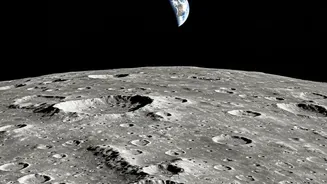
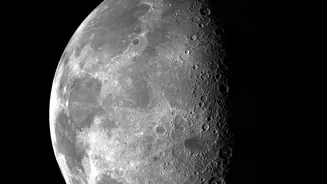
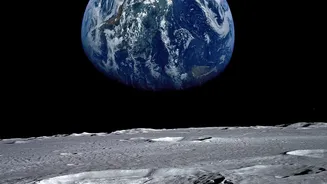
For as long as we have been able to see it, the Moon's near side has been defined by vast, dark volcanic plains known as 'maria' or seas. In stark contrast, the far side, hidden from Earth until the dawn of the space age, is a different world. It is dominated
by ancient, heavily cratered highlands with a significantly thicker crust and very few maria. This dramatic difference, known as the lunar dichotomy, has puzzled scientists for decades. Was it the result of a colossal impact? A collision with a long-lost second moon? Or something else entirely? Without physical evidence from the far side, these ideas remained compelling but unproven theories.
A Historic First: Samples from the Hidden Side
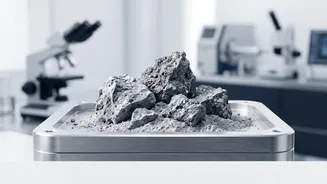
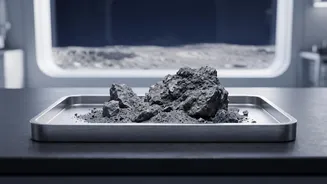
The game changed in June 2024, when China's Chang'e-6 mission successfully landed in the South Pole-Aitken basin on the lunar far side and returned nearly two kilograms of rock and soil to Earth. For the first time, researchers had physical material to analyze from this enigmatic hemisphere. A team led by Professor Hejiu Hui of Nanjing University began a meticulous comparison of these new samples with those collected from the near side by the Apollo and previous Chang'e missions. Their goal was to see if the differences were just skin-deep or if they extended deep into the Moon's mantle.
Clues Written in Rock
The analysis revealed a fascinating story. While rocks originating from the Moon's deep mantle were broadly similar on both sides, the crustal rocks were not. The far side's crust appeared to be richer in magnesium. Meanwhile, the near side showed much higher concentrations of a unique geological mixture known as KREEP—an acronym for potassium (K), rare-earth elements (REE), and phosphorus (P). This material also contains heat-producing radioactive elements like thorium. The findings suggested the Moon's underlying engine was the same, but something had caused the surface materials to be distributed in a lopsided way.
The Lingering Influence of Earth
The new research proposes a compelling culprit: Earth itself. The model suggests that shortly after the Moon formed from a giant impact, it was a molten ball that began to cool uniformly. However, it quickly became tidally locked, with one side permanently facing our planet. Billions of years ago, the Earth and Moon were much closer, and the gravitational pull was immense. This created powerful tidal forces that generated more heat on the lunar near side. This uneven heating, the researchers suggest, created a massive temperature difference across the Moon's still-molten interior.
A World in Motion
This temperature gap triggered a vast, slow-motion circulation of magma beneath the surface. Hotter material and the remaining molten rock, rich in the elements that form KREEP, flowed preferentially toward the near side. At the same time, this subterranean current dragged the cooling, magnesium-rich crustal material toward the far side, causing it to pile up and form the thicker crust we observe today. This process, unfolding over hundreds of millions of years, effectively sculpted the Moon's two distinct faces, linking its appearance directly to its relationship with Earth. While this provides a strong explanation, scientists note that more evidence is needed to confirm the model.