







Who is Anil Menon?
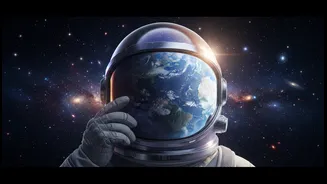
Anil Menon is a name that embodies the spirit of modern exploration. Born in Minneapolis, Minnesota, to an Indian father and a Ukrainian mother, his background is as diverse as his skill set. He is a lieutenant colonel in the US Air Force, a practicing
emergency medicine physician, and since 2021, a NASA astronaut. Before being selected for the coveted astronaut corps from over 12,000 applicants, Menon had already built a remarkable career. He served as a first responder in the Haiti and Nepal earthquakes and was SpaceX’s first-ever flight surgeon, where he was instrumental in launching the company's first humans into space during the historic Demo-2 mission. His journey includes a year in India as a Rotary Scholar supporting polio vaccination efforts, a deep connection that adds a personal layer to his professional achievements.
The Mission: Launching to the ISS
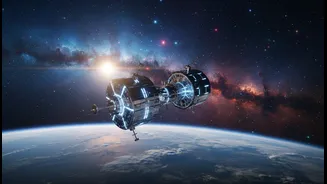
The latest and most significant development is Menon's first flight assignment. He is scheduled to launch to the International Space Station (ISS) on July 14, 2026. He will fly aboard the Roscosmos Soyuz MS-29 spacecraft from the historic Baikonur Cosmodrome in Kazakhstan, accompanied by Russian cosmonauts Pyotr Dubrov and Anna Kikina. This eight-month mission will see him serve as a flight engineer for ISS Expeditions 74 and 75. The launch marks the culmination of years of intense training, which he completed in March 2024 after being selected by NASA in 2021. This mission is not just a personal milestone; it places him in a small, elite group of astronauts of Indian heritage who have travelled to space.
A Doctor in the Stars: His Crucial Role
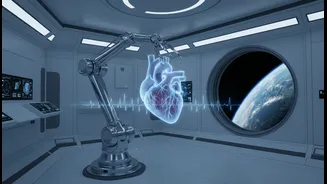
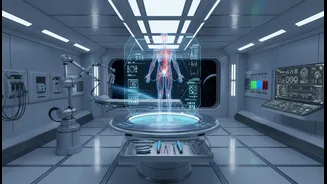
Menon isn't just a passenger; he is a specialist whose skills are critical for the future of long-duration spaceflight. As a physician with fellowship training in aerospace medicine, his primary focus will be on human health in microgravity. During his eight months in orbit, he will conduct a series of vital experiments. These include studying the effects of spaceflight on blood flow and vein structure, which are crucial for understanding how to keep astronauts healthy on future missions to the Moon and Mars. He will also test technologies for producing intravenous fluids from the station’s water supply and use AI-powered ultrasound tools—innovations that could make deep-space missions safer and more self-sufficient by reducing the reliance on medical support from Earth.
The Indian Connection: Beyond Heritage
For India, Menon’s mission resonates deeply. He follows in the footsteps of pioneers like Rakesh Sharma, Kalpana Chawla, and Sunita Williams, continuing a legacy of Indian presence in space. His journey serves as a powerful inspiration as India forges ahead with its own ambitious human spaceflight program, Gaganyaan. While Menon’s mission is with NASA, his expertise as a flight surgeon who helped build SpaceX's medical program is directly relevant to the challenges all space-faring nations face. His success is a moment of immense pride for the Indian diaspora and a tangible link between India's growing technological prowess and the global human exploration effort. It highlights a future where collaboration and shared knowledge will propel humanity, including India, further into the cosmos.