





The Invisible Danger on the Platform
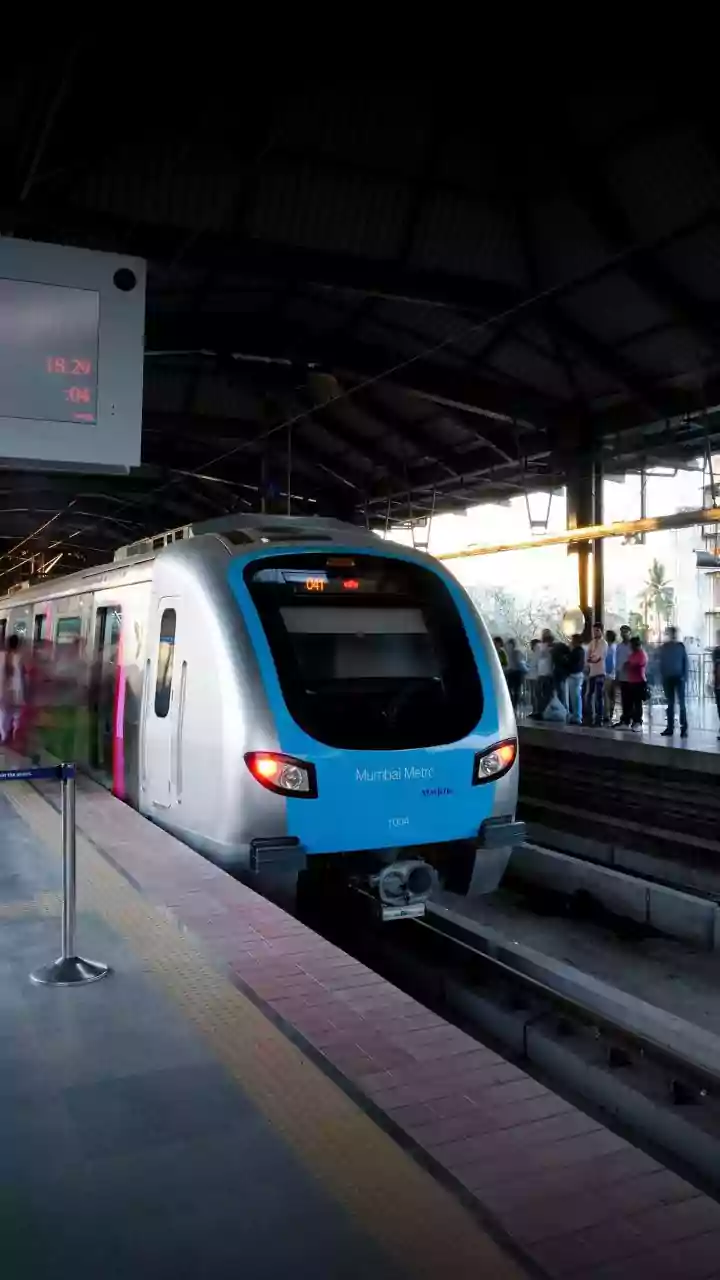
Anyone who has travelled through a major city’s metro system, especially during rush hour, is familiar with the stuffy, metallic smell of the underground. But beyond the immediate sensory experience lies a more serious concern: particulate matter (PM).
These microscopic particles, often referred to as fine dust, are a major pollutant. Studies have shown that air quality in underground metro stations can be significantly worse than at street level. A recent study on Chennai's metro, for example, found that PM levels on underground platforms were five to nine times higher than inside the train coaches. This pollution comes from various sources, including brake dust from trains, wear and tear on the tracks, and outdoor traffic pollution that gets sucked into the enclosed spaces. The most dangerous of these are PM2.5 particles, which are so small they can penetrate deep into the respiratory system and even enter the bloodstream, posing long-term health risks.
Nature's Answer to Urban Pollution
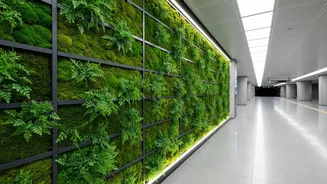
To combat this pervasive problem, cities and tech companies are turning to a surprising ally: nature. Bio-based air filtration is an emerging technology that uses living organisms to capture and degrade pollutants. Instead of relying solely on mechanical filters, which require energy and frequent replacement, these systems harness the natural abilities of plants like moss, as well as bacteria and algae. One of the most prominent examples is the 'CityTree', a modular living wall packed with specific types of moss. These green installations are not just for decoration; they are active bio-filters designed to function as self-sustaining ecosystems that scrub the air of harmful particles and compounds.
How Moss and Microbes Clean the Air
The secret to moss's effectiveness lies in its unique biology. Unlike other plants, moss absorbs water and nutrients directly through its vast leaf surface area. This structure also makes it incredibly effective at trapping airborne particles. Due to electrostatic forces, fine dust particles, which are often positively charged, are drawn to and stick to the negatively charged surface of the moss. But the process doesn't stop there. Microorganisms living on the moss then get to work, breaking down some of the captured pollutants and converting them into harmless biomass for the plant. This biological process effectively 'eats' the pollution. Some systems can filter up to 82% of fine dust from the air that passes through them. These bio-filters are often enhanced with IoT technology, which monitors environmental conditions like humidity and temperature to ensure the moss is always thriving and filtering at peak efficiency.
From Pilot Projects to Public Transit
While still a relatively new technology, bio-based filters are being tested in pollution hotspots across Europe. German tech firm Green City Solutions has deployed its moss-based 'CityTree' units in various urban settings, including near busy roads and public squares. In some cases, these moss filters have even been integrated directly into public infrastructure like railings, passively cleaning the air as people walk by. Other pilot programs have explored using bioreactors filled with harmless bacteria or algae inside subway stations to break down pollutants. While large-scale deployment across entire metro networks like those in Delhi or Mumbai has not yet happened, these international case studies provide a powerful proof of concept. They demonstrate a tangible way to improve air quality in the exact micro-environments where millions of Indian commuters spend their time every day.
Real-World Impact and Future Challenges
The data from existing installations is promising. Scientific studies and field data have shown that moss walls can significantly reduce concentrations of particulate matter and nitrogen oxides in their immediate vicinity. However, the technology is not a magic bullet. The effectiveness of a bio-filter depends on maintaining the right conditions, particularly moisture. In dry climates, this can require integrated irrigation systems, which adds to the complexity and cost. Furthermore, while these installations are highly effective at cleaning the air locally, deploying them on a scale large enough to clean an entire city's air remains a significant challenge. Experts see them not as a replacement for conventional HEPA filters or broader anti-pollution policies, but as a crucial complementary tool that brings green, sustainable technology directly to the places where people are most exposed.