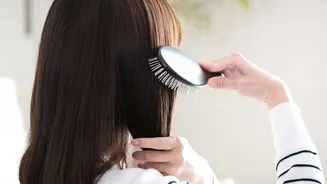







Start Your Defence in the Shower
Fighting humidity begins with your wash routine. Hair that is well-hydrated is less porous and, therefore, less likely to absorb moisture from the air, which is the primary cause of frizz. Start with a sulphate-free, moisturising shampoo and follow up
with a rich conditioner, focusing on the mid-lengths and ends. Once a week, use a deep conditioning mask to really lock in moisture. A final rinse with cool water can help seal the hair cuticle, creating a smoother surface that’s better prepared to face the damp air outside.
Layer Products to Create a Shield
Think of styling products as your armour against humidity. Layering lightweight products is more effective than using one heavy cream. On damp, towel-blotted hair, apply a leave-in conditioner followed by an anti-frizz serum or cream. These products work by creating a protective barrier that locks out environmental moisture. If you use heat styling, a heat protectant is non-negotiable. Finish your style with a light mist of an anti-humidity finishing spray, which acts as a final seal.
Choose Climate-Conscious Hairstyles
On the most humid days, sometimes the best strategy is to work with the weather, not against it. Protective styles like braids, twists, and buns can be your best friend, as they keep hair contained and minimise its exposure to moisture. A sleek low ponytail or a chic low bun can look polished while keeping your neck cool. Braids can even look better as the day goes on, as a little bit of texture from the humidity can add grip and volume.
Finding Your Perfect Fringe
A fringe, or bangs, can instantly update your look, but the wrong style can be a nightmare in humidity. A solid, blunt fringe can separate into oily strips on a damp forehead, while softer, more textured styles are more forgiving. The key is to choose a shape that works with your hair's natural texture and your lifestyle. From wispy and piecey to bold and blunt, there’s a fringe for everyone.
The Effortless Curtain Fringe
Still reigning as one of the most popular styles, curtain bangs are incredibly versatile and flattering for most face shapes. They are parted in the middle and typically angled to be shorter at the center and longer toward the cheekbones, beautifully framing the face. Their softness makes them manageable in humidity; they can be styled with a round brush for a bouncy 'swoop' or left to air-dry for a more casual look. Because they blend seamlessly into layers, they are also one of the easiest styles to grow out.
The Delicate Wispy Fringe
For those who are curious about bangs but not ready for a heavy commitment, a wispy fringe is the perfect entry point. This style is light, feathery, and slightly see-through, offering a soft, romantic look without the weight of a traditional fringe. This 'airy' quality makes them more breathable and less prone to looking flat and sweaty in the heat. They are low-maintenance and can easily be pushed to the side or blended into the rest of your hair.
The Bold Blunt Fringe
A blunt fringe makes a strong, stylish statement, cut straight across the forehead. This style works best on naturally straight and thicker hair types that can support the solid, sharp line. While undeniably chic, this is the highest-maintenance option, especially in humid climates. It requires regular trims every three to four weeks to maintain its sharp line and may need daily styling with a flat iron to stay sleek. An anti-frizz smoothing serum is essential to prevent it from puffing up.
Managing a Fringe in the Heat
The biggest challenge with a fringe in humidity is oil and sweat from your forehead. Dry shampoo is an essential tool; a quick spray at the roots will absorb oil and add volume. Some people find it helpful to wash just their bangs in the sink each morning for a fresh start. You can also use blotting papers on your forehead throughout the day to keep oil from transferring to your hair. For curtain bangs, a dry texturising spray can help absorb moisture while maintaining that soft, swooping shape.