





A Journey to a Metal World
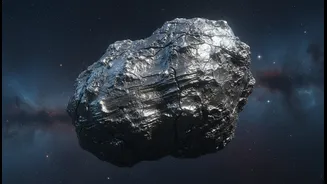
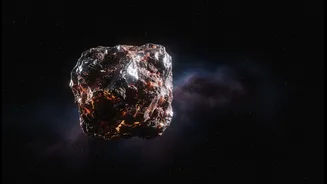
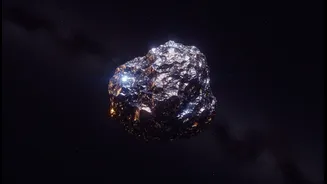
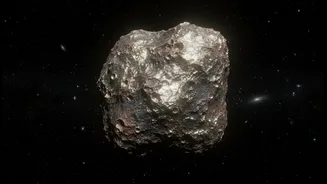
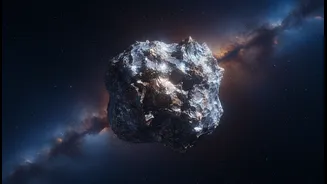
Deep in the main asteroid belt between Mars and Jupiter lies an object unlike any other we have visited: 16 Psyche. While most asteroids are rocky or icy, Psyche appears to be a giant, metal-rich body, measuring over 200 kilometers in diameter. Scientists
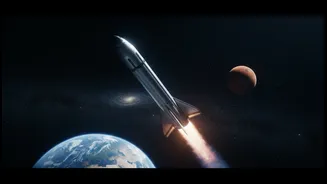
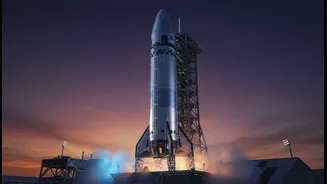
theorize that it could be the exposed nickel-iron core of a protoplanet—an infant world that was shattered by cataclysmic collisions billions of years ago. We cannot drill down to Earth's core, but this mission offers the next best thing: a chance to visit a planetary building block that was stripped bare, giving us a direct look at the material that forms the heart of worlds like our own. After launching in October 2023, the NASA spacecraft is now on its multi-year journey to rendezvous with this strange object in 2029.
The Core of the Matter
The leading theory for Psyche's origin is that it was once a planetesimal that, like early Earth, underwent differentiation, a process where heavier materials like iron and nickel sink to form a core, while lighter silicate rock rises to form a mantle and crust. Violent hit-and-run collisions in the chaotic early solar system might have stripped away Psyche's rocky outer layers, leaving the dense metallic core behind. However, Earth-based radar and thermal observations have introduced more complexity. Data on Psyche's density suggests it might be less dense than a solid hunk of iron, indicating it might be more of a mix of metal and rock, or perhaps highly porous. One intriguing theory even proposes the existence of ferrovolcanism, where iron volcanoes could have coated a rocky body with metal. The Psyche mission is designed to solve this very puzzle.
An Instrument Check at Mars
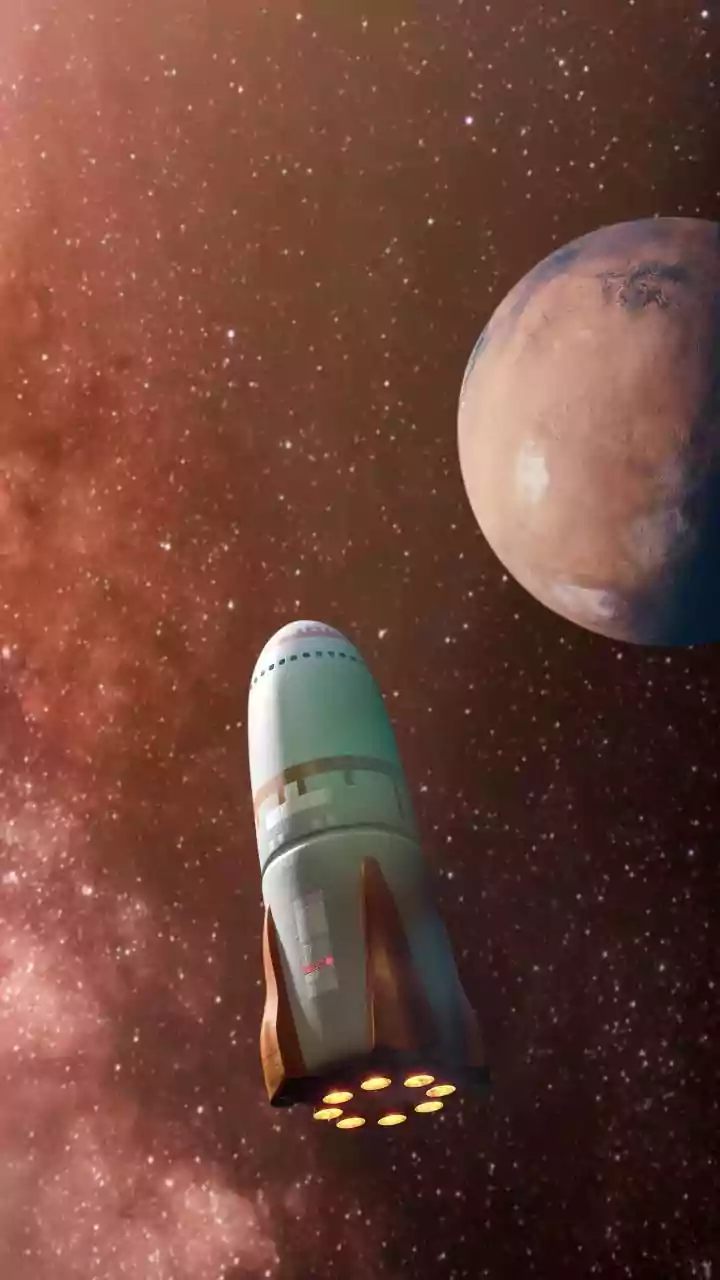
In May 2026, the Psyche spacecraft executed a crucial flyby of Mars. The primary purpose was a gravity assist—using the planet's gravity to gain speed and adjust its trajectory for the final leg of its journey to the asteroid belt. This maneuver also provided a perfect opportunity for the mission team to test and calibrate the spacecraft's scientific instruments on a well-studied planetary target. The multispectral imager captured stunning, high-resolution photos of Mars, even spotting its tiny moons Phobos and Deimos. The magnetometer successfully detected Mars' magnetic environment where it interacts with the solar wind, and the neutron spectrometer took readings of particles escaping the planet's atmosphere. These tests confirmed that all systems are working perfectly, preparing them for their ultimate task at the far more mysterious asteroid.
A Glimpse of Solar System Dawn
By studying Psyche, scientists hope to effectively travel back in time. If it is an exposed core, its surface could hold clues about the very process of core formation. For instance, if the core was once molten, it may have generated a magnetic field. While that field would be long gone, it could have left a remnant magnetic signature in the asteroid's materials, which Psyche's magnetometer is designed to detect. The spacecraft's Gamma-Ray and Neutron Spectrometer will map the asteroid's surface composition, determining what specific elements are present and in what quantities. This could help scientists determine whether Psyche was formed under conditions different from those that created Earth's core. These observations will help to either confirm or rewrite our understanding of the violent era of planet formation.
The Mission Ahead
With the Mars flyby complete, the Psyche spacecraft is now on course for its 2029 arrival. As it gets closer, its high-resolution cameras will begin to resolve Psyche from a mere point of light into a detailed world. Once captured by the asteroid's weak gravity, the spacecraft will spend nearly two years in a series of progressively lower orbits. From these vantage points, it will meticulously map the topography, analyze the chemical composition, and measure the gravity and magnetic properties of this unique object. Each piece of data will add to a new chapter in planetary science, one that has been previously inaccessible. The key questions remain: is Psyche a true protoplanetary core, a rubble pile of mixed rock and metal, or something no one has imagined? In a few years, we will begin to get the answers.