


India's Next Great Interplanetary Leap
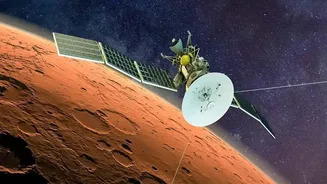
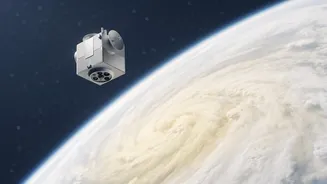
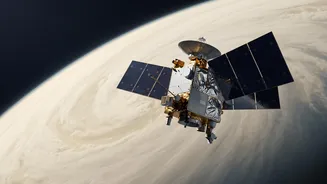
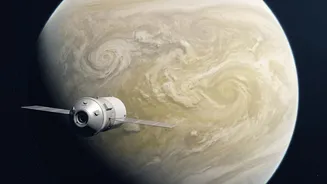
Following the historic successes of the Chandrayaan missions to the Moon and the Mangalyaan mission to Mars, the Indian Space Research Organisation (ISRO) is embarking on its next major interplanetary journey: a mission to Venus. Unofficially named Shukrayaan-1,
which translates from Sanskrit to 'Venus Craft', this orbiter represents a significant step in India's space exploration ambitions. Formally approved by the Union Cabinet in September 2024, the mission aims to perform a comprehensive global survey of Earth's so-called 'twin' planet. With a planned launch date of March 29, 2028, Shukrayaan will build upon ISRO's legacy of cost-effective and scientifically rich deep-space missions that have captured global attention.
The Heart of the Mission: Probing the Atmosphere
The latest development fueling excitement for the mission is the readiness of key sensors designed to analyze the chemical composition of Venus's atmosphere. A primary objective is to study the structure, composition, and dynamics of the dense atmosphere, which is dominated by carbon dioxide and thick clouds of sulfuric acid. The orbiter will carry a suite of sophisticated instruments, including some developed through international collaboration with Russia, France, and Sweden. One such instrument, the Venus InfraRed Atmospheric Gases Linker (VIRAL), will be crucial in identifying the chemical makeup of the clouds. Scientists are particularly interested in investigating the unconfirmed presence of phosphine gas, a compound that on Earth is associated with biological activity, making the Venusian clouds a zone of immense scientific curiosity.
Venus: Earth's 'Evil Twin'
Venus is often called Earth's twin due to its similar size, mass, and density. However, the comparison ends there. It is the hottest planet in our solar system, with surface temperatures of around 465 degrees Celsius—hot enough to melt lead. Its surface pressure is over 90 times that of Earth, equivalent to what you would experience a mile below the ocean. Scientists believe Venus may have once had liquid water oceans like Earth, but a runaway greenhouse effect turned it into the hostile world it is today. Understanding why and how Venus evolved so differently from our own planet is a key scientific driver for the Shukrayaan mission. The data gathered could provide invaluable insights into climate change models and the long-term evolution of Earth's own atmosphere.
Beyond the Clouds: Shukrayaan's Broader Goals
While atmospheric analysis is a central goal, Shukrayaan's objectives are far broader. The orbiter will be equipped with a high-resolution Synthetic Aperture Radar (SAR) capable of peering through the dense clouds to map the planet's surface in unprecedented detail. This will help scientists investigate surface processes, including evidence of active volcanic hotspots and ancient lava flows. Shukrayaan also aims to conduct the first-ever subsurface study of Venus, using a ground-penetrating radar to understand its geological layers. Additionally, instruments will study the interaction between the Venusian ionosphere and the solar wind, providing a complete picture of the planet's environment from its core to its upper atmosphere.
The Road Ahead to 2028
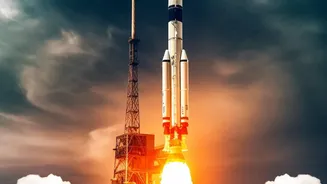
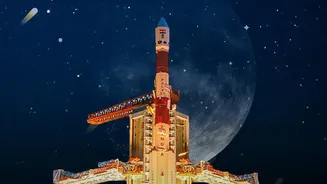
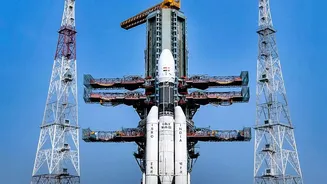
The Shukrayaan-1 spacecraft is scheduled to launch aboard India's powerful LVM-3 rocket, the same launch vehicle that successfully carried the Chandrayaan missions. After a 112-day journey from Earth, it is expected to enter a large elliptical orbit around Venus on July 19, 2028. From there, ISRO may use a technique called aerobraking—using the drag from the planet's upper atmosphere—to gradually lower the spacecraft into its optimal scientific orbit without expending significant fuel. With a planned mission duration of four years, Shukrayaan is poised to deliver a wealth of data, cementing India's position as a formidable force in planetary science and inspiring a new generation of scientists and engineers back home.