




The New Red Frontier: Mars Beckons
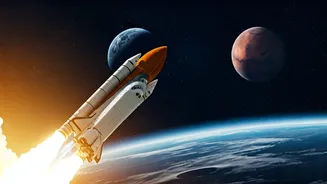
For decades, the Moon was the ultimate prize, a symbol of technological and ideological supremacy. Today, the horizon goal for human exploration is Mars. [3] The red planet is seen as a rich destination for scientific discovery, particularly in the search
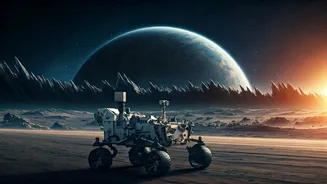
for extraterrestrial life, which could tell us more about Earth's own past and future. [3] This shift has ignited a new, more complex race. The United States, through NASA's Artemis program, views its return to the Moon as a stepping stone for eventual crewed missions to Mars. [3, 13] China, a formidable player in the modern space era, has its own ambitious Mars exploration plans. Its Tianwen-3 mission, planned for a 2028 launch, aims to be the first to return samples from the Martian surface, potentially beating the joint NASA-ESA effort. [6, 34] This isn't just about planting a flag; it's about securing the prestige and scientific breakthroughs that come with exploring a new world. [34]
The Resource Rush: Asteroids and Lunar Riches
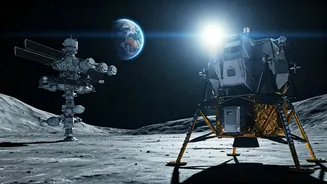
Beyond prestige, the new space competition is increasingly driven by economics. Celestial bodies are no longer just points of light in the sky; they are seen as repositories of valuable resources. There is growing interest in mining asteroids and the Moon for materials rare on Earth. [14] One such resource is Helium-3, an isotope deposited on the lunar surface by solar winds. [7] It is theorized to be a potential fuel for clean and efficient nuclear fusion energy, with some suggesting the Moon's supply could power humanity for thousands of years. [7, 33] This has spurred a global race, with companies like Interlune raising millions for prospecting missions and China's lunar missions tasked with estimating its reserves. [14, 19] Similarly, China's Tianwen-2 mission is targeting a near-Earth asteroid for a sample-return, breaking new ground in small-body exploration. [17, 18] The competition is also fierce between private firms like SpaceX and Blue Origin, who are developing the technologies that will underpin this future lunar economy. [10, 30]
Strategic High Ground: Orbits and Lagrange Points
The competition extends to the empty space between celestial bodies. Strategically important locations in orbit are becoming hotly contested. Lagrange points, positions where the gravitational pull of two large bodies like the Earth and Sun are balanced, are particularly crucial. [20, 28] Spacecraft placed at these points can maintain their position with minimal fuel, making them ideal locations for observatories, communication relays, and surveillance satellites. [12, 28] Control of these points offers significant scientific and military advantages. [28, 37] China has already placed satellites at these points to support its lunar missions. [37] This contest for strategic positioning reflects a broader shift where space is integral to terrestrial conflicts and communications, managed by vast satellite constellations and hybrid commercial-military systems. [4]
A Multipolar Race: New Nations and Private Players
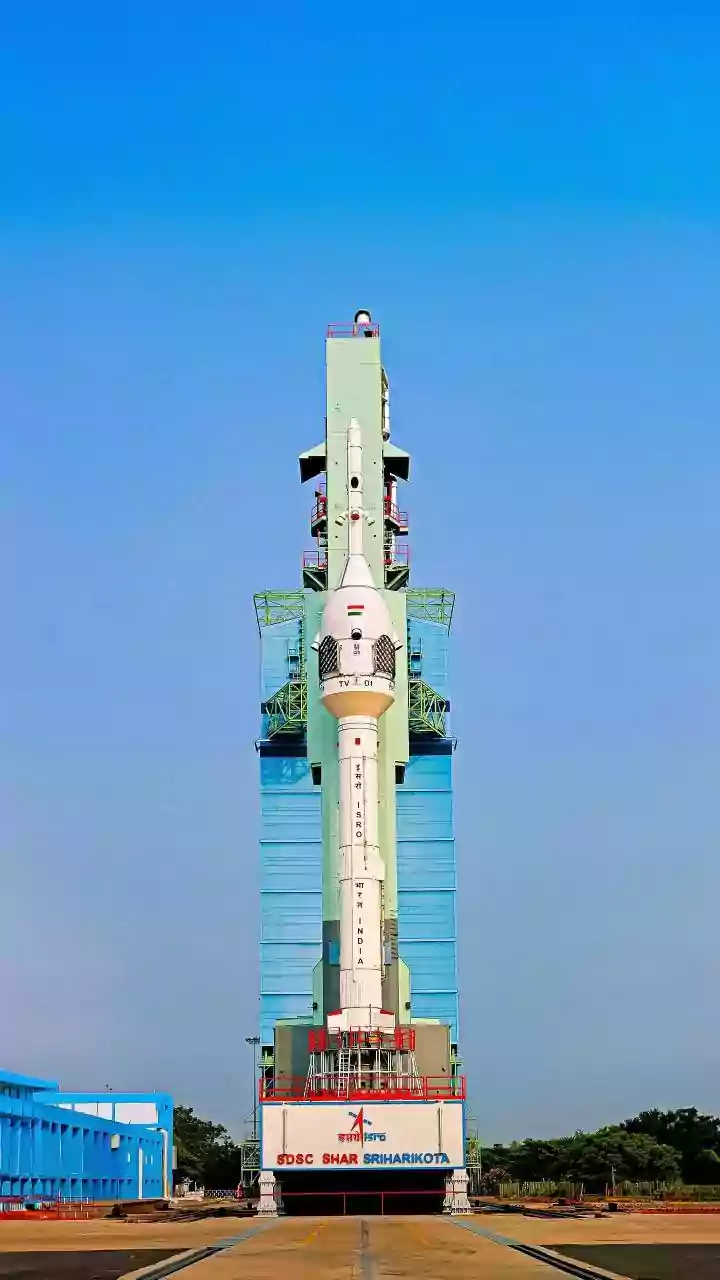
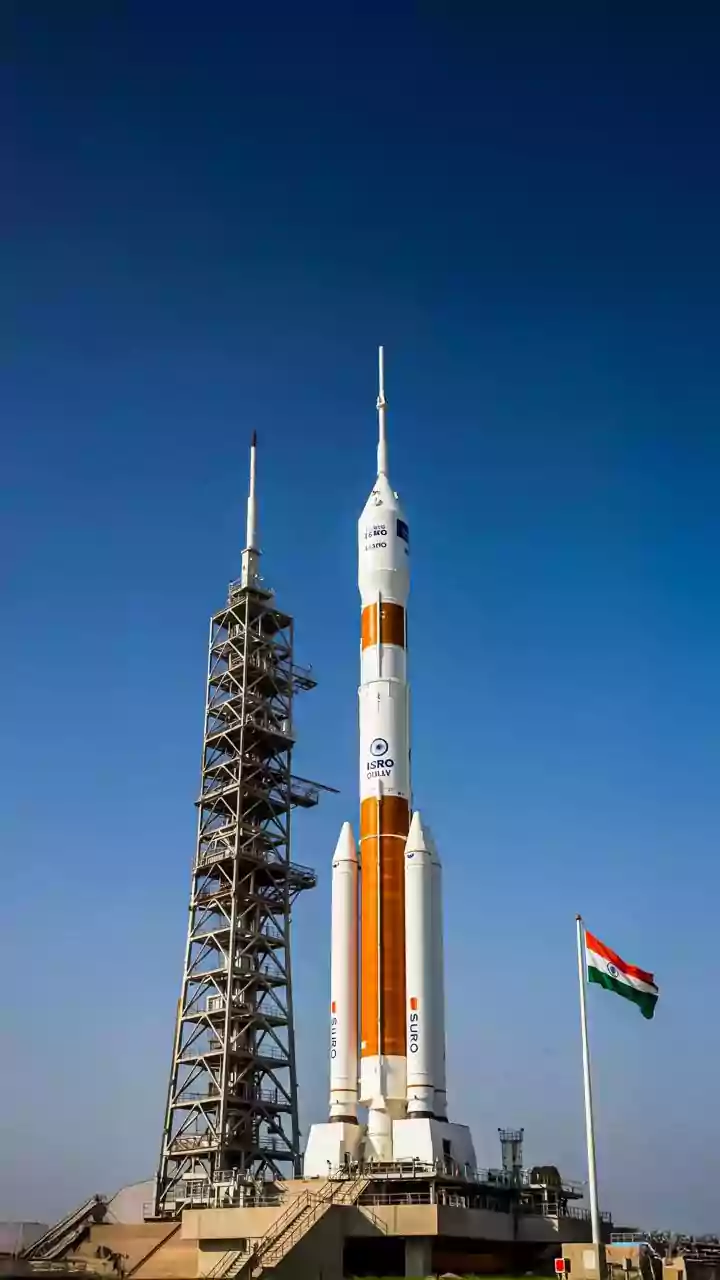
Unlike the Cold War's two-horse race, today's space arena is multipolar, with many nations and private entities pursuing their own ambitions. [4] India, through its space agency ISRO, has emerged as a major power with successful missions to the Moon and Mars, and has plans for a Venus orbiter and its own space station. [8, 23] Two distinct alliances are forming: the US-led Artemis Accords, a set of principles for peaceful space exploration with dozens of signatory nations, and a rival China-Russia initiative to build an International Lunar Research Station (ILRS). [4, 5, 21] Russia and China have framed their ILRS as an alternative for nations not aligned with the US framework. [5, 26] Adding another layer of complexity is the rise of powerful commercial companies like SpaceX and Blue Origin, which are not just contractors but key players driving innovation and competing for major government contracts, from lunar landers to satellite launches. [10, 22]