



Gold Buying Makes a Strong Comeback
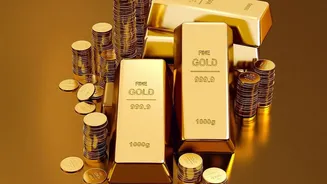
This year's Dhanteras and Diwali season saw a remarkable rebound in gold demand. According to the India Bullion and Jewellers Association (IBJA), gold purchases rose by as much as 30% in volume compared to the same period last year. Jewellers saw consumers
buy an estimated 52 tonnes of gold, valued at around ₹72,000 crore. This surge was largely driven by a timely price correction. After hitting a record high of around ₹1.8 lakh per 10 grams in January 2026, gold prices cooled to about ₹1.42 lakh during the festive period. This drop encouraged many buyers who had previously delayed their purchases to return to the market. The timing of the festivals, falling early in November after salaries and bonuses were paid, also provided a healthy cash flow that boosted spending. Additionally, with the wedding season kicking off in mid-November, many families made advance purchases, further fuelling the demand.
Silver Quietly Steals the Show
While gold captured the headlines, the more significant trend was the powerful rise of silver. The IBJA reported that silver sales grew by a solid 10% in volume, reaching an impressive 300 tonnes. Valued at approximately ₹5,400 crore, this surge highlights a pivotal shift in consumer behaviour that goes beyond traditional festive buying. For many, silver became the precious metal of choice. Its relative affordability made it an attractive option for gifting and personal buys, especially as households navigated high gold prices. This wasn't just about smaller budgets; it signalled a broader, more pragmatic approach to festive spending, where the cultural need to buy precious metals met modern financial realities. The trend was so pronounced that some analysts have started referring to silver as 'the next gold' for a significant segment of the Indian market.
Affordability and Shifting Preferences
A key driver behind silver's ascent is its accessibility. With gold prices remaining historically high despite the recent correction, many consumers adapted their buying strategies. Some opted for lightweight gold jewellery in 14-carat or 18-carat purity, while others turned to silver for token purchases like coins, idols, and traditional decorative items. This trend was particularly strong in rural areas and among lower-middle-income families, where silver has always been a popular store of value. The shift wasn't just a compromise; it was a conscious choice. Retailers noted a pattern of smarter spending, where buyers focused on getting the best value, whether through smaller gold items or more substantial silver purchases. This indicates a maturing market where consumers are balancing tradition with careful financial planning.
An Industrial Powerhouse in Disguise
The demand for silver is no longer just about jewellery and festive trinkets. A significant and growing portion of its demand comes from industry, a factor that makes its market dynamics fundamentally different from gold's. Silver is an essential component in some of the world's fastest-growing sectors, including solar panels, electric vehicles (EVs), and electronics. India's push towards renewable energy and e-mobility is creating a structural demand for silver that is independent of seasonal consumer trends. This dual role as both a precious asset and a critical industrial material means its value is supported by two powerful engines. While investors buy silver as a hedge or an alternative to gold, manufacturers are consuming it in processes where it cannot be recovered, leading to a sustained supply deficit in the global market.