




What 'Equinox' Really Means
The word equinox comes from the Latin for "equal night," which hints at what happens on this day. Around the September equinox, which occurs annually between September 22 and 24, day and night are approximately equal in length all across the globe. This
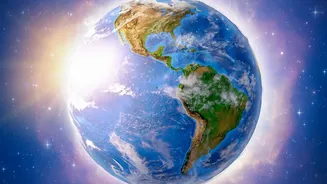
happens because of a specific alignment between the Earth and the sun. On the day of the equinox, the sun shines directly over the Earth's equator. For a brief moment in our planet's orbit, neither the Northern nor the Southern Hemisphere is tilted more towards the sun than the other. This moment of balance is what defines the equinox. This year, it will occur on September 23, 2026.
The Key Ingredient: Earth's Axial Tilt
The primary reason we have seasons, and therefore equinoxes, is that our planet is tilted. Earth spins on an axis that is tipped over by about 23.5 degrees. This tilt remains constant as our planet journeys around the sun. It's a common misconception that our seasons are caused by Earth's changing distance from the sun. In fact, the Northern Hemisphere experiences winter when Earth is closest to the sun. The tilt is the true driver of the seasons. When the Northern Hemisphere is tilted towards the sun, it receives more direct sunlight, resulting in the longer, warmer days of summer. When it's tilted away, it gets less direct sunlight, leading to the shorter, cooler days of winter.
A Journey Around the Sun
As Earth follows its 365-day orbit, this constant tilt means that different parts of the planet get their turn to face the sun more directly. Think of it as a year-long cosmic dance. The two extremes of this dance are the solstices, which occur in June and December. During the June solstice, the North Pole is at its maximum tilt toward the sun. During the December solstice, it's tilted furthest away. The equinoxes are the two midpoint moments in between these extremes. In March and September, Earth's tilt is side-on to the sun, so the sunlight is distributed evenly across both hemispheres. The September equinox specifically marks the moment the sun's direct rays cross the equator, moving southward.
Equinoxes vs. Solstices
It can be easy to confuse equinoxes and solstices, but they are essentially opposites. Solstices represent the extremes of length—the longest day of the year (summer solstice) and the shortest day of the year (winter solstice). They happen when Earth's tilt towards or away from the sun is at its maximum. Equinoxes, on the other hand, represent balance. They are the two days of the year when the sun is positioned exactly above the equator, resulting in day and night being of nearly equal length everywhere. While the solstices mark the peak of summer and the depth of winter, the equinoxes herald the beginning of spring and autumn.
What the Equinox Means for Us
For those in the Northern Hemisphere, including India, the September equinox marks the astronomical start of autumn. From this day forward, the days will become progressively shorter and the nights longer, until we reach the winter solstice in December. For the Southern Hemisphere, the opposite is true; the September equinox is their vernal (spring) equinox, kicking off a season of longer days and warmer weather. The equinox is more than just a date on the calendar. It’s a precise, predictable event dictated by the clockwork of our solar system, reminding us of the constant and elegant motion of our home planet.