


The Monsoon Entryway Problem
Every urban renter knows the struggle. You come home after navigating waterlogged streets, and the entrance to your apartment instantly becomes a chaotic zone. Wet umbrellas lean against walls, leaving puddles. Muddy shoes create a trail across the floor,
and damp raincoats are thrown over chairs, making the whole house feel humid and cluttered. In a small city apartment, this initial mess quickly spreads, turning your clean sanctuary into a source of stress. The lack of a designated transition space means dirt and dampness have a free pass into your living areas, potentially damaging floors and furniture over time.
What is a Renter-Friendly 'Mini-Mudroom'?
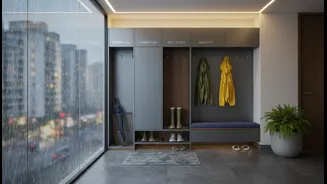
A traditional mudroom is a luxury—a separate room for shedding outdoor gear. But for a renter, the concept is about creating a dedicated, compact 'drop zone' right at your entrance. It's not about construction; it's about clever organisation. Think of it as a highly functional, space-saving nook carved out of your existing entryway. The goal is to establish a clear barrier between the wet outdoors and your clean home, using smart, non-permanent furniture and accessories that you can take with you when you move.
Your First Line of Defence Against Grime
The primary benefit of an entryway mudroom is containment. It stops mess in its tracks. By having a specific place for wet and dirty items, you prevent mud and water from being tracked throughout your home. This is especially crucial during the monsoon. A designated area protects your floors from water damage and your carpets from stubborn stains. It also helps maintain better hygiene by confining outdoor pollutants to one easy-to-clean spot. This small zone acts as a powerful buffer, preserving the cleanliness and calm of your main living space.
Creating Your No-Drill Mudroom Nook
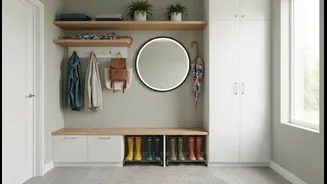
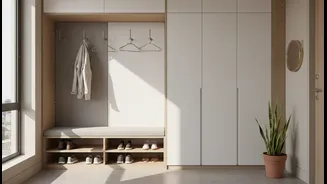
Building your mini-mudroom doesn't require a single screw if you choose wisely. Start with a foundation piece. A narrow console table or a slim, vertical shoe cabinet can define the space. Look for multi-functional furniture, like a bench that has built-in storage for shoes or baskets underneath. For hanging items, forget the drill and opt for heavy-duty adhesive hooks. These can hold surprisingly heavy raincoats and bags without damaging the walls. A waterproof boot tray is a non-negotiable for dripping footwear, and a highly absorbent doormat is your first step to a drier home. The key is to think vertically to maximise storage in a small footprint.
Essential Elements for Success
To make your entryway mudroom truly effective, you need a few core components. First, a seating element like a small stool or bench allows you to comfortably remove shoes. Second, accessible hooks are vital for hanging wet coats, bags, and umbrellas to air dry properly. Third, dedicated shoe storage is a must—whether it's a multi-tiered rack or baskets under a bench, it keeps the floor clear. Finally, add a small shelf or a set of wall-mounted pockets for essentials like keys, mail, and hand sanitiser to prevent clutter on other surfaces.
Style Meets Functionality
An entryway mudroom is not just practical; it's a style statement. It shows that your home is organised and considered from the moment someone steps inside. Choose pieces that align with your home's aesthetic. A sleek, minimalist hall tree can work in a modern apartment, while a rustic wooden bench and woven baskets might suit a more bohemian vibe. Using mirrors can also make a small entryway feel larger and brighter. By coordinating colours and materials, this functional zone becomes a welcoming and intentional part of your home decor, proving that you don't need a lot of space to live stylishly and efficiently.