








The Permanent Guest: Your Home Office
What started as a temporary solution has become a permanent fixture in many of our lives. Hybrid and remote work models are no longer a novelty but a standard for countless young professionals across India. However, our homes, particularly apartments
in metropolitan areas, were rarely designed with a dedicated office in mind. The dining table became a desk, the bedroom corner a conference room. This makeshift approach quickly revealed its flaws: a lack of privacy, poor ergonomics, and a creeping sense of clutter as work life bled into personal space. The need for a dedicated, functional, yet unobtrusive workspace became paramount. This isn't just about finding a place for a laptop; it's about reclaiming a sense of order and separation in a world where work is always just a few steps away.
Enter the Modular Desk
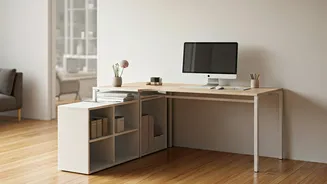
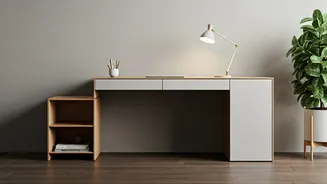
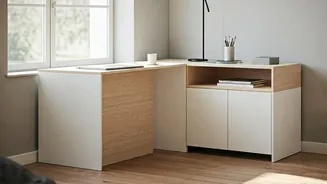
This is where modular furniture, specifically the modular desk, has emerged as a game-changer. Unlike traditional, monolithic desks, modular systems are built from individual, interconnected components. Think of them like building blocks for adults. You can choose different elements—a desk surface, shelving units, drawers, cabinets—and configure them to perfectly fit your space and needs. A simple writing surface can be expanded with vertical shelves for books and files, or a fold-away unit can disappear completely when the workday is over. This flexibility is the core of its appeal. It’s a design philosophy that adapts to you, not the other way around, making it the ideal solution for dynamic living situations and compact urban homes.
The Magic of Multi-Functionality
The primary advantage of going modular is maximising every square inch. In a small apartment, a piece of furniture that serves only one purpose is a luxury. A modular workspace can be a desk from 9-to-5, a display shelf in the evening, and a storage unit 24/7. Wall-mounted systems are particularly popular, as they draw the eye upward and free up valuable floor space, making a room feel larger and less cluttered. Some designs incorporate fold-down desks that vanish into a sleek cabinet, instantly transforming an office back into a living room or bedroom. This ability to create distinct 'zones' without physical walls is crucial for maintaining a healthy work-life balance when both happen under the same roof. It's about creating a space that works as hard as you do, but disappears when you need to relax.
What to Look for When Choosing
Ready to embrace the modular movement? Start by assessing your needs. Are you a minimalist who just needs a laptop surface, or do you require extensive storage for documents and equipment? Look for systems that offer scalability, allowing you to add more components later. Material and build quality are key; since you'll be interacting with it daily, invest in durable materials like solid wood, high-quality plywood, or sturdy metal frames. Don't forget the details. Integrated cable management is a must for keeping wires tidy and out of sight. Pay attention to ergonomics, ensuring the desk height is comfortable for you, whether sitting or standing. Finally, consider aesthetics. Modern modular systems come in a wide range of finishes and styles, allowing you to create a workspace that complements your home decor rather than clashing with it.
Beyond the Desk Itself
A great workspace is more than just a desk. The modular approach extends to the entire home office ecosystem. Pair your desk with a comfortable, ergonomic chair—your back will thank you. Good lighting is non-negotiable; consider a sleek LED desk lamp or integrated lighting within your modular shelving. Use modular storage cubes or floating shelves on an adjacent wall to keep clutter at bay. The goal is to create a cohesive, organised, and inspiring environment. By thinking holistically, you’re not just buying furniture; you are consciously designing a corner of your home that supports your productivity and well-being, proving that even the smallest of spaces can house the biggest of ideas.